
[
Here’s a Marvel “What If?” for you: what if Captain America’s short-lived ’70s rebrand had stuck? In 1974, Steve Rogers briefly hung up his shield and star-spangled uniform, reinventing himself with a new heroic identity: “Nomad.” The change didn’t last very long. But if it had, you could make the case that the Marvel Universe would look wildly different.
Steve Rogers’ blue-and-yellow Nomad costume was no substitute for the red-white-and-blue; that became obvious to Marvel pretty quickly.

In retrospect, this proved to be a pivot point for Marvel canon. Marvel’s failed Nomad experiment could have led to a world where heroic identities evolve naturally over time. Instead, it had the opposite effect.
The Historical Context Surrounding Steve Rogers’ 1970s Stint As “Nomad,” Explained
Captain America #180, Written By Steve Englehart; Art By Sal Buschema; Published In 1974

In August 1974, Richard M. Nixon resigned as President of the United States. Despite winning a landslide re-election in November 1972, his second term had been increasingly stymied by ongoing revelations about his involvement in the Watergate scandal. In the mythology of American politics, Watergate was the thing that finally broke Americans’ trust in their government. At the time, it also broke Captain America.
In September 1974’s Captain America #180, Steve Rogers made the shocking decision to quit being Cap. Faced by corruption in the Marvel Universe version of the American government, he gave up the costume and code name that had been his since World War II. As political commentary, it was a potent reaction to the protracted Watergate affair. As superhero canon, it was a crossroads moment for Marvel Comics.
52 years later, we know how it turned out. Marvel debuted Nomad in Captain America #180; by Captain America #184, Rogers was back to his old identity. It’s easy to say the change didn’t last because Steve Rogers is meant to be Captain America, but let’s look at the actual substance of the change itself, and consider how things could’ve been different.
Steve Rogers Put A Lot Of Thought Into His Nomad Alter Ego; It Turned Out To Be A Dud
Rogers Designing His New Gear Was A Whole Plot Point
The birth of Nomad in Captain America #180 can definitely be filed in the “don’t make ’em like they used to” category. Having quit as Captain America in the previous issue, Steve Rogers spends much of Cap #180 brainstorming his new identity and assembling a new outfit. Yes, there are multiple panels of Rogers sewing his own costume.
And there are twice as many in which Rogers ponders a good superhero name. At first he thinks he wants “something that means adventurer, like Daredevil,” before realizing he needs to play on his new “man without a country” status. Eventually, he lands on “Nomad,” the moniker by which Steve Rogers would be known forever after.

Or at least, that’s what we would be saying if the Nomad design was a hit. Unfortunately, Marvel fans at the time were far from fond of it, and Steve Rogers was quickly reset to his Captain America status quo in early 1975. Looking back now, there’s one aspect of Nomad’s debut in Captain America #180, in particular, that highlights why the look could never have lasted.
Nomad’s First Fight Was A Failure, Giving Us An Image That Sums Up Marvel’s Captain America Replacement
Steve Rogers’ Ill-Fated Experiment With A Cape
There’s an iconic minor character in Alan Moore’s Watchmen, the vigilante known as Dollar Bill, who suffers a tragic fate because of a mishap with his cape. Over a decade earlier, Steve Rogers similarly found out the hard way why some heroes are not cut out to wear capes, though at least he survived the encounter.
It’s a funny bit in Captain America #180, really. After a moment’s deliberation while he’s sewing his costume, Rogers says yes to a cape, thinking: “Sure, why not? Those guys with capes always looked great.” Later, in his first outing as Nomad, he trips over his cape, and it’s so embarrassing that the bad guys actually stop their getaway to remark on it.
After that, the former Cap drops the cape. Again, it’s amusing, but at the expense of making Nomad “cool.” It’s supposed to represent a trial-and-error phase for Steve Rogers’ new superhero identity, but the effect was making Rogers seem dorky. This dorkiness was an unforgivable sin for Marvel readers, and it sunk Nomad’s chances of success immediately.
Nomad’s Failure Helped Shape Modern Marvel; How Might Things Be Different If The Design Worked?
Is Nomad Still An A-List Marvel Hero Today?

Contemporary Marvel Comics readers expect costume changes and new hero identities to be short-term. That’s par for the course these days. In 1974, there was a more realistic chance that Steve Rogers might legitimately leave his Captain America identity behind and evolve into a different kind of hero as Nomad.
That’s one behind-the-scenes Marvel “What If?” we can consider. Put it this way: is there a possible world where Chris Evans plays Nomad in the Marvel Cinematic Universe? Alternatively, does Marvel eventually land on a Steve Rogers replacement as Cap who sticks, and becomes even more synonymous with the role than its originator?

Captain America’s 5 Most Ridiculous Costumes in Marvel History
There is no more iconic symbol than Captain America’s shield, but the same can’t be said for Steve Rogers’ most outlandish redesigned uniforms.
Or is Steve Rogers’ return to the role inevitable? Even if it takes forty issues instead of four? And if Rogers’ “Nomad” identity lasts even a couple years, does that have a ripple effect on the wider Marvel Universe? Does it become more common for superheroes to adopt new identities, and to part ways with their recognizable iconography?
Maybe the arc of Marvel history between 1974 and 2026 bends back toward exactly where it is right now. But perhaps Captain America’s successful conversion into Nomad sets a precedent for more long-term changes of the same kind. Maybe Marvel is less stuck in perpetual “arrested development” today than its critics argue.
Captain America’s “Nomad Era” Is An Important Moment In Marvel Comics History
Nomad Is More Than Just Trivia

After Captain America #183 wrapped up the abbreviated Nomad arc, the next issue got back to “normal,” with Steve Rogers suiting up as Cap once more. It summed up the detour like this:
Steve Rogers was Captain America until he saw how America failed its ideals. Then he was the Nomad…until he saw how he failed his ideals.
And that was that. The Nomad design has made a comeback occasionally in the years since, but as the “next phase” of Steve Rogers’ character, it was only a flash in the pan.
And that’s what makes it more than just a footnote in Marvel history. The Nomad era, as brief as it was, deserves its own chapter. From examining why the change was made, and why the change back was made so quickly, we can better understand how Marvel Comics became what it is today.
When we think of Marvel in the 1970s, we think of big things like the rebirth of the X-Men franchise, or Marvel IP’s first forays into live-action television. But there were many defining moments beyond that, and Captain America’s short stint as Nomad shouldn’t be forgotten, because it stands out as important to Marvel’s legacy as anything else from that period.
Sound off, Marvel fans. What other small, but pivotal moments in Marvel history should Screen Rant cover?
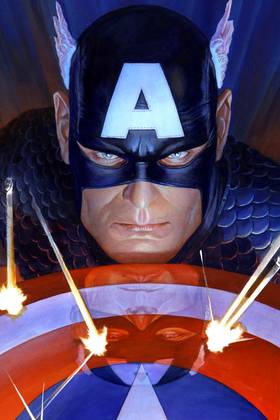
- First Appearance
-
Captain America Comics
- Alias
-
Steve Rogers, John Walker, Sam Wilson
- Alliance
-
Avengers, Invaders, S.H.I.E.L.D., U.S. Army
- Race
-
Human
- Franchise
-
Marvel
https://static0.srcdn.com/wordpress/wp-content/uploads/2026/04/captain-america-left-gritting-his-teeth-and-steve-rogers-as-nomad-right.jpg?w=1600&h=900&fit=crop
https://screenrant.com/captain-america-nomad-70s-failed-character-change-marvel-comics/
Ambrose Tardive
Almontather Rassoul




