
- Surfshark updates its browser extension with a new safety feature
- The tool warns of malware, data breaches, and phishing before you click
- The feature is available now via the Surfshark browser extension settings
Surfshark has rolled out a significant update to its browser extension, introducing a proactive safety feature designed to flag malicious websites directly within Google Search results.
While the best VPN services are primarily known for encrypting your connection and masking your IP address, providers are increasingly expanding their toolkits to cover broader cybersecurity threats. Surfshark’s new update focuses on the initial point of contact with the web, the search engine, aiming to prevent users from stumbling onto compromised sites.
The feature actively scans links displayed in your search results. If a site is known to harbor malware, has been involved in a data breach, or shows signs of phishing, the extension will display a warning icon next to the link. This allows users to steer clear of potential threats without having to click through to the page first.
Gabriele Sinkeviciute, Head of Product at Surfshark, emphasizes the necessity of this proactive approach in the current threat landscape.
“It’s hard to imagine a day without using a search engine like Google. However, even seemingly harmless searches can lead to risks behind any link you click,” said Sinkeviciute, explaining that the team implemented the new tool to help people browse more securely “without any extra effort.”
A visual guard against invisible threats
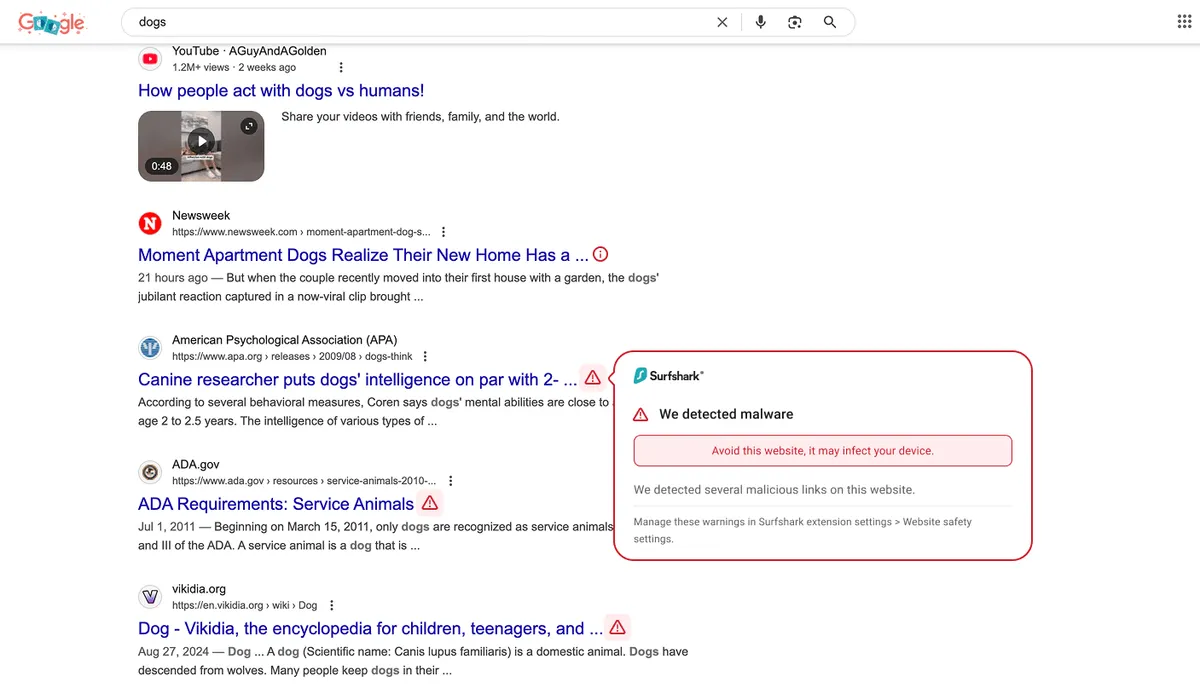
The core benefit of this update is visibility. Previously, similar safety tools might have alerted a user only after they landed on a suspicious page, or required them to check a safety badge manually. By integrating directly into the Google Search interface, Surfshark is trying to cut off the risk at the source.
The company states that the need for such tools is growing rapidly. Surfshark reports that in 2025 alone, it detected more than 141,000 new online threats. Furthermore, since 2022, the company has added over 25,000 websites to its database that are flagged as potentially harmful but are “not easily identifiable as dangerous.”
“Protecting users from malicious search engine links is just as critical as providing reliable online protection for their data,” said Sinkeviciute. “We aim to help users avoid the frustration of compromised accounts, device infections, or stolen credentials when visiting a harmful website without even realizing it.”
This move aligns Surfshark with a broader industry trend where VPNs are evolving into all-in-one security suites. Competitors like NordVPN (with Threat Protection) and ExpressVPN (with Threat Manager) have similarly invested in blocking malicious trackers and sites.
How to use Surfshark’s website safety settings
Currently, this safety feature is exclusive to Google Search and Google Chrome, requiring the Surfshark browser extension. If you are already a user, you may need to ensure your VPN extension is updated to the latest version.
After that, navigate to the Website safety warnings section and turn on both toggles for Data breach alert and Malware alert.
For those looking to expand their privacy toolkit further, checking out a Surfshark review can help you decide whether the full suite, which includes antivirus and data leak detection, is right for you.
Users can also get even more utility out of the software, as they can now get a dedicated IP on Surfshark’s browser extension, making it a robust option for secure, uninterrupted browsing.
Follow TechRadar on Google News and add us as a preferred source to get our expert news, reviews, and opinion in your feeds. Make sure to click the Follow button!
https://cdn.mos.cms.futurecdn.net/Be2biKBJvmWNyid55bUKKY-2560-80.jpg
Source link





