
It was promised as a new age for businesses. Virtual reality, augmented reality, mixed reality – in whatever shape it took, this was going to be the 21st century game-changer. No more staring at screens or using a mouse. That’s ancient, 20th century thinking, that is.
This new reality would see the advent of true hands-free computing and unparalleled remote experiences, wherever in the world professionals were based. From prototyping to healthcare diagnoses, it heralded a new age. And, like those stuck in Casablanca, we waited. And waited. And waited.
When Facebook acquired Oculus in 2014, it seemed as if the social giant sought to conquer new worlds to keep growing, even if it had to invent them. A decade later, it’s proved to be Meta’s equivalent of Google’s Android purchase.
While the company never characterized the Quest as a video game console – and neither Meta nor the leading console makers referred to the other as major competition – Meta’s developer events would invariably highlight new games as the headset’s leading third-party content.
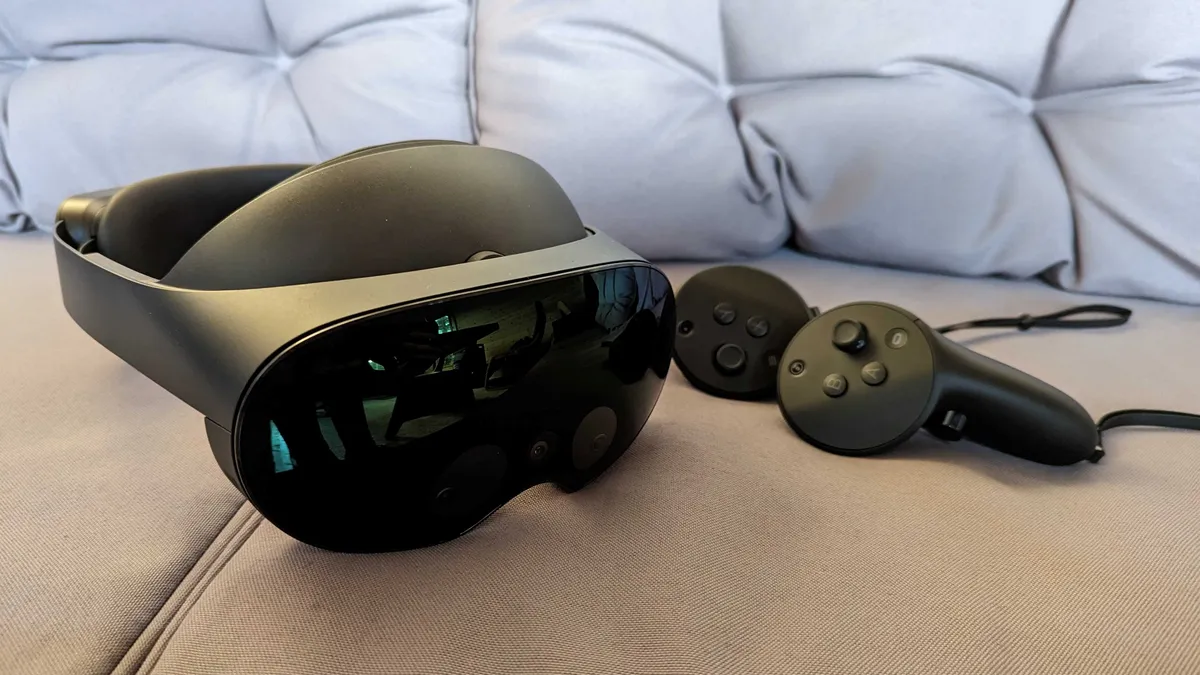
A vision larger than its field of view
There are a number of reasons for the lack of up-take in the professional (and, indeed, gaming) world.
Those grand promises, it turned out, were all mist. As tangible and as real as dreams. That overpromising of the capabilities inevitably led to user backlash when it was discovered they couldn’t effectively deliver what businesses needed.
Features like X-ray vision, simply didn’t exist. And what did exist felt as limited as the field of view offered by many devices. Software compatibility remained a perpetual problem – the VR/AR software itself was often unreliable and unresponsive. Integrating that with existing IT architecture was time-consuming, costly, and borderline unscalable.
There were issues with the comfort of headsets during prolonged use – eight hours of a working day using one was all but impossible, assuming the motion sickness didn’t get to you first.
Then there was the cost. Developing and manufacturing headsets like the HoloLens was high. For consumers buying them, they were positively prohibitive.
That has a major knock-on effect across the wider VR/AR market, such as gaming.
For example, Quest unit sales have been a small fraction of smartphone sales, making it harder for developers to drive revenue with free-to-play games (at least for exclusive titles). Even Microsoft’s Xbox Series X/S consoles, hardly best-sellers themselves, are estimated to have outsold all Quest headsets despite launching after the first Quest.
And while the economics of Meta’s Quest business, which it has long subsidized, include epic losses, it also cleared the field, relegating nearly all other players to the more pro space.
For example, the last HTC Vive was released in early 2023, and the lowest-cost option in the current line-up is about $1,000.

What next then?
Given that companies such as Meta and Xreal are only now making the jump to in-lens displays, it seems that, until smart glasses can produce something reasonably close to the Quest experience, the momentum is elsewhere.
That said, Google may provide a silver lining.
Because it licenses Android XR to multiple hardware manufacturers, those might include companies more focused on professional business use, particularly with PC vendors coming into the Android fold with the Chrome OS successor “Aluminium.”
Late last year, TechRadar’s editor-at-large Lance Ulanoff tried out a pair of prototype Android XR smart glasses. In his article said, “I think we’re just about done with our dalliances with too-expensive episodic-use immersion devices. The time for AI-powered AR glasses is now here.”
Of course, Google hasn’t hit a lot of home runs with Android in categories beyond smartphones, and PC vendors including Acer and HP were burned by Microsoft’s Windows Mixed Reality headset initiative.
But if brands like Dell, HP, Lenovo, Acer, and Asus can get the ball rolling with pro-grade business tools and enhanced AI, there’s potential to sustainably match or exceed what Meta spent big to create and is now moving quickly to abandon.
We’ve tested the best VR headsets and the best smart glasses.
https://cdn.mos.cms.futurecdn.net/ebhUoSqSUJdcPJpFam5ALY-2560-80.jpg
Source link





