
[
Star Wars needs to embrace the first lesson George Lucas taught audiences in 1977: this is a mythological story, the history of “a galaxy far, far away.” But once the crawl hits in A New Hope, and John Williams’ score kicks in, Star Wars and Star Wars fans tend to quickly forget that.
“Canon” is a big deal in Star Wars. But what that translates to in practice is that as Star Wars fans, we treat every new piece of lore like gospel. Like hard facts. Like universal truths. When really, we should approach Star Wars more like historians. Especially when different sources clash. This can be frustrating for fans who want the “true” story, but fun for historians of the Star Wars galaxy.

The franchise has occasionally gotten this right, notably in the Essential Chronology books, which we’ll talk about in more detail below. But we’ll also talk about how Star Wars could do more to embrace itself as history, including taking a cue or two from Game of Thrones’ author George R.R. Martin.
Star Wars Is Fantasy & History; What’s Lost When We Get Stuck On “Canon”
Star Wars Should Feel Legendary
In 2014, Disney rebooted Star Wars canon. Decades worth of multimedia Star Wars content was rebranded Legends, and in this regard, Disney hinted at the essence of something. Star Wars has always been about mythic, legendary figures. The very first frame of the original Star Wars frames the story this way: it happened “a long time ago, in a galaxy far, far away.”
We all recognize this as a modern sci-fi spin on “once upon a time, in a far off land.” Yet over time, Star Wars has ceded its mythic qualities by becoming a linear story where every piece has to fit together seamlessly. Both fans and the shepherds of Star Wars as IP are at fault, in this regard. Because Star Wars birthed the modern concept of franchise “canon,” but now canon is killing Star Wars.
“Who Shot First?” And Why “Star Wars” Is Better With More Questions, Less Answers
The Case For A Messier Star Wars Universe

Imagine you live in the Star Wars universe. If you’re a fan of the franchise, you’ve probably done this before. Now imagine you’ve ended up on the sketchy side of the galaxy. You stop in the Mos Eisley Cantina on Tattooine for a drink, where you strike up a conversation with a friendly alien, who points to a booth in the back and says Han Solo shot a bounty hunter back there once.
You’re a history buff, so you know the story. But you’ve heard Greedo, the bounty hunter, shot first, which the alien insists isn’t true. Now, let’s end this thought experiment before things go horribly wrong, and you get in a bar fight over the answer. The point is, “who shot first?” is a big controversy if you need there to be a “truth” to Star Wars, but if it’s open to interpretation, you get something better than truth: you get debate.
The worst thing Star Wars fans can do is treat reconciling different sources like it’s a burden. And the worst thing Star Wars stories can do is get caught up in being a perfect puzzle piece. Star Wars is more fun when it’s messy, like real history. When there are conflicting accounts and arguments to be made in favor of each of them.
What “Star Wars” Could Learn From “Game Of Thrones” Author George R. R. Martin
How Star Wars Can Preserve It’s History’s Mysteries

Star Wars canon comes from multiple sources, spread across different mediums. It starts with the movies, but then there are books, comics, games, and now TV shows as well. Sometimes these sources repeat the same stories, or offer conflicting information about the same characters. That comes with the territory when chronicling events from “a long time ago,’ whether you’re talking about real history, or fiction.
And Star Wars is not a work of historical fiction, primarily. It is a space fantasy, and functionally it is most often an action-adventure series. We’re just saying fans and creators alike might be better off treating it like history. And there is some precedent for this in the Star Wars Extended Universe. Fans of a certain age will fondly remember the Essential Chronology books, which were framed as in-universe history texts.

In a way, these books were Star Wars precursors to George R.R. Martin’s Fire & Blood volumes, which are the basis for HBO’s House of the Dragon. Speaking of Martin, it’s also worth considering how he treats the history of his fictional world in the Song of Ice and Fire novels. Because it would be of great use in Star Wars fiction.
That is, the Ice and Fire books are all written from the characters’ POVs, and they have flawed, in-universe understandings of history. This allows Martin to reveal snippets of his world, while still leaving plenty of blank spots for readers to fill in with their imagination. In essence, this used to be what Star Wars was all about.
What The Star Wars Expanded Universe Is Really There For
It’s Not About Making Canon Make Sense

Star Wars fans hold it close to their hearts. That’s why what’s canon and what isn’t means so much to them. It’s shorthand for what is important. What to care about. Things like Star Wars Infinities, the franchise’s equivalent of Marvel’s What If?, are novelties to Star Wars fans, but only because the novelty is diverging from such a well-defined story.
Except that story always had gaps and discrepancies. For some, the Expanded Universe was always there to fill these in, and smooth them out. But that’s never really been its purpose. The Star Wars Expanded Universe has always really been about giving us more of the thing we love. It’s as simple as that.
Star Wars Needs To Lean Into Its Penchant For Different POVs
Star Wars Needs To Keep Evolving

Star Wars has had its retcons and its “points of view” from the very beginning. These are features, not bugs, in the Star Wars system. It’s an evolving story, just like historians maintain an evolving, rather than static, view of history. Put yourself back in the Star Wars galaxy again for one more moment. Wouldn’t each sector, each star system, each world, have its own perspective on history?
That’s what Star Wars really needs to be. Not a single story told by many voices, but a plurality of perspectives, each offering something unique to the Star Wars franchise. That’s how Star Wars can honor its very first words, “a long time ago in a galaxy far, far away,” as it nears the half-century mark as a pop culture landmark.
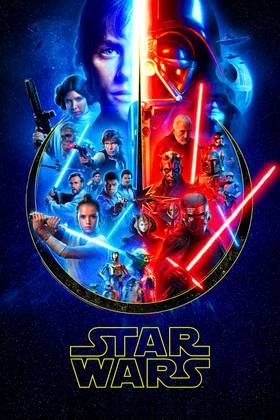
- Cast
-
Mark Hamill, James Earl Jones, David Prowse, Carrie Fisher, Harrison Ford, Daisy Ridley, Adam Driver, Ian McDiarmid, Ewan McGregor, Rosario Dawson, Lars Mikkelsen, Rupert Friend, Moses Ingram, Frank Oz, Pedro Pascal
- TV Show(s)
-
The Mandalorian, Andor, Obi-Wan Kenobi, The Book of Boba Fett, Ahsoka, The Acolyte, Star Wars: Skeleton Crew, Lando, Star Wars: The Clone Wars, Star Wars Rebels, Star Wars: The Bad Batch, Star Wars: Resistance, Star Wars: Young Jedi Adventures, Star Wars: Visions
- Movie(s)
-
Star Wars: Episode I – The Phantom Menace, Star Wars: Episode II – Attack of the Clones, Star Wars: Episode III – Revenge of the Sith, Star Wars: Episode IV – A New Hope, Star Wars: Episode V – The Empire Strikes Back, Star Wars: Episode VI – Return of the Jedi, Star Wars: Episode VII – The Force Awakens, Star Wars: Episode VIII – The Last Jedi, Star Wars: Episode IX- The Rise of Skywalker, Rogue One: A Star Wars Story, Solo: A Star Wars Story, Star Wars: The Clone Wars, Star Wars: Dawn of the Jedi, Star Wars: New Jedi Order
- Character(s)
-
Luke Skywalker, Han Solo, Rey Skywalker, Emperor Palpatine / Darth Sidious, Obi-Wan Kenobi, Ahsoka Tano, Grand Admiral Thrawn, Grand Inquisitor, Reva (The Third Sister), The Fifth Brother, The Seventh Sister, The Eighth Brother, Yoda, Din Djarin, Grogu, Anakin Skywalker/Darth Vader, Leia Organa, Ben Solo/Kylo Ren
https://static0.srcdn.com/wordpress/wp-content/uploads/2025/11/star-wars-poster-showing-luke-skywalker-and-darth-vader.jpg?w=1600&h=900&fit=crop
https://screenrant.com/star-wars-history-long-time-ago-canon-legends/
Ambrose Tardive
Almontather Rassoul




