
[
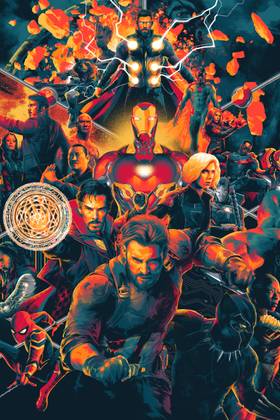
It’s official: On the anniversary of its first release, the Marvel Cinematic Universe turns 18-years-old today. If Marvel Studios’ franchise were a person, they’d be allowed to vote, to enlist in the army, to buy fireworks, to get a tattoo. It’s a major milestone in a young person’s life; for Disney’s $30 billion franchise, it’s a chance to look back on the legacy of the MCU, and where it goes from here.
The MCU launched on May 2, 2008, with the release of Iron Man. Directed by Jon Favreau and starring Robert Downey Jr. as Marvel’s titular hero, the film earned generally positive reviews and went on to gross a respectable $585.8 million at the worldwide box office. However, what truly changed the game was Iron Man‘s post-credits scene, which introduced Samuel L. Jackson’s Nick Fury and something called the Avengers Initiative.
While superhero franchises weren’t new to Hollywood, what the MCU offered was different. The promise of the Avengers wasn’t simply a linear film franchise following one character, but a series of films focused on a variety of different characters who came together for a crossover event. It’s impossible to overstate how revolutionary this was at the time, and how desperately other Hollywood studios attempted to recreate Marvel’s success — though none ever truly replicated it.
Now, 37 MCU movies and 13 live-action TV shows later, Marvel Studios’ franchise has grown into a behemoth within the industry. But the MCU isn’t without its faults and mistakes. So, on the Marvel Cinematic Universe’s 18th birthday, it’s time to look back at how the franchise got here, what went wrong, and where it goes from here.
Over The Past 18 Years, The MCU Has Seen Tremendous Success

When the MCU began, no one was sure it would succeed. Although the seeds for Thanos were planted in those early days of Phase 1, the massive crossover event of Avengers: Endgame was little more than a glimmer in MCU architect Kevin Feige’s eye. The MCU’s first phase was more focused on proving their concept could succeed — and succeed they did.
After stumbling a bit with their sophomore entry, The Incredible Hulk, and introducing Thor and Captain America in their own decently well-received solo movies, The Avengers was the MCU’s first true test. Joss Whedon’s team-up film knocked it out of the park, with The Avengers taking the Summer 2012 box office by storm and going on to earn $1.520 billion globally. It became the first of nearly a dozen MCU movies to earn over $1 billion.
Most importantly, The Avengers proved Marvel Studios could deliver on the MCU’s promise: Introduce a whole universe of comic book characters and bring them together for amazing theatrical crossover events. After The Avengers, the question was no longer whether Marvel could pull it off, but how big they could go. In 2019, with the release of Avengers: Endgame, we got our answer.
To this day, more than seven years later, Avengers: Endgame remains the biggest crossover in Hollywood history, bringing together dozens of A-list actors in a massive fight to save the world. All six of the original Avengers stars returned, and they were joined by an entire universe of fellow Marvel actors to give audiences the payoff the studio had been building toward for over 10 years.
It was an awe-inspiring event, one that translated to $2.799 billion at the worldwide box office. For a time, Avengers: Endgame became the highest-grossing movie in history, though it was eventually dethroned by a re-release of James Cameron’s Avatar. But the cultural impact of Endgame cannot be argued. Marvel had set out to do something completely new with its superhero franchise, and with Endgame, the MCU cemented its place in Hollywood history.
In Recent Years, The MCU Has Faced Its Biggest Challenges

However, in the years since Avengers: Endgame, the MCU has stumbled, due to both internal and external factors. There was, of course, the COVID-19 pandemic, which delayed the MCU’s initial post-Endgame releases, including Black Widow. There were also the writer and actor strikes in 2023, leading to more delays and an incomplete marketing campaign for The Marvels, which ended up becoming the MCU’s lowest-grossing film.
Perhaps most importantly, though, there was the launch of Disney+, the streaming service of Marvel’s parent company, for which Marvel Studios was mandated to create new MCU content. For the first time in the MCU’s history, Marvel Studios created television shows, specifically for Disney+. While more Marvel releases seemed like a good idea at the time, it led to the franchise’s key creative architects, namely Kevin Feige, being spread too thin.
Whereas previously Feige could keep a close eye on all MCU output, even when they were releasing 3–4 movies a year, the addition of Disney+ TV shows meant the Marvel Studios president wasn’t able to give each project the time and consideration it needed. As a result, many MCU projects suffered without that oversight, and the brand took a hit that has led to lower box office returns and viewership.
|
Marvel Cinematic Universe Movies Phases 4-6 |
||
|---|---|---|
|
Black Widow |
July 9, 2021* |
$379.8 million |
|
Shang-Chi and the Legend of the Ten Rings |
September 3, 2021 |
$432.2 million |
|
Eternals |
November 5, 2021 |
$402.1 million |
|
Spider-Man: No Way Home |
December 17, 2021 |
$1.921 billion |
|
Doctor Strange in the Multiverse of Madness |
May 6, 2022 |
$955.8 million |
|
Thor: Love and Thunder |
July 8, 2022 |
$760.9 million |
|
Black Panther: Wakanda Forever |
November 11, 2022 |
$859.2 million |
|
Ant-Man and the Wasp: Quantumania |
February 17, 2023 |
$476.1 million |
|
Guardians of the Galaxy Vol. 3 |
May 5, 2023 |
$845.6 million |
|
The Marvels |
November 10, 2023 |
$206.1 million |
|
Deadpool & Wolverine |
July 26, 2024 |
$1.338 billion |
|
Captain America: Brave New World |
February 14, 2025 |
$415.1 million |
|
Thunderbolts* |
May 2, 2025 |
$382.4 million |
|
The Fantastic Four: First Steps |
July 25, 2025 |
$521.9 million |
|
*Released concurrently on Disney+ with Premier Access |
||
While Disney’s mandate for more Marvel content to bolster its Disney+ library is part of the MCU’s post-Endgame problems, it’s not the only issue. In the first three phases of the MCU, the franchise was anchored by Avengers movies that brought its characters together and paid off the films’ interconnected storytelling. By the time Avengers: Doomsday releases in December, however, we’ll have gone seven years, 15 movies and 23 seasons of television (both live-action and animation) between Avengers movies.
The biggest problem with the MCU right now is that it’s become too unwieldy, and Marvel hasn’t been able to give audiences even a fraction of the payoff they once could count on. Heroes and villains are introduced, never to be seen again; post-credits scenes tee up sequels that never happen, and there’s no central throughline. As a result, Marvel has lost the interest of casual audiences, and been hard-pressed to keep even die-hard fans engaged with the meandering multiverse storyline.
Now, the MCU is turning 18 at a pivotal point for the franchise, one that could determine the real longevity of Marvel Studios’ cinematic universe.
How Will The MCU Last Another 18 Years?

The one question that has plagued the MCU since Avengers: Endgame is how Marvel Studios can keep the franchise going even after they retire certain characters or actors. MCU Phase 4 attempted to blend returning Avengers characters with new additions to the franchise, but the lack of big theatrical crossovers and no overarching storyline left viewers confused about what exactly they needed to watch to get the payoff they expected from Marvel.
In recent years, Marvel head Kevin Feige has put a focus on ensuring MCU movies don’t require as much “homework” as they did in phases 4, 5 and 6, but the franchise’s upcoming slate still attempts to reward long-time fans. This summer’s Spider-Man: Brand New Day sees Tom Holland return alongside other Marvel characters, including original Avenger, Hulk (Mark Ruffalo), and Netflix anti-hero The Punisher (Jon Bernthal). Then in December, Avengers: Doomsday aims to round off multiple Marvel franchises.
For the first time, stars from the MCU’s Avengers and Fox’s X-Men will come together on screen, battling Robert Downey Jr’s Doctor Doom. Next year, Marvel Studios will wrap up its Multiverse Saga with Avengers: Secret Wars, which aims to be bigger than both Endgame and Doomsday. It’s ultimately the same play as Endgame was — bring beloved characters together for the biggest event possible. Theoretically, Secret Wars should be even bigger than Endgame, but then what?
Eventually, Marvel Studios will run out of actors and characters from previous franchises to bring back, and given the scale of Doomsday and Secret Wars, that time might come as soon as next year. If the MCU is to continue, the franchise needs to reinvent the game all over again. Thankfully, that’s exactly what Marvel seems to be planning.
Before the MCU, superhero franchises always revolved around a single character — Superman, Batman, Spider-Man — or, in the case of Fox’s X-Men series, a team. Despite the scale of its cinematic universe, the MCU essentially hinged on the Avengers, a lesson driven home by how much the franchise floundered when there were no Avengers movies. If the MCU is going to continue, it needs to make clear to audiences who the central characters of the franchise are, and will be going forward.
Little is known about Marvel’s post-Secret Wars plan, but the one thing we do know is that they’re planning an MCU X-Men movie. It’s possible that the MCU will take a cue from the comics and transition into a franchise with a few central teams and characters, perhaps including the X-Men and Avengers. Meanwhile, smaller characters like Daredevil will continue in storylines that exist in the same universe, but aren’t necessarily instrumental to the overarching storyline.
It remains to be seen exactly what Marvel has planned for the MCU after Avengers: Doomsday and Avengers: Secret Wars close out the current phase, but more may be revealed at San Diego Comic-Con this summer — or at next year’s convention. Until then, audiences can only hope that Marvel has learned the lessons it needed to from its post-Endgame offerings and can use them to make sure the MCU becomes the kind of franchise that can live on indefinitely.
Like any young person turning 18 and needing to make big life choices, the MCU is entering a new chapter of its life, one where it needs to reflect on what’s worked so far, what mistakes have been made, and where it goes next. Based on Marvel Studios’ track record, the MCU still has a great deal of potential, but its biggest, most defining decisions are still to come.
Hopefully, Marvel avoids mistakes like getting an embarrassing tattoo or injuring themselves with fireworks, and instead makes the kind of good decisions that will lead to another 18 years of success for the MCU.
- TV Show(s)
-
Agents of S.H.I.E.L.D., Agent Carter, Inhumans, WandaVision, The Falcon and the Winter Soldier, Loki, What If…?, Hawkeye, Moon Knight, Ms. Marvel, She-Hulk: Attorney at Law, Secret Invasion, Marvel’s Echo, Agatha All Along, Ironheart, Daredevil: Born Again, Your Friendly Neighborhood Spider-Man
- Cast
-
Robert Downey Jr., Chris Evans, Scarlett Johansson, Samuel L. Jackson, Jeremy Renner, Chris Hemsworth, Mark Ruffalo, Edward Norton, Paul Rudd, Tom Holland, Tom Hiddleston, Anthony Mackie, Cobie Smulders, Brie Larson, Chadwick Boseman, Sebastian Stan, Chris Pratt, Dave Bautista, Zoe Saldana, Bradley Cooper, Vin Diesel, Pom Klementieff, Josh Brolin, Karen Gillan, Clark Gregg, Paul Bettany, Don Cheadle, Benedict Cumberbatch, Evangeline Lilly, Simu Liu, Aaron Taylor-Johnson, Angelina Jolie, Kit Harington, Salma Hayek, Richard Madden, Barry Keoghan, Gemma Chan, Ma Dong-seok, Brian Tyree Henry, Kumail Nanjiani, Lauren Ridloff, Lia McHugh, Jonathan Majors
- Upcoming Films
-
Blade, Avengers: Doomsday (2026), Avengers: Secret Wars
https://static0.srcdn.com/wordpress/wp-content/uploads/2026/05/mcu-18_bday.jpg?w=1600&h=900&fit=crop
https://screenrant.com/marvel-cinematic-universe-18-year-anniversary/
Molly Freeman
Almontather Rassoul




