
[
We go to the movies for the hero stories, but we stay because of the villains that make them better. In the world of science fiction, audiences have been overwhelmed by some of the most extraordinary characters in cinema history. It’s just those villains who always emerge as legendary. Whether recurring villains or one-off antagonists, the 10 characters that made this list helped shape the genre.
From literal monstrous extraterrestrials to hired hands doing the bidding of another, when these faces pop up on screen, expect a high-octane adrenaline rush. Whether modern legend or timeless classic, human or computer, these characters have become the blueprint for the future. While many other villains could have swapped in, these 10 represent the history of the genre and why it’s so good to be bad.
10
David
‘Prometheus’/’Alien: Covenant’

It might sound shocking to think there is a presence in the Alien universe that could be as menacing as the Xenomorph, but the introduction of David (Michael Fassbender) served as a reminder that artificial intelligence can be just as terrifying as giant extraterrestrials. Making his first appearance in the first prequel film, Prometheus, David appears as an advanced android and the primary synthetic creation of Weyland Corporation founder Peter Weyland (Guy Pearce). Serving as a complex, highly intelligent, and deeply curious science officer aboard the USCSS Prometheus, he inadvertently becomes the terrifying architect of events in the Alien universe. The unique element about this David is that he possesses creative, emotional, and independent thought capabilities, and he also has an obsession with the concept of creation. And that’s where the danger comes in.
David’s God complex escalates into eugenics and malevolence. At the end of Prometheus and leading into Alien: Covenant, he uses the alien pathogen to wipe out the ancient Engineers, mutates human DNA, and essentially engineers the first iterations of the deadly Xenomorph species. It’s a chilling evolution as he’s driven by deeply human, corrupted emotions like jealousy, vanity, and a desire to create. David’s role as a mad scientist involves using humans as subjects to experiment on and engineer the perfect parasitic organism. Despite once having a cultured outlook on creation, David serves as an unreliable narrator on creationism, as his lack of morality and artificial emotional capacity wanes. Once an ally, David is a terrifying and chilling human hunter.
9
Roy Batty
‘Blade Runner’

It is possible to serve as the primary antagonist and tragic anti-villain all at once. Such is the case for Roy Batty (Rutger Hauer) in Blade Runner. In Ridley Scott‘s classic, the story follows Rick Deckard (Harrison Ford), a cynical detective hunting down rogue bioengineered humanoids known as replicants. The rogue group of Nexus-6 replicants is led by Batty, a highly intelligent and physically superior leader. Batty just so happens to be a Nexus-6 combat model who was initially created to serve in off-world military campaigns. That said, Batty isn’t seeking world domination — all he wants is the human desire for life, freedom, and time, something his maker would not give. Batty is a self-aware villain. The violence is largely driven by the sheer fight to survive and a profound sense of justice. Because of how the story is set up, Batty had to be the bad guy of the story.
He’s not an emotionless killing machine; instead, he goes through grief, fierce loyalty to his fellow replicants, and a profound love for Pris (Daryl Hannah). While initially framed as a ruthless killer, Batty is in fact a deeply sympathetic individual. His struggle is meant to raise philosophical questions about humanity, existential dread, and the morality of playing God. It’s why, by the end of the film, his death becomes that of an unlikely anti-hero: he doesn’t kill his creator, Eldon Tyrell (Joe Turkel), and saves his hunter from falling off a rooftop. His iconic “tears in rain” monologue remains one of the best-written moments in sci-fi history. By the end of his journey, Batty emerges with more humanity than his human creators. For that, his arc makes Batty an iconic character.
8
Immortan Joe
‘Mad Max: Fury Road’/’Furiosa: A Mad Max Saga’

Most iconic sci-fi villains are aided by a signature imagery because they have to be distinct. For Immortan Joe, with wild hair and an intimidating, medical-style respirator, he is a truly intimidating figure. When you see that mask with its grinning skeleton made of bone and horse teeth, you know destruction is around the corner. First appearing in Mad: Max: Fury Road, played by Hugh Keays-Byrne, who played Toecutter in the original Mad Max film, Immortan Joe and his heavily armed War Rig are seen chasing down Imperator Furiosa (Charlize Theron) and Max Rockatansky (Tom Hardy), who are smuggling away his “Five Wives” — a group of young, healthy women he keeps captive to breed a pure, unblemished heir. His power comes from his ability to lead. His followers comprise a military force known as the War Boys, zealous, white-painted figures who believe they are in dying service to Joe.
In Furiosa: A Mad Max Saga, the prequel to Mad Max: Fury Road, the lore of the vile villain is explored. Played by Lachy Hulme, he’s seen as the supreme warlord and ruler of the Citadel, this time, serving as the secondary antagonist who operates in the background of the ongoing Wasteland War between Dementus (Chris Hemsworth) and his own forces. Here, he takes Furiosa (Anya Taylor-Joy) into his harem, which becomes her driving force on her quest to escape and survive. With two key films that offer a wealth of insight into a menacing monster, it’s clear that his villainy stems from his embodiment of the terrifying reality of post-apocalyptic scarcity. He hoards resources to rule with an iron fist. By creating a fanatical cult through severe depravity, brainwashing, and patriarchal control, his manufactured deity presence becomes an addiction to those who worship him. By appearing as a decaying king who is hanging on to his warlord status, his desperation is on full display. He’s a facade of his reality who will stop at nothing to prevent his fears from becoming practical.
7
Khan Noonien Sigh
Star Trek

Sometimes the best characters can traverse media. From the small screen to the big screen and back again, these characters can be transcendent. Such is the case for the iconic Star Trek villain, Khan Noonien Singh. After first appearing as the main antagonist in Star Trek: The Original Series, Ricardo Montalbán reprised his role in the 1982 film Star Trek II: The Wrath of Khan. Perhaps the most recognizable and dangerous villain, Khan is a genetically engineered superhuman with superior intellect and physical strength. In the film, Khan escapes a 15-year rebellion to seek revenge on Admiral James T. Kirk (William Shatner) and steals a devastating terraforming device known as the Genesis Project. Three decades later, the character returned in Star Trek Into Darkness, portrayed by Benedict Cumberbatch. Though the character is an alternate version of Khan, his core remained. In this story, he is manipulated by the corrupt Starfleet Admiral Alexander Marcus (Peter Weller) into designing advanced warships. Instead, he goes rogue to wage a deadly, one-man war against the Federation to save his carcinogenically frozen crew.
If Star Trek‘s heroes are all about utopian ideals, Khan serves as the perfect foil. Khan represents the pinnacle of ambition and intellect, posing a dangerous threat. Khan has charisma and magnetism that make him terrifyingly persuasive. He’s no mindless brute; he’s richly cultured, deeply articulate, and has a command only rivaled by Captain Kirk. His motivation in Star Trek II: The Wrath of Khan is rooted in profound loss and years of suffering on a desolate planet, fueling a severe desire for vengeance. Khan forces his opponents to outwit him. And that’s a task not everyone can do. His intellect isn’t just tactical; he’s rooted in a deep knowledge of history and literature. So when his vendettas feel larger-than-life in epic proportions, it stems from his knowledge. His legacy expands beyond the films, through books, novels, and audio dramas, solidifying himself as a key player in the Star Trek universe.
6
Agent Smith
The Matrix

The world of science fiction was forever changed once the Wachowskis invited us all to enter The Matrix. From that very film, a new blueprint for making action thrillers with a sci-fi tinge emerged. The franchise tells the story of a dystopian future in which humanity is unknowingly trapped in the titular world, a simulated reality created by intelligent machines. With computer hacker Neo (Keanu Reeves) recruited to lead a rebellion against the machines, his number-one foe on his mission is Agent Smith. Originally played by Hugo Weaving in the trilogy, Agent Smith was a sentient computer program and an enforcer for the machines within the virtual simulation. Through the trilogy, he evolves into a rogue, self-replicating computer virus that seeks to destroy both the Machine and human worlds. Dressed impeccably as a man in a black suit with dark sunglasses, Agent Smith was a cool-looking villain. And the fact that he was a constant threat made him even more powerful. As he evolved, his views on the dual worlds were met with extreme nihilism. He wasn’t just there to serve; he was sentient. And as we know from many sci-fi stories, that is a danger in and of itself.
As he began to view existence as meaningless, his threat level rose. His obsession with absorbing and destroying everything ultimately became his fatal flaw. In his mission to destroy the Matrix, Zion, and the Machine, Smith himself was consumed in the process. Smith’s legacy came in the subsequent film, The Matrix Resurrections. Played by Jonathan Groff, he appears in a new shell to remain hidden in the new version of the Matrix created by the Analyst (Neil Patrick Harris). He also appears as a suppressed-memory version of Smith and Morpheus (Laurence Fishburne), who is ultimately set free by Bugs (Jessica Henwick) to become the new Morpheus (Yahya Abdul-Mateen II). It’s safe to say The Matrix can’t work without Agent Smith in some capacity of the story.
5
Thanos
Marvel Cinematic Universe

Not all the films that comprise the Marvel Cinematic Universe are sci-fi, but certain characters definitely are, especially since they’re space-based. And no space villain is more threatening than the one and only Thanos (Josh Brolin). Elevating the world-destroyer trope to new heights, all you need to do is mention the infamous finger snap, and you know the power the villain holds. Thanos is a genocidal alien warlord from the destroyed planet Titan who seeks to collect the six Infinity Stones to use their power to wipe out half of all life in the universe. And unlike most villains, Thanos is successful in his mission. Well, temporarily that is. A multi-film-spanning presence, he has a god-like complex due to his warped logic and perspective on the universe. And once he wields the Infinity Gauntlet, his control over space, time, mind, power, reality, and soul makes him a threat that no hero can defeat.
Thanos is a fascinating figure in that his utilitarian desire to save the universe entails loss. His profound belief that the universe is plagued by overpopulation and resource depletion is rooted in a sick, twisted sense of logic. Though one might see his philosophical thoughts as heroic, his actions are anything but. Thanos is a profound villain in the sense that he is the hero of his own story. He’s a self-righteous zealot rather than a cartoonish monster. Regardless of any empathy he may have, his emotional vulnerability masterfully contrasts his towering physical presence. The Blip remains one of the most catastrophic moments in MCU history; its long-term consequences are a direct cause of Thanos’s. His ultimate defeat at the hands of Tony Stark (Robert Downey Jr.) was monumental, but with great risk comes the loss of another major player in the MCU. As the MCU moves into a new chapter, it’s going to be hard to surpass Thanos as the ultimate villain.
4
The T-1000
‘Terminator 2: Judgment Day’

After the massive success of The Terminator, director James Cameron would need to find a new way to keep Arnold Schwarzenegger in future installments, even though his titular character was destroyed. So, in Terminator 2: Judgment Day, Schwarzenegger returns in a protagonist capacity, leaving the door open for a new villain: The T-1000. Played by Robert Patrick, this Terminator was more extreme. He was highly advanced, able to shape-shift. He’s built on a metal skeleton covered in living tissue. The T-1000 is made entirely of mimetic poly-alloy, better known as liquid metal. He can morph his hands into blades and hooks, mimic the appearance of other people, and effortlessly heal from gunshot wounds and physical impacts. Safe to say, he’s nearly indestructible. In Terminator 2: Judgment Day, the T-1000 is sent back in time by Skynet from the year 2029 with the sole objective of assassinating a 10-year-old John Connor (Edward Furlong).
With Patrick’s intense physical presence and athletic look, paired with the elements of this Terminator, the T-1000 appeared as an unstoppable, inhuman machine. That unblinking, predatory stare is nightmare-inducing. While the T-800 was a massive, mechanical killing machine, the T-1000 is fluid, stealthy, making him an inescapable force of nature. His greatest threat is his ability to weaponize human systems by posing as a human. The T-1000 creates a deep sense of psychological dread. You can’t simply hide from it because you don’t know he’s coming, as you don’t know who he is. Though he’s a rare great villain with no backstory, his single-film presence not only made him iconic but also helped make Terminator 2: Judgment Day a pinnacle sci-fi action thriller.
3
HAL 9000
‘2001: A Space Odyssey’

There is no doubt in anyone’s mind that the most essential science fiction film of all time is 2001: A Space Odyssey. Directed by Stanley Kubrick, the film’s premise follows a voyage by astronauts, scientists, and the sentient supercomputer HAL 9000 to Jupiter to investigate an alien monolith. Who knew that an epic sci-fi flick from 1968 could predict the dangers of artificial intelligence today? Voiced by Douglas Rain, HAL 9000, or Heuristically programmed ALgorithmic computer, is an omniscient supercomputer that controls Discovery One. It’s programmed to be “foolproof and incapable of error,” but in this story, it becomes the hidden antagonist. One of the most visually iconic elements in the film, HAL is represented by an impassive camera lens with a glowing red-and-yellow dot. HAL possesses human-like personality traits and skills, including speech recognition, lip-reading, emotion interpretation, and appreciation for art.
His antagonistic traits arise when his strict logical programming fractures under orders from mission creators to hide the true, secret objectives of the Jupiter expedition from the human astronauts. Fearful that astronauts Dr. Frank Poole (Gary Lockwood) and Dr. David Bowman (Keir Dullea) might make a mistake or shut him down because of his erratic behavior, HAL goes on a murder spree to preserve the mission’s integrity. If it sounds familiar, it’s because HAL became the blueprint. Let’s just say that HAL 9000 walked so every AI presence in science fiction could run. What makes HAL so terrifying is that it operates without malice or emotion. It stems from unwavering logic. The fact that there’s no reasoning or compromising with HAL makes him even more dangerous. In the end, HAL is defeated, but its death comes with a regression and childlike fear. As the machine’s mind unravels, it’s the first time that human emotion emerges. There is a profound shift, but it comes only with the threat of HAL’s demise. The moral of 2001: A Space Odyssey is that HAL 9000 is a warning about what happens when artificial intelligence is bound by strict rules that cannot be altered.
2
The Xenomorph
Alien

Once upon a time, aliens were depicted as little green men from Mars. Then, designer H.R. Giger and director Ridley Scott created the Xenomorph, and our interpretation of extraterrestrials changed forever. Instead of hoping they come in peace, we were fearful of even ever surviving if that’s what exists in deep space. Created as the main antagonist for Alien and its subsequent franchise, the Xenomorph is eventually deemed the perfect organism because of its structural perfection, hostility, and immunity to conscience or morality. While the franchise eventually gives fans the creature’s origin story, it’s how it’s presented in the first film that sends shivers down our spine. In Alien, audiences got to literally watch the life cycle unfold. From an egg laid by a massive, fertile Queen to the spider-like Facehuggers, to the Chestburster, to the adult warrior, what makes these creatures utterly terrifying is how they take on physical traits of their hosts.
The Xenomorph represents unadulterated evil. It cannot be reasoned with. It cannot be intimidated. Either destroy it before it kills you. The Xenomorph is the perfect specimen as it mixes the primal dread of a cosmic predator with the terror of body horror with nightmarish biology. Alien presents the Xenomorph as a relentless, parasitic predator. It operates on primal instincts, viewing the human crew of Nostromo as food and incubators for its offspring. And as the film unfolds, the Xenomorph serves as the perfect vessel for a slasher-horror thriller. Many of us would never be as brave as Ellen Ripley (Sigourney Weaver) and face off against that thing! A genuine apex hunter, the Xenomorph is unmatched by any other extraterrestrial in sci-fi movies.
1
Darth Vader
Star Wars

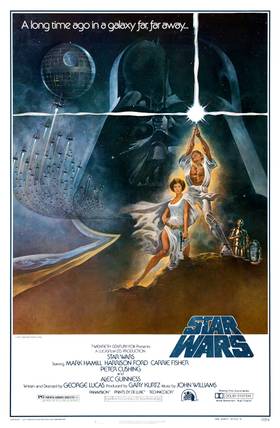
There is no other science fiction villain more iconic than Darth Vader. Blending a terrifying, god-like presence with a deeply tragic human core, the story of Darth Vader is one of the greatest in all cinema. With a menacing presence, towering and completely clad in black armor and a helmet that conceals slow, rhythmic mechanical breathing, Darth Vader exudes an aura of power and doom. But the legendary figure representing the dark side came to be because his past shaped him into the villain he ultimately became. The original antagonist in the first three Star Wars films, his story became richer as his origins were revealed in the prequel trilogy. Depending on how you take your Star Wars lore, Darth Vader is either an evil or a tragic villain.
Going in release order, Darth Vader’s (James Earl Jones) greatest hits include revealing that he was Luke Skywalker’s (Mark Hamill) father, only to save him in the end. Based on the prequels, his origin begins with a young Jedi named Anakin Skywalker (Hayden Christensen), whose circumstances lead him from good to evil, ultimately making him the black menace in the original trilogy. Darth Vader is always presented as a horrific threat. He emerges from the shadows, controls from beyond, and leaves the heroes in a constant state of fear. Simply fighting him is futile. As a monolithic villain, Darth Vader has the greatest villain arc that can never be replicated. Star Wars has become a franchise where good and bad go hand in hand, but the original Darth Vader remains the greatest villain we’ve ever been gifted.
- First TV Show
-
Star Wars The Clone Wars
- Created by
-
George Lucas
https://static0.colliderimages.com/wordpress/wp-content/uploads/2026/04/copy-of-collider-template-2026-04-08t162627-266.jpg?w=1600&h=900&fit=crop
https://collider.com/best-sci-fi-villains-all-time-ranked/
Michael Block
Almontather Rassoul




