
[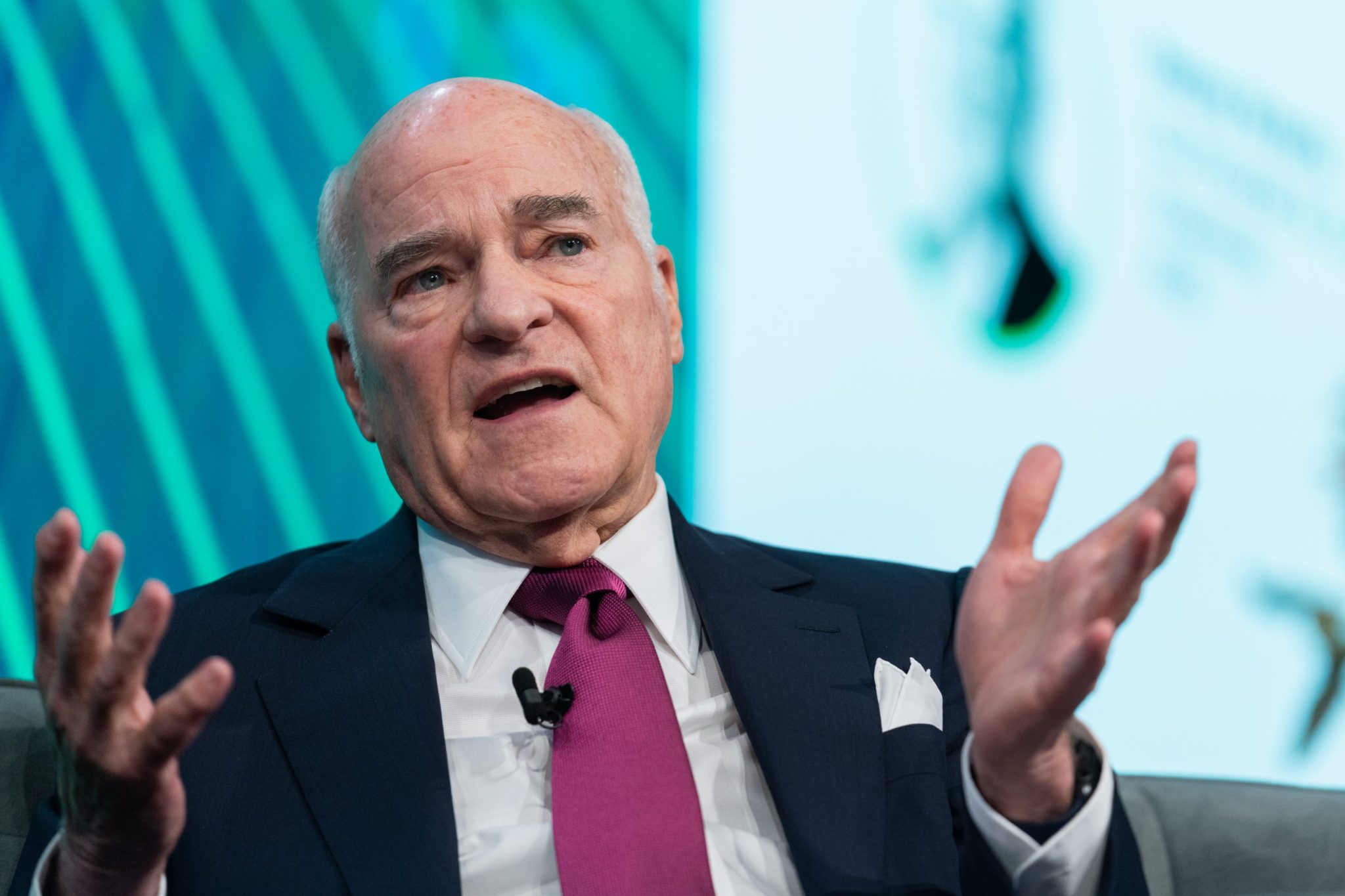
It doesn’t matter who you are or where you come from—first impressions can shape an entire career. Just ask Henry Kravis.
Long before he had $16.5 billion to his name by cofounding KKR, one of the largest private equity firms in the world, Kravis was a college graduate trying to find his footing on Wall Street. In the 1960s, while working a summer trainee job at the Madison Fund, his boss sent him to meet alone with Roy O. Disney, the brother of Walt, and then the CEO of Walt Disney Company. Kravis was intimidated—but he decided the only thing he could control was how prepared he was.
“I read everything I could read, believe me,” Kravis recalled to students at Columbia Business School—his MBA alma mater—earlier this month. “I read annual reports, research reports, you name it, footnotes, and filings.”
When he arrived for their 9 a.m. meeting, Kravis admitted he was so “scared to death” that he hoped Disney would only spare him 15 minutes. Instead, Disney blocked off an hour—and was impressed enough that, halfway through, he decided Kravis should spend the entire day with him: sitting in on meetings, then capping things off with a studio tour.
“Now, I thought I’d died and gone to heaven,” Kravis said. “He never once asked me was I a partner at the Madison Fund or was I a summer trainee… And he never asked me how old I was. Nothing. All he cared about was that I knew a lot about his company.”
To Kravis, the lesson was simple: show up prepared, and people stop caring about your resume or age. Disney told him most analysts who visited never even bothered to read his annual report—they just wanted him to hand them the answer. Kravis had come with real questions instead.
The lesson has stuck with him throughout his career, and can be used by Gen Z today: “Don’t be afraid to reach out to people older than you. Don’t be afraid to reach out and ask questions. There are no dumb questions. You’re going to learn a lot from just questioning people and asking.”
‘Arrogance kills’: KKR’s billionaire cofounder says curiosity matters more than confidence
That meeting with Disney became one of the defining moments of Kravis’s early career, but he said the lesson extends far beyond a single conversation.
Now 82, Kravis said the best investors—and the best leaders—never stop learning. In fact, there’s a sign behind his desk at KKR bearing one of the firm’s guiding principles: “Arrogance Kills.”
“I’ve just seen more people blow up because they were really arrogant. We all put our pants on the same way every morning, and we’re all human beings,” Kravis said. “If you stop learning and you think, ‘Oh, I’ve got all the answers’—that’s arrogant, and that’ll kill you, because I guarantee, I don’t care who you are, none of us have all the answers. Even ChatGPT doesn’t get it right half the time as we know.”
Curiosity, he added, is also a competitive advantage that no successful person can live without—especially for entrepreneurs. It’s something he learned as he and his partners built out KKR into a firm now with over $750 billion assets under management.
“I don’t know if you can teach somebody to be a great entrepreneur,” Kravis said. “Because if somebody’s afraid of taking risk and they’re afraid of making a mistake, you won’t be an entrepreneur. You’ve got to fail. You’ve got to be prepared to fail. Pick yourself up and do it again.”
Fortune reached out to KKR for further comment.
The secret to success is a learning mindset, agrees Marc Benioff and Jeff Bezos
Kravis isn’t alone in his thinking—having a learning mindset is something many CEOs agree sets apart those who succeed from those who don’t.
Salesforce CEO Marc Benioff has long advocated for maintaining what he calls a “beginner’s mind.”
“You can have an expert’s mind, where you have few possibilities, or you can have a beginner’s mind, where you always have every possibility,” he said in an interview with LinkedIn in 2020. “It’s critical for every entrepreneur, for every CEO, every business leader—really everyone—[to] maintain your beginner’s mind.”
Jeff Bezos has echoed that philosophy, saying Amazon’s success depends on employees staying willing to learn.
“That’s one of the things that culturally we do really well at Amazon. We’re willing to learn new skills, willing to do that big price of admission,” Bezos told Fortune in 2016. “There’s a lot of tuition to become an expert in something new but then while doing that, maintain a beginner’s mind so that we actually end up with a differentiated offering instead of a me-too offering.”
AMD CEO Lisa Su delivered a similar, simple message to students at Stanford Graduate School of Business last year.
“The most important thing for all of us is to have a deep curiosity for solving problems.”
https://fortune.com/img-assets/wp-content/uploads/2026/06/GettyImages-1258507350-e1782830449424.jpg?resize=1200,600
https://fortune.com/2026/06/30/wall-street-kkr-cofounder-henry-kravis-early-career-lesson-from-roy-disney-come-prepared-led-to-later-billionaire-success-gen-z-advice/
Preston Fore




