
[
Between the comic books and video games, the continuity of The Walking Dead is a little bit tough to follow. They like to have their cake and eat it, too, with characters and narrative threads shared back and forth, yet they weren’t beholden to sharing a continuity with one another in every instance.
Ideally, the comics and the games would be able to tell their own stories and occasionally overlap, but Lilly Caul threw a wrench into that plan early on. Anyone who’s unfamiliar with how The Walking Dead’s phenomenal Telltale video games intersect with The Walking Dead’s seminal Image comic books is probably unaware that two characters who share a first name were originally one and the same, and they might’ve never split if it wasn’t for an error on Robert Kirkman’s part.
The Walking Dead’s Lilly Had An Identity Crisis

The games’ Lilly and the comics’ Lilly were initially meant to be the same character, and Kirkman has now explained how there came to be two distinct characters named Lilly. The Walking Dead’s most recent Deluxe reprint, issue #140, features a behind-the-scenes tale about how Kirkman’s miscommunication led to a “vacant continuity pocket” while Telltale’s series attempted to weave itself through the fabric of the stories told in the comic (and subsequent novels):
“Now here’s a big deal for the CUTTING ROOM FLOOR. I don’t think I’ve ever mentioned this before. You may not be aware, but there was a Michonne game from TELLTALE that came out between Telltale’s Season Two and Season Three games. It detailed more of Michonne’s adventures at sea and was in continuity and (as I recall) seamlessly fit in with the comics.
At the time, there were a lot of pitches for Season Three flying around, and one of them involved having Clementine run into Negan. This would be before Negan appeared in the comic, timeline-wise. The idea was that in the game, at some point, Clementine would give Negan the scar that is introduced in this issue.
Now, I was not the best partner with Telltale. In Season One, I said, ‘There’s this character Lilly, who actually kills the Governor, and I don’t really have any plans to ever do anything with her. You could make her a character!’ And then I forgot saying that… and then co-wrote a whole novel series that eventually made Lilly the de facto main character! So that’s how we ended up with the two Lillys in TWD continuity. OOPS. 100% my fault.”
The novel series Kirkman references here is a trilogy including The Walking Dead: Rise of the Governor, The Walking Dead: Road to Woodbury, and The Walking Dead: The Fall of the Governor. Effectively, Lilly’s character diverged into two after Episode Three of Telltale’s The Walking Dead Season One because the character’s backstory, as depicted in The Walking Dead: Road to Woodbury, retconned her.
The Walking Dead Lore Is Rich In Every Franchise

It’s interesting to imagine how different Telltale’s Walking Dead story might’ve been thereafter if Lilly had returned in Season Four as the same Lilly from the comics that she was in Season One. Likewise, it’s terrifying to picture what a meeting between Clementine and Negan might’ve been like, though it seems like fans wouldn’t have needed to worry about Clementine getting her head demolished by Negan’s barbed-wire-wrapped baseball bat, Lucille, as she’d be the one to inflict him with a brutal wound, instead.
If nothing else, this story is a testament to how difficult it is to worldbuild in an IP that is as storied as The Walking Dead, especially considering how characters could’ve possibly run into one another, or that the games and the comics moved at their own pace. Meanwhile, AMC’s The Walking Dead TV show never had a strict continuity leash and was allowed to simply be inspired by the comics that it adapted.
The Walking Dead Deluxe #140 is out now.
- Latest TV Show
-
The Walking Dead: The Ones Who Live
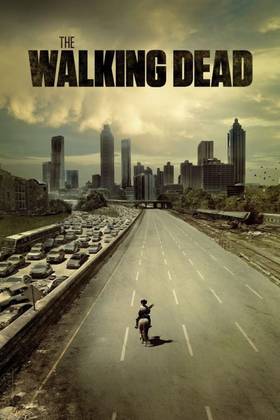
The Walking Dead is a massive multimedia franchise that began with a comic book series created by Robert Kirkman, Tony Moore, and Charlie Adlard. The franchise gained widespread popularity with the launch of the television series The Walking Dead in 2010 on AMC, which chronicles the lives of survivors in a post-apocalyptic world overrun by zombies, referred to as “walkers.” The success of the original show has led to numerous spin-offs, web series, video games, novels, and other media. The franchise explores themes of survival, human nature, and the breakdown of society in the face of an existential threat, making it one of the most successful and influential horror series of the 21st century.
https://static0.srcdn.com/wordpress/wp-content/uploads/2026/07/twd-walking-dead-rick-grimes.jpg?w=1600&h=900&fit=crop
https://screenrant.com/walking-dead-continuity-issue-lilly-telltale/
Jared Stewart
Almontather Rassoul




