Epic films are among the best examples of cinema’s power. These grand movies offer cinematic reinterpretations of the past and make the most of their available technology to create a truly one-of-a-kind experience. Though they usually focus on visual spectacle, many epics also have equally grand characters, stories, and themes.
Animated movies have had their fair share of epic movies as well. Since they aren’t limited or restricted by the physical world, these animated epics can go even further, creating larger-than-life worlds for audiences to get lost in. The best epic movies in animation are awe-inspiring, massive in scale, and thoughtful, using their settings to craft stories that are equally revealing and entertaining. Some use music, others humor, but the greatest animated epic finds the perfect balance between all these elements.
15
‘Spirit: Stallion of the Cimarron’ (2002)
Spirit and Rain in Spirit: Stallion of the CimarronImage via DreamWorks
Spirit (Matt Damon) is a wild mustang stallion born into 19th-century America as the USA is undergoing a westward expansion. He is captured by US cavalrymen and taken to a fort, where the local Colonel (James Cromwell) hopes to break Spirit and prove that anything can be tamed. However, Spirit proves to have a stronger will than the humans anticipated, and the capture of a Lakota warrior named Little Creek (Daniel Studi) gives him the chance to escape and try to find his way home.
Spirit: Stallion of the Cimarron is one of the best examples of the creative landscape of 2000s animated films, where the traditional musical of the ’90s was replaced with more adventurous and ambitious projects. The animators did a phenomenal job making this film feel epic, with plenty of sweeping shots of the American West that capture the majesty of nature. Where they really excelled is in animating the facial and body language of the characters, which allows most of the story to be told through non-verbal acting.
14
‘The Land Before Time’ (1988)
Littlefoot and Littlefoot’s mother in ‘The Land Before Time’Image via Universal Pictures
Littlefoot (Gabriel Damon) is the only child born to a herd of Brontosauruses making their way to the mythical Great Valley. Following a Tyrannosaurus attack and an earthquake, Littlefoot is separated from his family. He joins forces with other orphaned dinosaurs and uses his mother’s stories to guide them to the valley.
The animators in The Land Before Time did a phenomenal job bringing to life this prehistoric world, from the design and movements of the dinosaurs to the ever-changing landscape. Its story is also quite mature for a children’s film, touching on themes of faith, prejudice, and loss. The Land Before Time is among the best dinosaur movies, a poignant exploration of life that succeeds despite its many detours into schmaltzy sentimentalism.
13
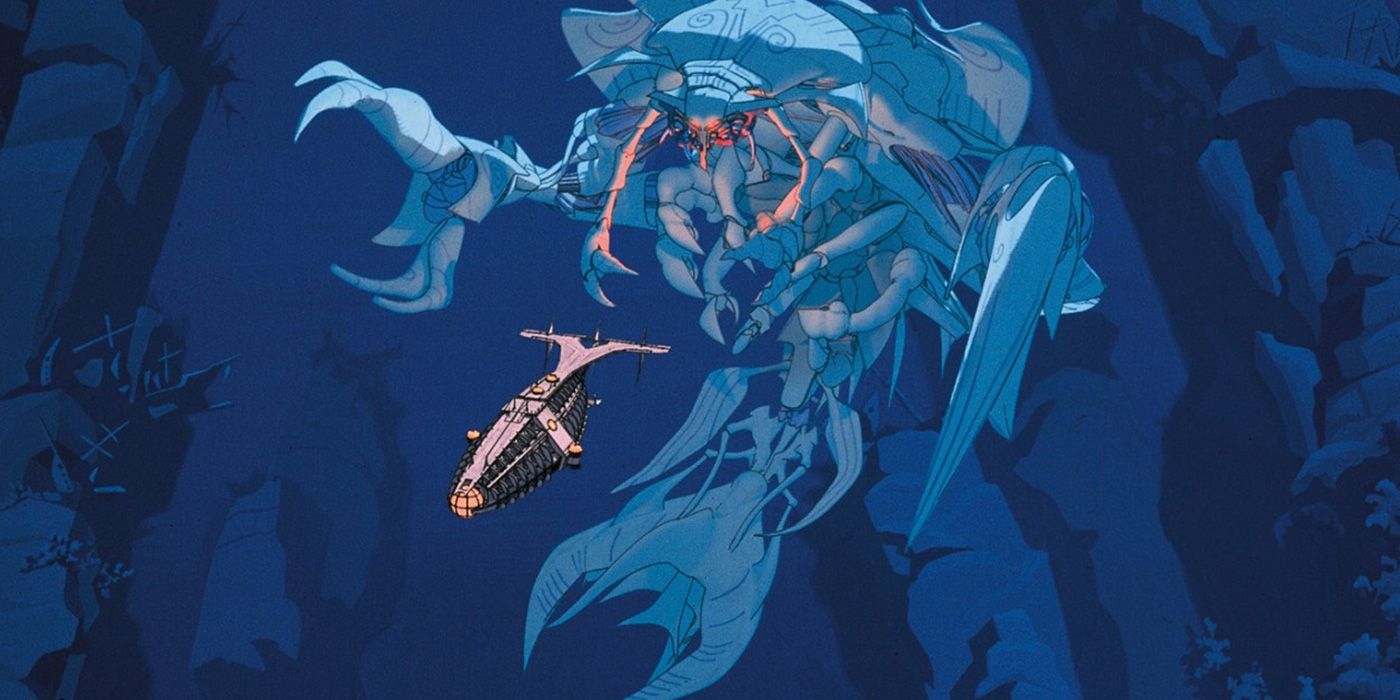
‘Atlantis: The Lost Empire’ (2001)
Milo Thatch (Michael J. Fox) is a linguist obsessed with discovering the lost city of Atlantis. One night, he is approached by a friend of his grandfather, who has found a journal that leads to the city and agrees to finance an expedition. Milo joins as their linguist and mythology expert, but even his knowledge can’t prepare the team for what they’ll encounter.
Atlantis: The Lost Empire underperformed on release but has gained cult status due to its grand scale and the care put into its world and characters. The idea of the Atlantean civilization is interesting, as the surviving people have forgotten much of their ancient culture despite being surrounded by its ruins. Its art style was inspired by comic artist Mike Mignola, which gives it a more mature and alien look compared to other Disney films. One of Disney’s most underrated movies, Atlantis is a great animated adventure, even if it doesn’t do half as much with its premise as it should’ve.
12
‘Mulan’ (1998)
Mulan wielding a sword atop a building in the film Mulan.Image via Disney
When a Hun army invades China, the Emperor (Pat Morita) orders one man from every household to be conscripted into the army. Knowing that her father won’t survive the war, Fa Mulan (Ming-Na Wen) takes his place and disguises herself as a man. Aided by a family guardian named Mushu (Eddie Murphy), she does her best to inspire both herself and her fellow soldiers to save their homeland.
Mulan tells a grand story straight out of Chinese legend about courage, triumph against impossible odds, and self-identity. Through stellar landscapes and Jerry Goldsmith‘s score, audiences are transported to ancient China and experience the same levels of hope and despair as the heroes. Mulan herself is one of Disney’s best characters, taking her destiny into her own hands. Mulan does much with its premise while remaining firmly in family-friendly territory, even if it falls short of truly exploring the grandeur of Imperial China.
11
‘Sleeping Beauty’ (1959)
Philip charges towards Maleficent, who has turned into a dragon and is breathing fire in Sleeping Beauty.Image via Walt Disney Pictures
Enraged that she wasn’t invited to the christening of Princess Aurora (Mary Costa), the evil fairy Maleficent (Eleanor Audley) curses the child to die on her sixteenth birthday. The good fairy, Merryweather (Barbara Luddy), changes her fate to a deathless sleep, then tries to raise the princess with her companions, Flora (Verna Felton) and Fauna (Barbara Jo Allen). Unfortunately, Maleficent is determined to see her curse through.
Sleeping Beauty was Disney’s most expensive film at the time, and it shows through the art style. The film looks like a medieval tapestry brought to life, resulting in colors that pop off the screen and truly atmospheric locations. Its climax is one of Disney’s best, and its depiction of the high Middle Ages is romantic and enveloping. Sleeping Beauty remains a sweeping and unique entry in Disney’s canon, even if its focus on fantasy prevents it from fully exploring its historical setting.
10
‘The Sea Beast’ (2022)
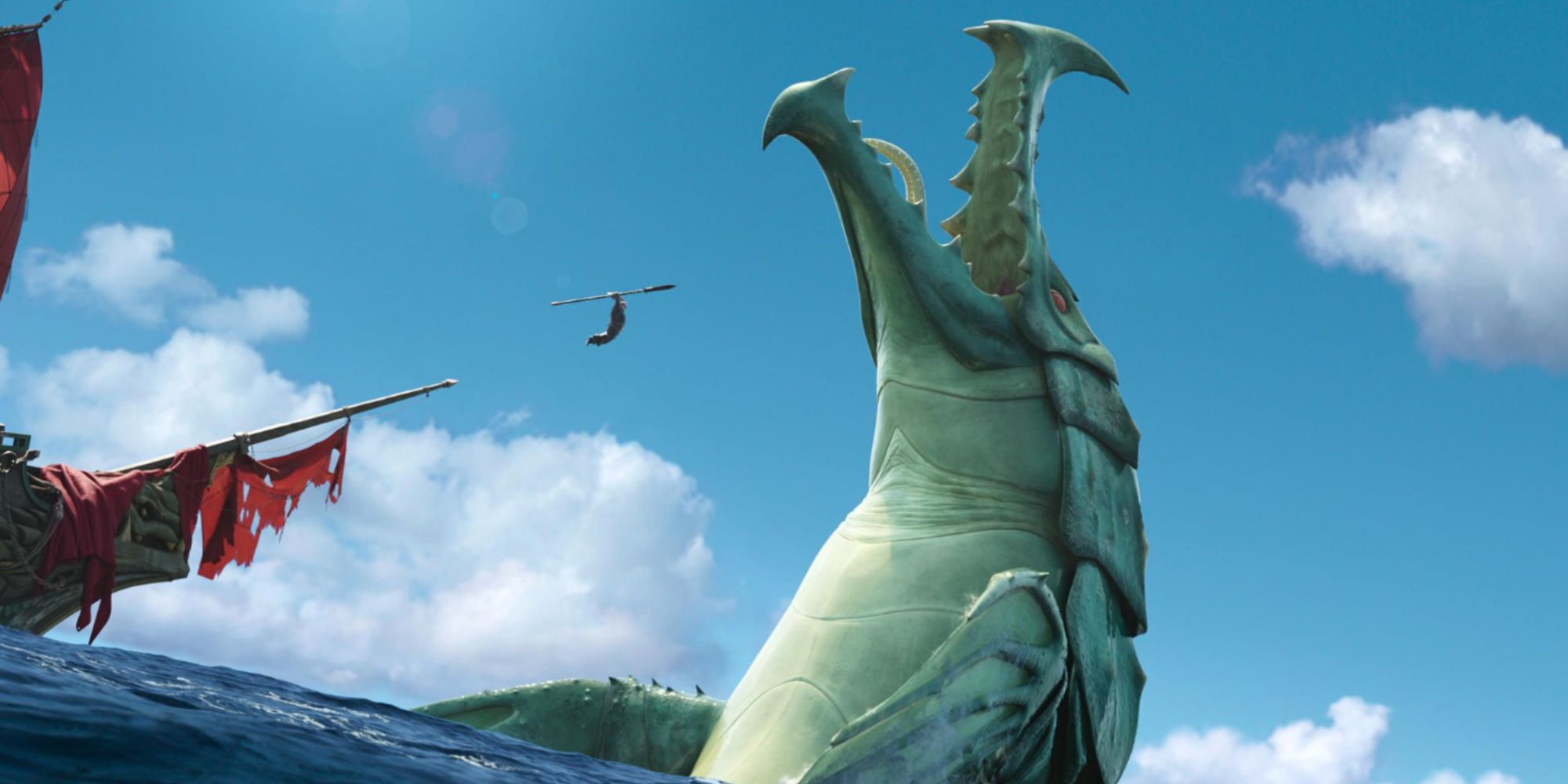
When the royal family of Three Bridges threatens to replace their sea monster Hunters with naval officers, the crew of the Intrepid is given one chance to prove their worth by killing the elusive Red Bluster. They nearly succeed, but the captain’s adopted son, Jacob (Karl Urban), and a stowaway named Maisie (Zaris-Angel Hator) fall overboard. The Bluster takes them to a secluded island, where they learn more about the sea beasts than they anticipated.
The Sea Beast has some of the best cinematography of any recent animated film. It does a wonderful job of showing off the size of the ocean and the beasts that inhabit it, especially when the humans find themselves submerged. The Sea Beast‘s story is also equally grand as it explores themes of man vs. nature and how heroes can also be wrong.
9
‘How to Train Your Dragon 2’ (2014)
Hiccup and Toothless embracing one another in How to Train Your DragonImage via Paramount Pictures
Five years after bringing peace between Vikings and dragons, Hiccup (Jay Baruchel) and his dragon, Toothless (Randy Thom), encounter dragon trappers employed by a warlord named Drago Bludvist (Djimon Hounsou). Despite his father’s warnings, Hiccup thinks he can avoid war by speaking to Drago. This leads to him finding his lost mother, Valka (Cate Blanchett), and a hidden kingdom of dragons.
How to Train Your Dragon 2 improved on the already impressive cinematography and storytelling of the original How to Train Your Dragon. The new additions include new factions and gargantuan alpha dragons, which make the world feel grander and full of mysteries. How to Train Your Dragon 2 embraces the main tropes associated with the Viking Age, effortlessly blending them with a healthy dose of fantasy.
COLLIDERInteractive
Ballot sealed
Movies/Academy Awards/Best Picture
And the Oscar goes to
★
Collider · Best Picture Which Oscar Best Picture Is Your Perfect Movie? Five winners · ten questions · one envelope
Five Oscar Best Picture winners. Five completely different visions of what cinema can be and what it can do to you. One of them is the film made for the way your mind works, and ten questions will work out which. The nominees
2020Parasite
2023Everything Everywhere All at Once
2024Oppenheimer
2015Birdman
2008No Country for Old Men
Question 01 of 10TONE
01 What kind of film experience are you really after? The best movies do not just entertain. They leave something behind.
Keys 1 to 5 or A to E · Enter to advance
Question 02 of 10THEME
02 Which idea grabs you most in a film? Great films are driven by a central obsession. What is yours?
Keys 1 to 5 or A to E · Enter to advance
Question 03 of 10STRUCTURE
03 How do you like your story told? Form is content. The way a story is shaped changes what it means.
Keys 1 to 5 or A to E · Enter to advance
Question 04 of 10VILLAIN
04 What makes a truly great antagonist? The opposition defines the protagonist. What kind of opposition fascinates you?
Keys 1 to 5 or A to E · Enter to advance
Question 05 of 10ENDING
05 What do you want from a film’s ending? The final note is the one that lingers. What do you want it to sound like?
Keys 1 to 5 or A to E · Enter to advance
Question 06 of 10WORLD
06 Which setting pulls you in most? Where a film takes place shapes everything: mood, stakes, what is even possible.
Keys 1 to 5 or A to E · Enter to advance
Question 07 of 10CRAFT
07 What cinematic craft impresses you most? Every great film has a signature, the element that makes it unmistakable.
Keys 1 to 5 or A to E · Enter to advance
Question 08 of 10PROTAGONIST
08 What kind of main character do you root for? The protagonist is the lens. Who you follow says something about you.
Keys 1 to 5 or A to E · Enter to advance
Question 09 of 10PACE
09 How do you feel about a film that takes its time? Pace is a choice. Some films sprint. Others let tension accumulate slowly, deliberately.
Keys 1 to 5 or A to E · Enter to advance
Question 10 of 10AFTERMATH
10 What do you want to feel walking out of the cinema? The best films leave a mark. What kind of mark do you want?
Keys 1 to 5 or A to E · Enter to advance
The envelope, pleaseAnd the Oscar goes to
★ Best Picture, 2020 Parasite Bong Joon-ho, 2019 A film that hides its true intentions until the moment it is ready to reveal them.
You are drawn to films that operate on several levels at once, that begin in one genre and quietly, brilliantly migrate into another. Bong Joon-ho’s Parasite is a film about class, desire and the architecture of inequality that manages to be darkly funny, deeply suspenseful and genuinely shocking across a single extraordinary running time. Your instinct is for cinema that rewards close attention and punishes assumptions, right up to its devastating final image. From the Collider file
The first film not in the English language to win Best Picture, in the Academy’s
92-year history to that point.
It took four Oscars in one night: Picture, Director, Original Screenplay and International
Feature.
It won the Palme d’Or at Cannes in 2019 by a unanimous jury vote, the first Korean film
to do so.
The Park family’s modernist house was not a location. It was built from scratch on an
outdoor lot.
Reads between the lines Loves a reveal Attention to detail
★ Best Picture, 2023 Everything Everywhere All at Once Daniel Kwan and Daniel Scheinert, 2022 A film that refuses to choose between being entertaining and being meaningful.
You want it all, and this one gives you all of it. The Daniels’ Everything Everywhere All at Once is among the most maximalist films ever made: action comedy, multiverse science fiction, family drama, existential crisis, and an emotional core that sneaks up on you in the middle of the chaos. You respond to ambition. Being overwhelmed is the design, not the side effect, because the feeling of being crushed by infinite possibility is exactly what the film is about. From the Collider file
Seven Oscars, including three acting wins for Michelle Yeoh, Ke Huy Quan and Jamie Lee
Curtis.
Michelle Yeoh became the first Asian woman to win Best Actress.
The visual effects were handled by a team of fewer than ten people, most of them
self-taught.
Ke Huy Quan had all but left acting for two decades before this role brought him back.
Wants everything Big swings Soft center
★ Best Picture, 2024 Oppenheimer Christopher Nolan, 2023 A film about the gap between what we can do and what we should do.
You are drawn to cinema on a grand scale, films that treat history not as a backdrop but as a force, then place their characters inside that force and watch what happens. Christopher Nolan’s Oppenheimer sits inside one of the most consequential moments in human history and refuses to look away from it. You want your films to feel important without being self-important, earning their ambition through craft and the gravity of the subject. This one is enormous, complicated, and offers no easy comfort. From the Collider file
Seven Oscars, including Nolan’s first wins for directing and for Best Picture.
Cillian Murphy and Robert Downey Jr. both took their first Academy Awards for it.
Kodak engineered a black-and-white 65mm stock that did not previously exist so Nolan could
shoot those sequences on IMAX.
A three-hour, R-rated drama about theoretical physics that passed 950 million dollars
worldwide.
Thinks in decades Scale and weight No easy comfort
★ Best Picture, 2015 Birdman Alejandro G. Iñárritu, 2014 A film doing something that probably should not be possible.
You are drawn to films that foreground their own construction, where the how of the filmmaking becomes part of the what it is about. Alejandro G. Iñárritu’s Birdman, stitched to appear as one continuous take, is cinema examining itself through the cracked mirror of a fading actor’s ego. You respond to formal daring. Michael Keaton’s performance and Emmanuel Lubezki’s restless camera make something unlike anything else: a film about creativity, relevance, self-destruction and never quite knowing whether your work means anything at all. From the Collider file
Four Oscars, among them Best Picture and Best Director for Iñárritu.
Emmanuel Lubezki’s win here was the middle of three consecutive cinematography Oscars,
after Gravity and before The Revenant.
Antonio Sánchez’s improvised drum score was ruled ineligible for the score category,
which caused a minor uproar.
The long-take illusion was built from a handful of extended shots joined by hidden cuts.
Formally daring Camera as character Ego and art
★ Best Picture, 2008 No Country for Old Men Joel and Ethan Coen, 2007 A film that treats dread as a form of meaning.
You are drawn to cinema that trusts silence, refuses to explain itself, and lets unease do the talking. The Coen Brothers’ No Country for Old Men is about the arrival of a new kind of evil: implacable, arbitrary, and indifferent to the moral frameworks we use to make sense of things. It is one of the most tightly controlled films ever made, and that control is the source of the terror. You want your films to haunt you rather than comfort you, and you have no interest in a resolution that would be a lie. From the Collider file
Four Oscars: Picture, Director, Adapted Screenplay, and Supporting Actor for Javier Bardem.
Adapted from Cormac McCarthy’s 2005 novel, with much of his dialogue carried over
intact.
Carter Burwell’s score runs about sixteen minutes and is nearly inaudible by design.
Roger Deakins was nominated twice that year, for this and The Assassination of Jesse James,
and won for neither.
Trusts silence Dread over answers No tidy endings
Ballot tally · your top three
1
2
3
Ballot counted byCOLLIDERCollider.com · The Awards Desk
8
‘The Hunchback of Notre Dame’ (1996)
Quasimodo (Tom Hulce) is a hunchback who works as the bell ringer of Notre Dame Cathedral. Against the wishes of his master, Judge Frollo (Tony Jay), he attends the Festival of Fools and is publicly humiliated. When the Romani woman Esmerelda (Demi Moore) shows him kindness, she earns the wrath of Frollo, who demands her capture.
Based on the literary classic by Victor Hugo, The Hunchback of Notre Dame has perhaps the grandest sense of scale out of all entries in the Disney Renaissance. The animators make Notre Dame feel monumental thanks to creative angles, rich detail, and impressive camera work when Quasimodo is scaling its walls. 15th-century Paris is fully realized, with sequences like the Festival of Fools feeling absorbing, chaotic, and lively. The Hunchback of Notre Dame is an epic reinvention of a beloved tale, and while it’s not faithful to Hugo’s words, it is a phenomenal animated effort from the Mouse House.
Wall-E (Ben Burtt) is the last of a legion of robots tasked with cleaning up a polluted Earth after humanity fled 700 years ago. One day, an advanced probe named EVE (Elissa Knight) comes to Earth, and Wall-E instantly falls in love with her. When he tries to impress her with a young plant he discovered, it causes EVE’s return protocol to activate, bringing her and Wall-E to the human ship Axiom, where they can help lead the now obsessed and technologically dependent humans back home.
Wall-Eis perhaps the greatest example of Pixar’s phenomenal animation, as they are able to convey so much emotion on robotic characters who don’t have proper faces. They also did a great job of making the world feel epic, from the ominous images of gigantic towers of trash rising atop a silent Earth, to the vast majesty of the cosmos whenever the characters look out or even travel through the vastness of space. Its message is also very poignant and topical, with major themes regarding environmentalism, the dangers of overreliance on technology, and the importance of living rather than just surviving.
6
‘Fantasia’ (1940)
Image via Walt Disney Studios Motion Pictures
In order to push the bounds of animation, Walt Disney paired up with conductor Leopold Stokowski and the Philadelphia Orchestra. He tasked his animators with creating seven shorts that would synchronize with classical music pieces. The result is one of the most surreal and grand spectacles in all animation.
Each segment of Fantasia is epic and grand in its own way. Some tell stories through the use of abstract shapes and colors, while others tell more traditional narratives with recognizable heroes and villains. The most recognizable of all is “The Sorcerer’s Apprentice,” thanks to the inclusion of Mickey Mouse (Walt Disney), and “A Night on Bald Mountain” for its juxtaposition between demonic hellfire and the calming light of dawn.