
[
Elon Musk’s nearly half-a-billion-dollar bet on Republican midterm victories is a day late and many dollars short, but whether the world’s richest person’s political investments were all for nought remains to be seen. The tech billionaire donated at least $474 million to Republican candidates ahead of the 2026 midterm elections, Fortune’s Sasha Rogelberg reports.
Yet Musk had little to show for it: The Republicans were trounced in Congress.
But the jury is still out on whether he has lost influence among Republicans, or if he’s laying the groundwork for the 2028 election. In fact, Musk could very much influence the future of the party.
“He basically gets to steer a political party,” Virginia Commonwealth University political science professor Alex Keena said. “This is one of the biggest influences of money. It’s not just about who wins. It’s about setting the agenda and what types of issues we talk about.”
MORE FROM FORTUNE
Meet the AI company retiring your CPA so he can still see you face to face this tax season – Catherina Gioino
How the Democratic Party flipped the House and Senate, in 12 charts – Joshua Hong
Prime Infra’s CEO says the Paris 1.5-degree goal is ‘feasible’ for Southeast Asia—if governments are willing to pay for it – Jay Ganglani
Companies need to fortify supply chains for “a flock of black swan” events, says Toll Group executive chairman Thomas Knudsen – Jay Ganglani
Appeals court tosses lawsuit over Mamdani’s pied-à-terre tax rollout, ruling homeowners can’t sue over notices – Catherina Gioino
Democrat wins will slow data center construction and force tech to the negotiating table after even Republican stronghold of Texas flips – Marco Quiroz-Gutierrez
‘Seismic’ blue wave triggers the sinking of oil prices, energy stocks, and the chances of power permitting reform – Jordan Blum
How Maggie Sellers Reum Turned Investment Advice Into Big Business | Fortune Daily
AI
AI is a double-edged sword for U.S. GDP and “a boon to the likes of Korea and Taiwan,” ING says
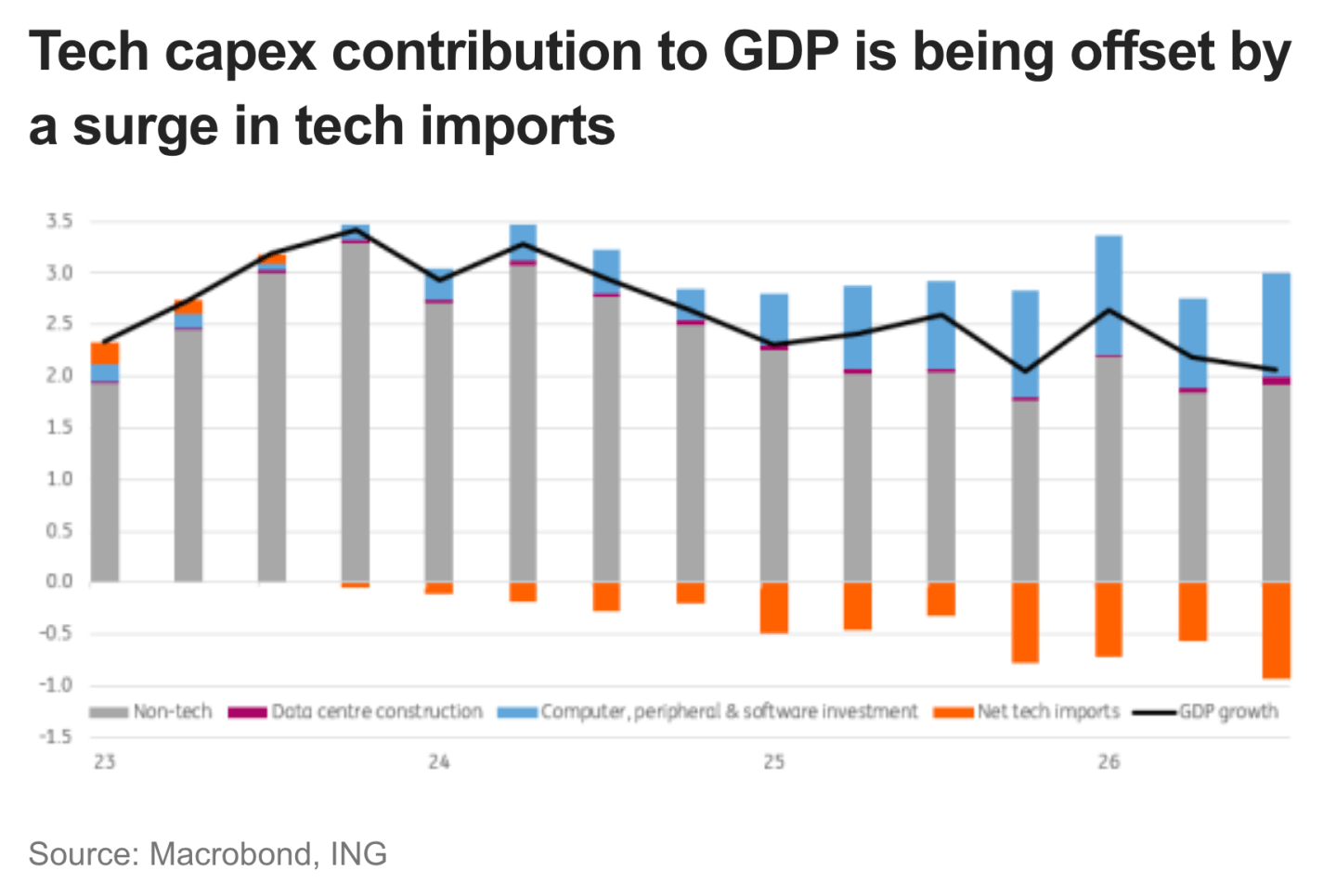
One of the quirks of calculating GDP is the fact that imports are negative for growth, simply because the money is being sent abroad (in exchange for goods) and thus contributes to someone else’s GDP. So much money is being spent on tech equipment in the AI boom that it’s actually hurting U.S. GDP, according to ING’s James Knightley.
“With the US running a trade deficit of $64 billion in September in tech products alone, out of an overall trade deficit of $105 billion, we need to remember that this aspect actually subtracts from growth. Instead, it is a boon to the likes of Korea and Taiwan,” which supply the products, Knightley writes.
“Tech products that are destined for data centres around the country have not merely gone exponential, but almost vertical.”
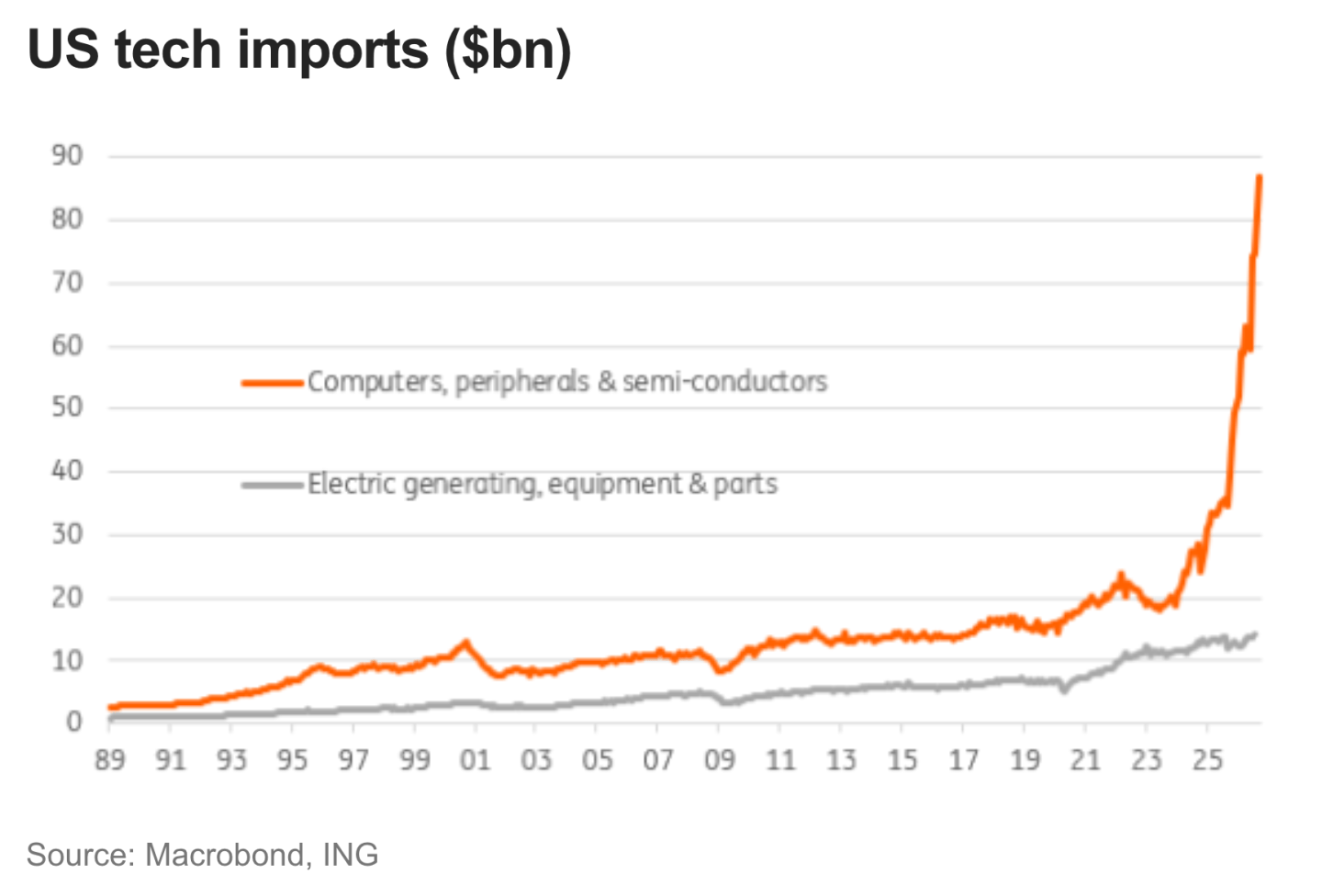
“This is a net negative for U.S. growth as money is flowing out of the country to the likes of Korea and Taiwan, from which U.S. imports are up 35% and 60% respectively,” he noted. “Only three years ago, the U.S. was a net exporter of tech products!”
THE MARKETS
Blue wave lifts stocks in U.S. and Europe but swamps Asian markets
U.S. S&P 500 futures were marginally up this morning after the index rose strongly yesterday on the midterm election results. Europe followed suit in early trading.
But the “blue tsunami” had the opposite effect in Asia today as markets in Korea and Japan closed sharply down. Traders led a selloff in chipmakers like SK Hynix and Samsung on the assumption that Democratic restrictions on new AI data centers in the U.S. might reduce demand for computing power.
Fact of the day: Total trading on Kalshi’s prediction market for the midterms exceeded $2.5 billion, up from $1.3 billion in 2024, according to Ben Freeman, Kalshi’s head of politics.
- The S&P 500 closed up 1.58% yesterday. Futures are up 0.09% this morning.
- In Europe, the Stoxx 600 was up 0.36% in early trading, and the U.K.’s FTSE 100 rose 0.67% before lunch.
- Asia: South Korea’s KOSPI was down 5.28%. Japan’s Nikkei 225 was down 1.79%. India’s Nifty 50 was up 2.4%. China’s CSI 300 was up 0.29%.
- Brent crude declined to $96 per barrel.
- Bitcoin rose to $80,284.
At Anthropic, questions about the company’s business model
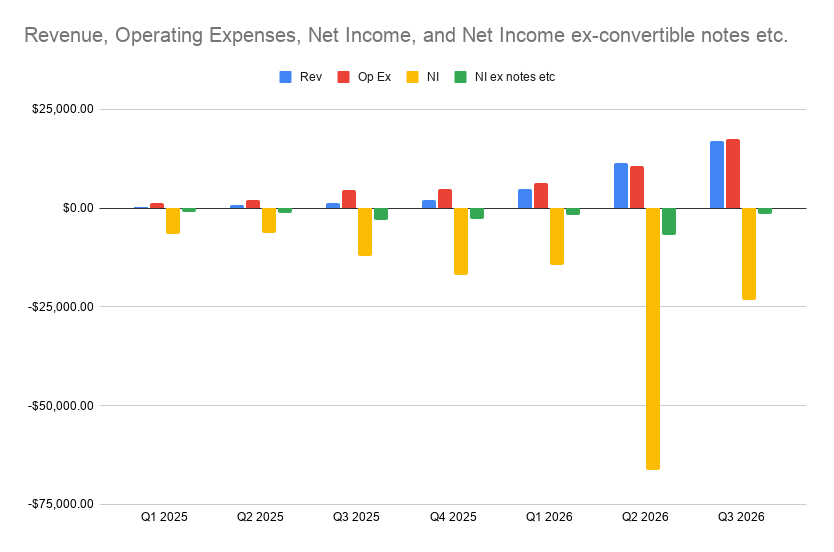
This chart explains a lot about the recent selloff in tech stocks, particularly those linked to AI. It shows Anthropic’s revenues plotted against its operating expenses through Q3 2026. The good news is that its net losses (green) are getting smaller, once you discount the noncash charge for the changing value of convertible loan notes the company has issued. But the bad news is that Anthropic is clearly having difficulty keeping its opex (red) lower than its revenues (blue). It’s early days for the company, of course. But until those green bars rise above zero, its pre-IPO narrative remains tainted by the fact that the company does not yet have a profitable business model.
NUMBER OF THE DAY
0.4%
The percentage of the total addressable market currently claimed by OpenAI and Anthropic, per an estimate from Brett Winton at ARK Invest.
If the companies can increase the productivity of their corporate clients over the next 10 years, they could generate $40 trillion in revenue, Winton estimates.
CHART OF THE DAY
The average American is richer than they have ever been before
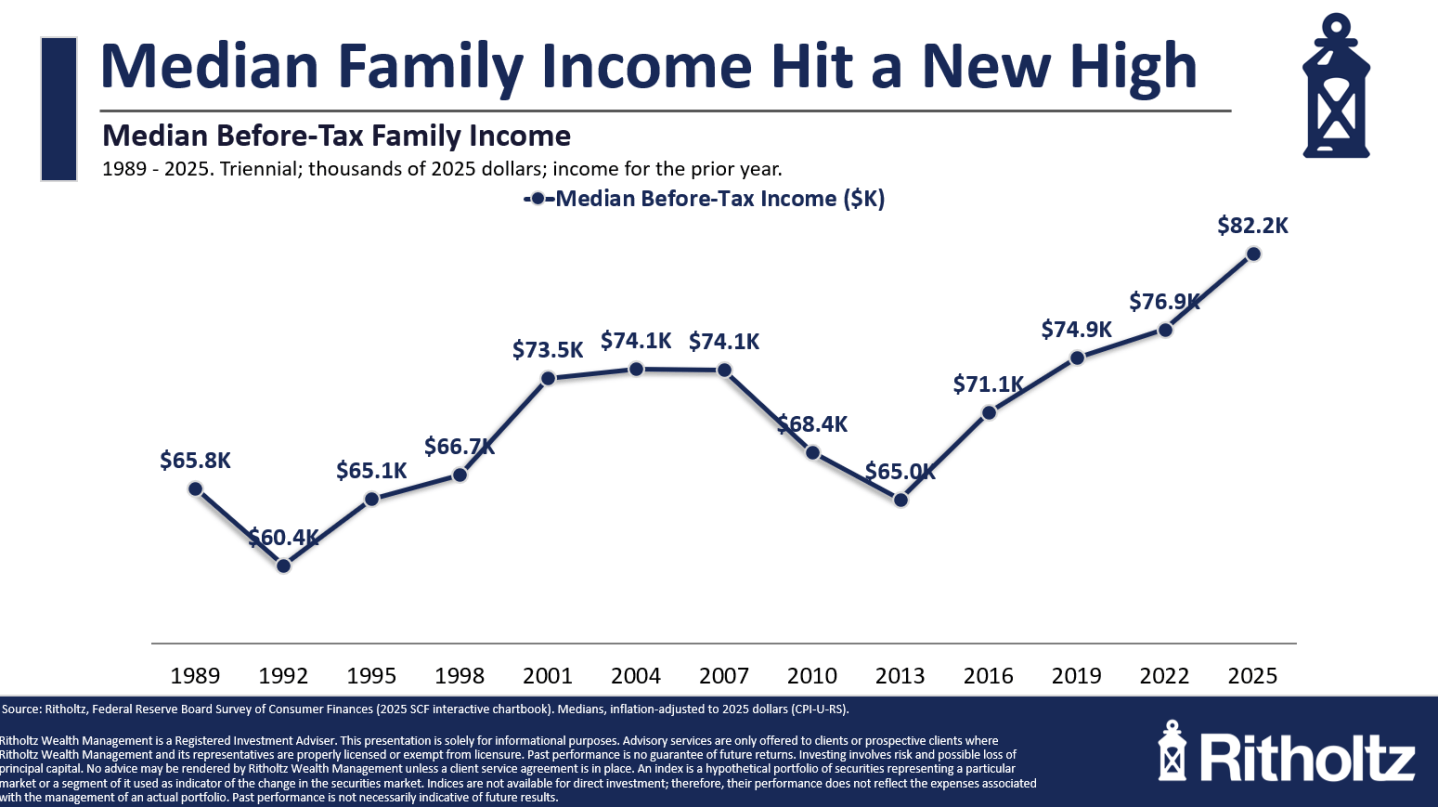
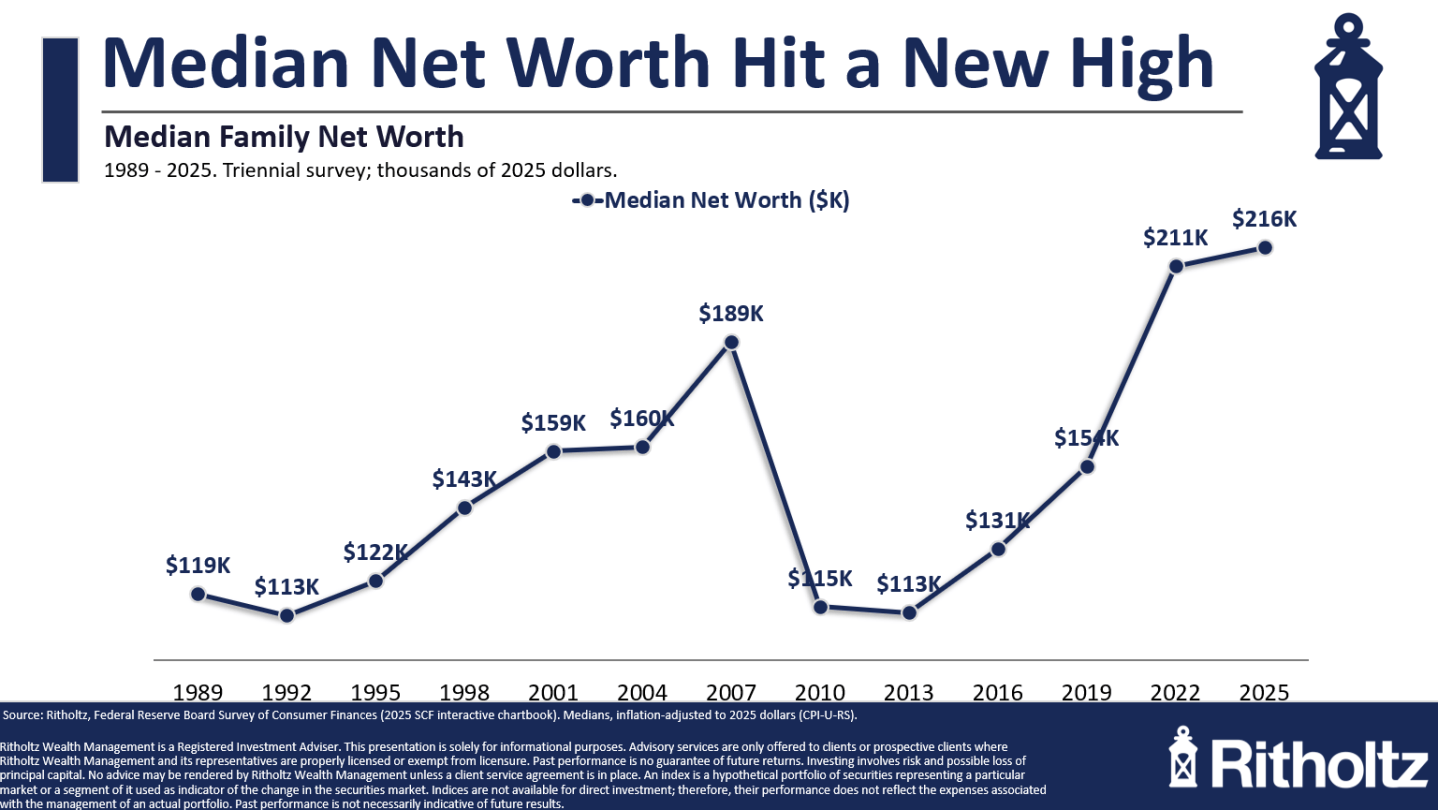
You wouldn’t know it from all the complaining they do, but the average American is doing pretty well, according to these charts from Ben Carlson at Ritholtz Wealth Management. The data is based on the U.S. Federal Reserve’s triennial Survey of Consumer Finances.
“It’s hard to believe real incomes were unchanged from 1989 to 2013,” Carlson writes. But “after adjusting for inflation, incomes are up almost 30% from the 2013 lows.”
The median net worth chart is even more dramatic, given that the Great Financial Crisis culled almost 60% from stocks and 30% off housing prices.
THE FRONT PAGES TODAY
Microsoft rejects multibillion-dollar AI deal with UK’s Nscale – FT
What Wall Street billionaires are saying about Democrats’ midterm sweep – CNBC
After midterm defeat, Trump faces mostly bad options in Iran – Axios
Vance’s Break With Trump on Iran Follows Weeks of Handwringing Over War – WSJ
Democrats’ Warning to ‘Lawyer Up’ Ripples Through Washington – Bloomberg
Shares of Truth Social’s Parent Company Hit New Low – NYT
ONE MORE THING
Elon Musk’s net worth declined by $30 billion after the midterms
SpaceX CEO Elon Musk made nearly half a billion dollars in campaign donations to the Republican Party in this election cycle, according to The Financial Times, and none of his bets paid off. In addition, SpaceX and Tesla stock declined by 7.6% and 5.7%, respectively, or about negative $30 billion, during overnight trading after election day. Of course, those are paper losses. Stocks can go up as well as down. But mostly they are going down: SpaceX lost another 3.8% yesterday and Tesla was down by 3.34%.
- ➡️ Would you like to sponsor this newsletter? Contact advertising@fortune.com for details.
- ➡️ If you would like to receive this information in your inbox every morning before the markets open in New York, sign up here.
https://fortune.com/img-assets/wp-content/uploads/2026/10/AP26281662471891-e1791901872848.jpg?resize=1200,600
https://fortune.com/2026/11/05/elon-musk-post-trump-republican-party-net-worth/
Jim Edwards




