
[
Florida-based Villa Vie Residences says fuel did it in. The company said its monthly fuel cost per cabin climbed from $1,800 to between $6,000 and $8,000 after the Iran war sent oil prices soaring, and that passing the full increase on to residents was not realistic. It sold years of life at sea at a set price, and its highest variable cost more than tripled.
A Cambodian official put the count at 203 passengers and 156 crew, and most residents were American. The ship is reportedly bound for Singapore, where it could eventually be auctioned.
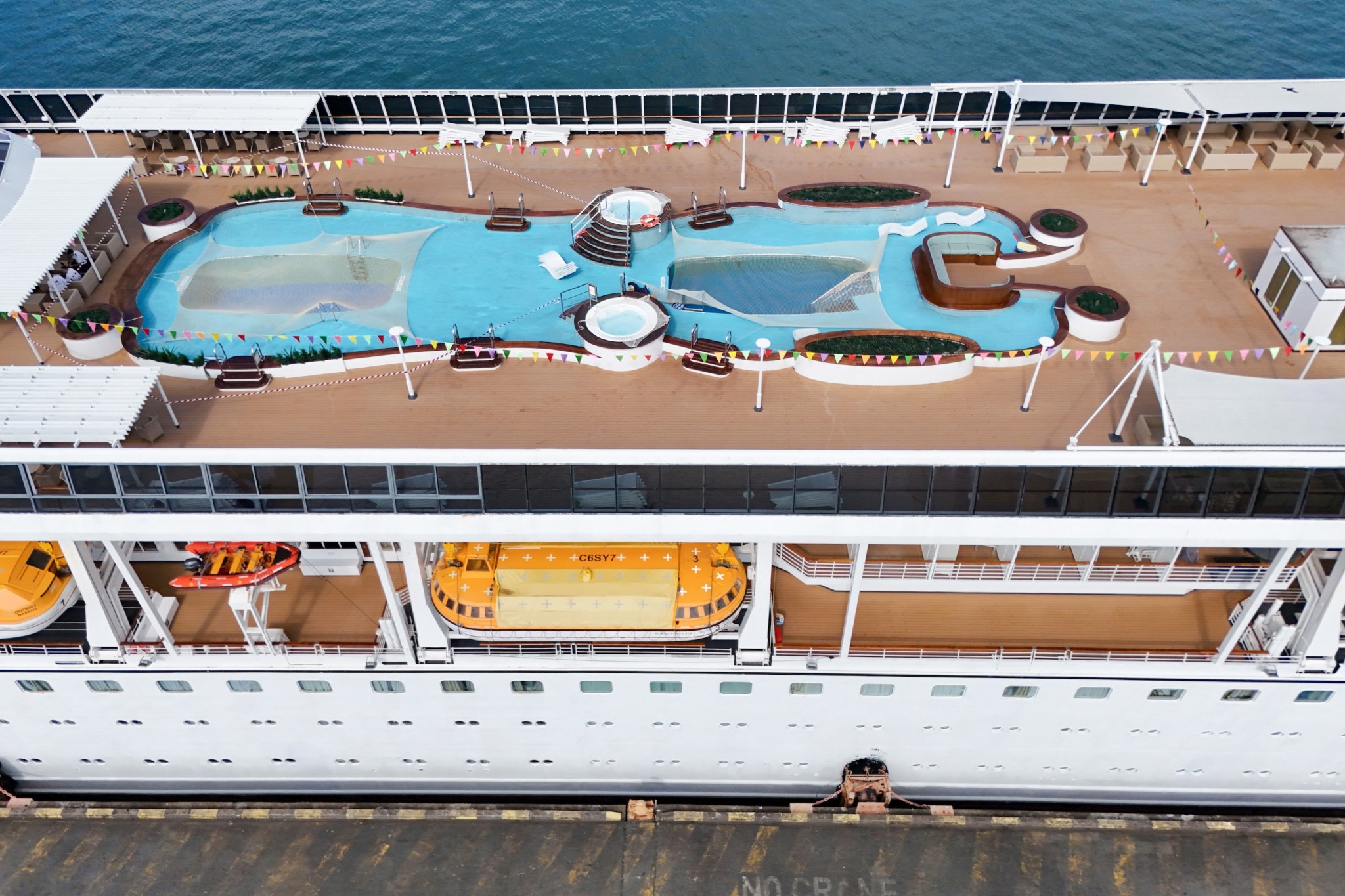
Before it landed on the chopping block, the 642-foot Odyssey was home to people who planned to stay for years. Mechanical problems kept it in Belfast, Northern Ireland, until October 2024, when it finally set off on a voyage meant to circle the globe every three and a half years, reaching 147 countries on the first loop. A four-year stay cost $319,998 for two people sharing a cabin.
For others, it was a lifetime commitment. Some sold their houses, and the company’s Endless Horizons program charged a one-time $299,999 for a single cabin or $499,999 for a double. When Fortune covered the launch in 2023, Villa Vie was selling cabins from $99,000, plus annual fees of $21,000 to $48,000.
As recently as July, the company announced a second ship, Legacy, saying Odyssey had sold 85% of its residences. Then on Oct. 27, residents were told they had roughly eight hours to leave. The ship was 754 days into its planned voyage.
“Since the conflict began in late February, we have taken significant steps to reduce fuel consumption, including slowing the itinerary and spending more time in port,” the company said in a statement the week it halted operations. It wasn’t enough.
Residents who sold their business to live at sea
Lanette Canen and Johan Bodin, both 56, were longtime Maui residents swept up in the idea of seeing the world from a residential cruise ship. What surprised them most was how much cheaper life at sea could be: no car or mortgage payments, meals included, laundry handled. It was the deal of a lifetime.
So they sold their business, moved aboard, and began documenting the trip on their YouTube channel, Living Life on a Cruise, which now has more than 55,000 subscribers.
In their final vlog from the ship, the couple said they started hearing about the company’s financial trouble two months before they were told to leave. The waiting made the dream “emotionally exhausting.”
“I felt really drained the last two months … you get beat down, and then the next day or two, like: oh boy, we have hope, we have investors, we have this coming, and then the next two days, you get beat down again,” Bodin said.
The couple says they are not in dire financial straits and plan to keep traveling through Southeast Asia. But they know residents who put their life savings and retirement funds into the ship and now don’t know what comes next.
A founder who blames the war
Founder and executive chairman Mikael Petterson has taken responsibility, calling himself “the villain in the story” in an interview with Business Insider. He still maintains the Iran war is what sank the business.
“I think we would have been absolutely fine and we would have seen this through, if there was no Iran war,” Petterson said.
The Iran war’s bill comes due for households
Before U.S. and Israeli strikes on Iran began on Feb. 28, Brent crude traded around $70 a barrel. It has since repeatedly broken $100, topping $126 this spring. Crude has slipped back below $100, but regular gasoline still averaged $4.10 a gallon on Nov. 4, according to AAA.
U.S. consumers paid $160 billion more for gasoline and diesel from March 1 through Oct. 14 than they would have without the war, according to the Centre for Research on Energy and Clean Air. That is the largest bill of any country, Fortune reported.
Mark Zandi, chief economist at Moody’s Analytics, estimated in mid-October that the war has cost the average American household nearly $2,000. About $1,100 of that comes from higher energy prices. The rest comes from higher interest rates and the cost of military operations.
For Villa Vie, the next deadline is its own. The company has given itself about 60 days to restructure and raise new money, says no outcome is assured, and Petterson has told NBC News that a Chapter 11 filing may be necessary.
https://fortune.com/img-assets/wp-content/uploads/2026/11/GettyImages-2301978277.jpg?resize=1200,600
https://fortune.com/2026/11/05/villa-vie-odyssey-cruise-cambodia-lender-iran-war-fuel/
Muskaan Arshad




