
[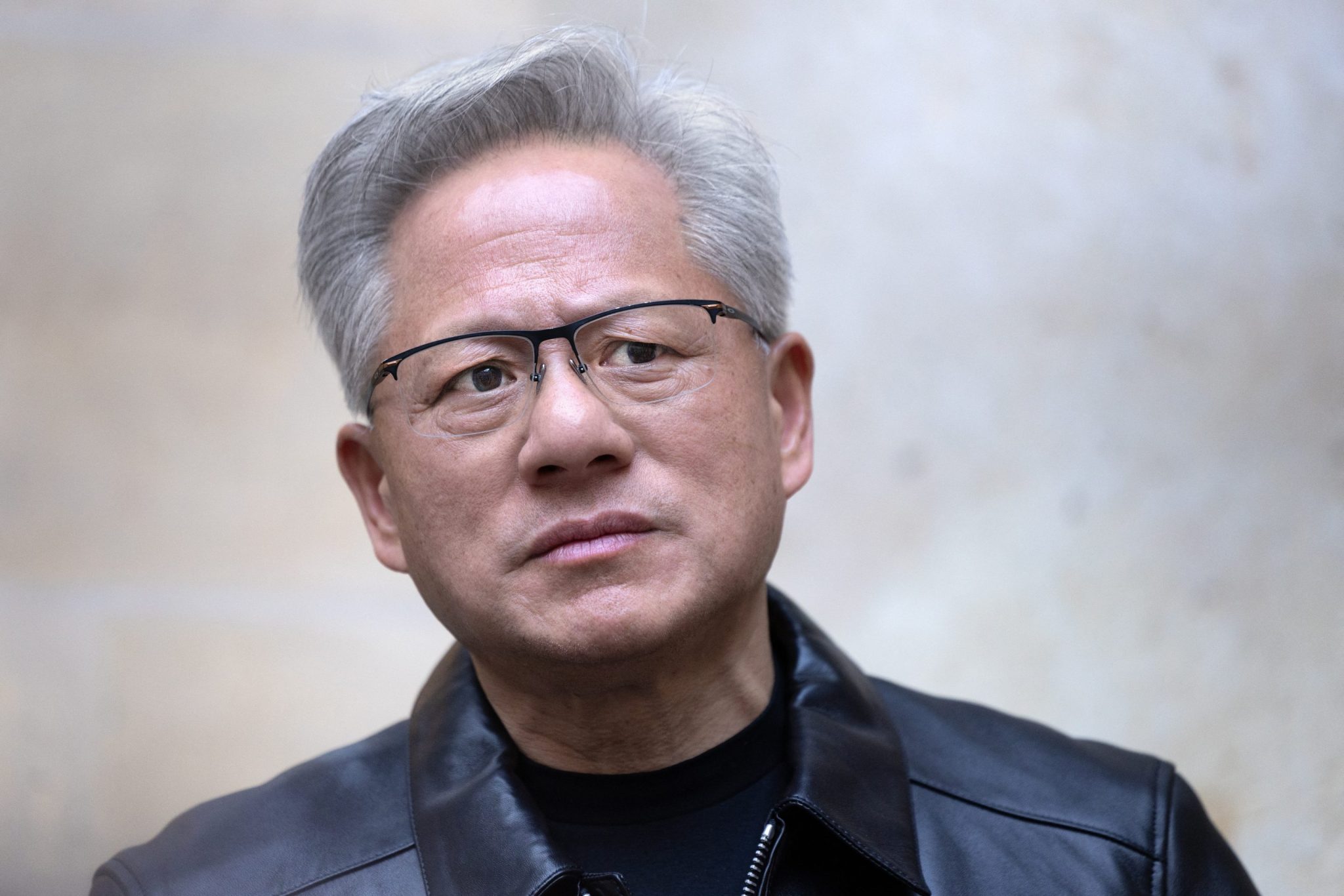
It’s just about the most relentless and pulpy headline imaginable: Nvidia CEO Jensen Huang admitted to an affair, with a woman who’s an alleged Chinese spy no less.
The news bombshelled on Sunday, and the market reacted viscerally on Monday: Nvidia closed down 4.3%, with about $230 billion in shareholder value wiped out, as other tech companies like Google and Meta saw share price upticks (welcome after Thursday’s Nasdaq nightmare). And yes, the luridness certainly drew attention, as did the national security concerns now subject to investigation.
The underlying question of it all is simple: Where do Huang and Nvidia go from here? Huang is AI’s ultimate key man. But more importantly: Nvidia—indelibly associated with Huang—is AI’s arms dealer, controlling north of 80% of the global market for AI and data center GPUs.
So, Huang’s affair isn’t just a public markets story, it’s a private markets story, with many tendrils. For one, functionally every AI startup and LLM giant is dependent on Nvidia GPU clusters to train and run models. This, naturally, includes the biggest names, including OpenAI, Elon Musk’s xAI, and Anthropic (on the eve of its IPO, expected to be historically large).
Nvidia’s also widely, and I believe correctly, described as AI’s central bank. The company’s financial footprint is stamped across the AI-pilled private markets. Nvidia’s been a key investor in startups, including Ilya Sutskever’s Safe Superintelligence and robotics unicorn Figure AI, and in key neoclouds like Nebius—not to mention an acquirer, as was the case with Nvidia’s September $12.93 billion announced acquisition of open-source startup Hugging Face, which had its own host of venture backers, including Lux Capital and Salesforce. (Nvidia has also backed OpenAI and Anthropic, and at least 400 other startups, a look at PitchBook says.)
It goes even further: Nvidia’s existing partnerships across the private markets include deals with Apollo, BlackRock, Blackstone, Brookfield, Goldman Sachs, and KKR to create $500 billion in financing opportunities for (you guessed it) compute and data centers.
It’s the ultimate “key man risk” story. I’ve never typed this sentence before, but it’s true: There are trillions at stake, and it all ties back to Huang, who decisively helped create the AI boom. And he’s now the reason the AI status quo is, at best, imperiled.
But Huang is also impossibly entrenched and vital, and there’s just too much financial infrastructure at stake. This story is still developing, as they say, and new revelations may yet come to light. But my guess: Whether it’s right or wrong, Huang survives this furor and remains CEO of Nvidia.
See you tomorrow,
Allie Garfinkle
X: @agarfinks
Email: alexandra.garfinkle@fortune.com
Submit a deal for the Term Sheet newsletter here.
Joey Abrams curated the deals section of today’s newsletter.
VENTURE CAPITAL
– Nominal, an Austin, Texas-based provider of AI-powered hardware engineering software, raised $240 million in Series C funding. Lightspeed Venture Partners and Insight Partners led the round and were joined by Lux Capital, Sequoia, General Catalyst, and others.
– Mavria, a The Woodlands, Texas-based manufacturer of modular data centers for AI infrastructure, raised $100 million in seed funding. Paradigm led the round and was joined by AMP PBC, Liquid 2, Critical Frontier, and Dream Ventures.
– Project Omega, a Newport, R.I.-based developer of nuclear fuel recycling technology and long-duration power systems, raised $80 million in Series A funding. B Capital led the round and was joined by noa VC, 645 Ventures, and existing investors.
– Blackletter, a Toronto, Canada-based AI-powered law firm offering fixed-fee legal services to businesses, raised $6 million in seed funding. Lerer Hippeau led the round and was joined by Seven Stars, Maple VC, Garage Capital, Ripple Ventures, and angel investors.
– Snapp, a San Francisco-based provider of an AI-powered sports intelligence platform for professional teams and fans, raised $4.6 million in funding from a16z Speedrun, Dorm Room Fund, Gold House Ventures, House Fund, Valia Ventures, and other investors.
– Avanlee Care, a Billings, Mont.-based provider of a family caregiver engagement platform for health plans and health care organizations, raised $3.5 million in seed funding. BEA Venture Fund led the round and was joined by existing investors Esther Dyson, Chrysalis Ventures, and FairBridge VC.
PRIVATE EQUITY
– Gooch & Housego, an Arlington Capital Partners portfolio company, acquired IntraAction, a Bellwood, Ill.-based manufacturer of acousto-optic devices and radio-frequency drivers for semiconductor, industrial, and scientific applications. Financial terms were not disclosed.
EXITS
– Parkview Health acquired Ovation Healthcare, a Brentwood, Tenn.-based provider of shared services to community hospitals and health systems, from Grant Avenue Capital. Financial terms were not disclosed.
IPOs
– Windward Bio Group, a Basel, Switzerland-based developer of antibody therapies for respiratory and dermatologic diseases, plans to raise up to $185.4 million in an offering of 10.3 million shares priced between $16 and $18 on the Nasdaq. Novo Holdings, OrbiMed, Luca Santarelli, SR One, Omega Funds, RTW Investments, and Blue Owl Capital back the company.
FUNDS + FUNDS OF FUNDS
– redalpine, a Zug, Switzerland-based venture capital firm, raised $250 million for its eighth fund focused on software and science companies.
https://fortune.com/img-assets/wp-content/uploads/2026/11/GettyImages-2299493352-e1794256213484.jpg?resize=1200,600
https://fortune.com/2026/11/10/jensen-huang-ai-boom-key-man-private-markets-nvidia-gpu-investor-startups-partnerships-compute/
Allie Garfinkle





