
[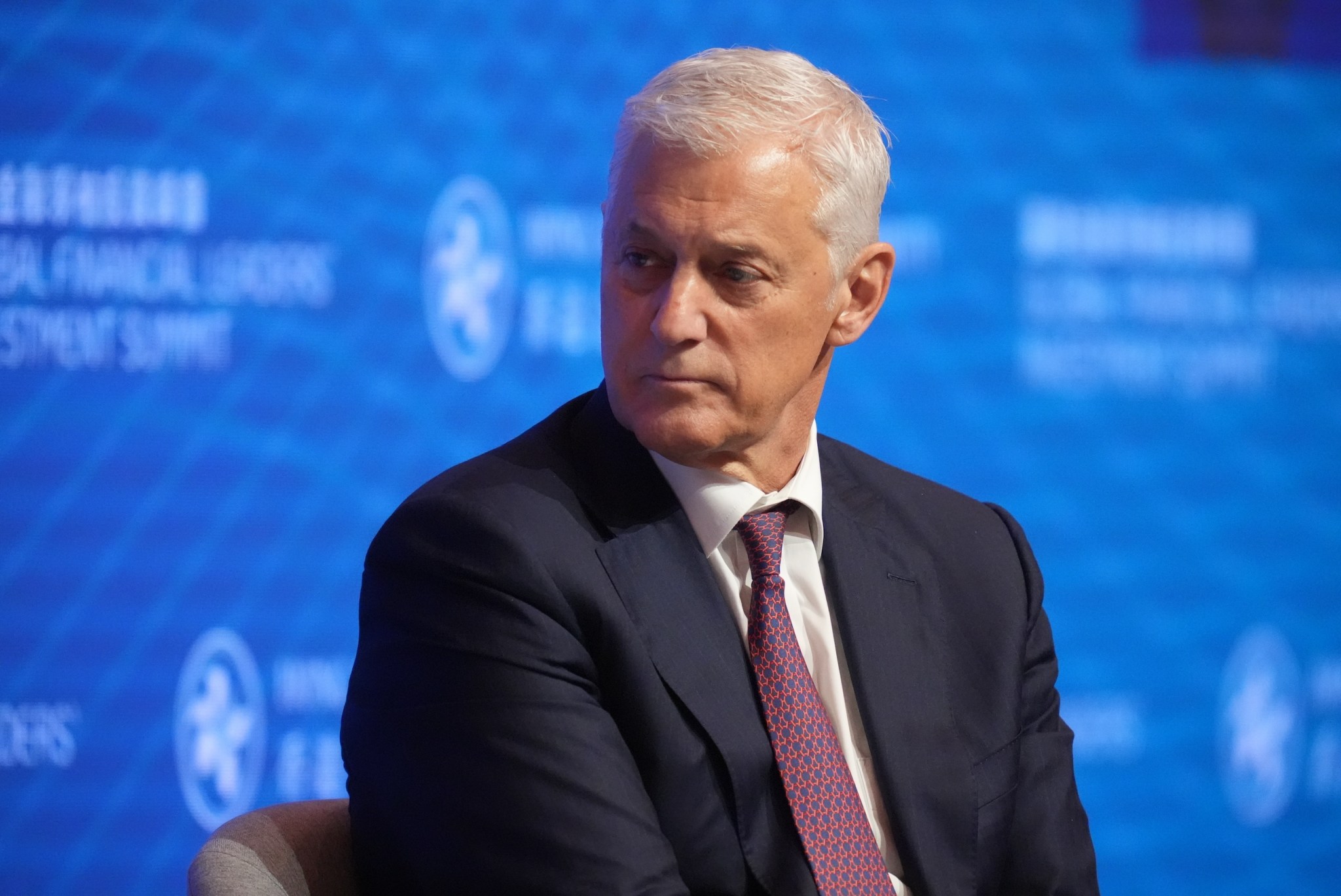
The CEO of British multinational bank Standard Chartered says “geopolitical fragmentation is an advantage for us,” after the lender reported a 46% jump in third-quarter net profit to $1.5 billion.
Speaking at a media roundtable, Bill Winters said the splintering of global trade is creating new business for the bank, which helps multinational corporations manage cross-border deals, the South China Morning Post reported.
His remarks come as companies rethink where they make things amid rising trade tensions. Many have adopted a “China plus one” strategy, shifting some production to Southeast Asia to offset China’s rising costs. That shift has proven more complicated than expected, as many factories in the region still rely on Chinese inputs, Fortune reported in October.
Why a fractured economy is good business for Standard Chartered
Geopolitical fragmentation refers to the structural shift in the global economy as supply chains, trade, and policy realign along political lines.
For banks, that shift changes where money flows. A company moving manufacturing from China to Southeast Asia, for instance, needs new banking relationships and financing arrangements in each new market.
Standard Chartered operates in 54 markets, with a significant presence in Asia, Africa, and the Middle East. That network lets it follow clients as their trade and investment move.
“We’ve really focused on getting a few things right and one is to serve multinational corporations and multinational individuals on their cross-border needs,” Winters said.
Wealth and markets fees power the quarter
The bank’s third-quarter results, released Oct. 28, show how much it now leans on fee-generating businesses beyond traditional lending. Operating income rose 13% to $5.8 billion, and pre-tax profit climbed 27% to $2.25 billion.
Wealth Solutions income rose 26% to $1.1 billion, while Global Markets income grew 20% to just over $1 billion. The bank raised its 2026 outlook and now expects a return on tangible equity of about 14%.
The industry as a whole is flush. Banks earned a record $1.3 trillion in net income in 2025, up 7% from a year earlier, according to McKinsey’s Global Banking Annual Review, which argues that AI will reward lenders that move quickly. Winters cautioned that the AI boom may lead to some misallocated capital, and said the bank’s role is to avoid those risks.
The downside of a divided global economy
Fragmentation cuts both ways. Trade restrictions and political instability add friction to the cross-border transactions at the heart of Standard Chartered’s business, and if tensions choke off trade, demand for those services could fall.
Operating across dozens of jurisdictions also means keeping up with each country’s regulations and compliance requirements, which can shift with politics. Even so, the bank’s economists have argued that fears of a broad retreat from the U.S. dollar are overstated, Fortune reported in July.
Standard Chartered’s bets for the next decade
Winters named five structural trends he expects to redefine finance over the next decade: the transition to a low-carbon economy, wealth creation across Asia, the Middle East, and Africa, changes to banking infrastructure, geopolitical fragmentation, and the digitization of money.
Hong Kong, where regulators are building frameworks for digital assets, is central to that last bet. This month, Standard Chartered launched tokenized deposits in Hong Kong and piloted a liquidity facility to support Ant International’s investment in tokenized money market funds. The bank ranks No. 7 on the 2026 Fortune Crypto 100.
“We’re positioned for the themes that we think are most important for the next 10 to 20 years, and we intend to keep our focus on those things,” Winters said.
https://fortune.com/img-assets/wp-content/uploads/2026/11/GettyImages-2302844674.jpg?resize=1200,600
https://fortune.com/2026/11/12/standard-chartered-ceo-geopolitical-fragmentation-profit/
Michaela Herbst





