
[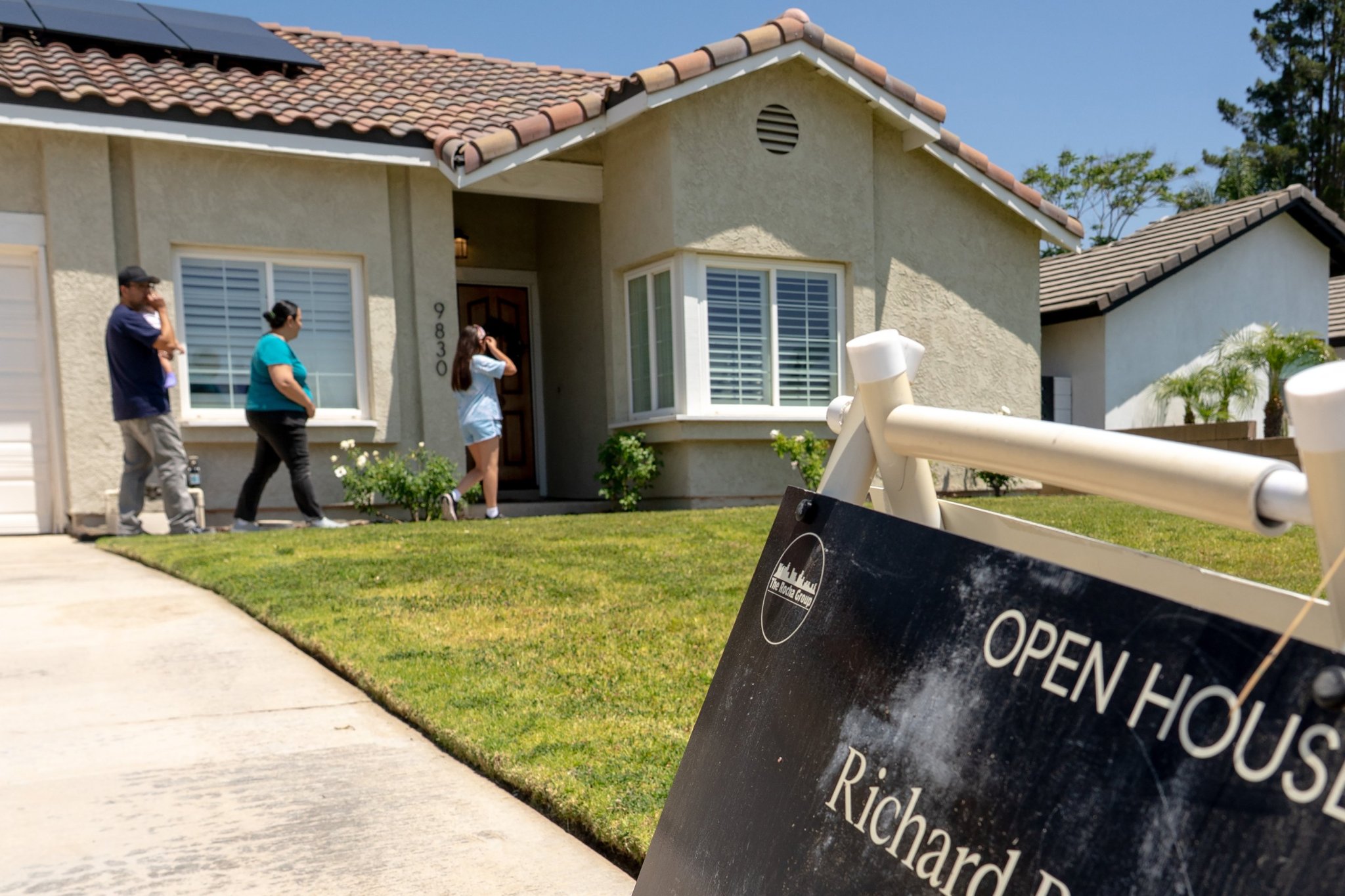
Previously owned homes sold at their slowest pace since 2010 in October. Existing home sales fell 5.5% from September to a seasonally adjusted annual rate of 3.75 million, according to the National Association of Realtors. That’s down 8.8% from a year earlier and below the 3.85 million economists expected, according to Goldman Sachs’ tally of forecasts.
The last time sales were this slow, the market was choking on foreclosures. Foreclosures and short sales made up 26% of home sales in 2010, according to RealtyTrac. In October, distressed sales were 2%, NAR said.
But this time around, nobody is being forced out. The people who own the houses are staying in them, and a big share of them are older. Empty-nest baby boomers own 28% of U.S. homes with three or more bedrooms, while millennials with children own 16%, Redfin found in 2024 Census data. People who did sell in the year through June had owned their homes for a median 12 years, the longest NAR has ever recorded.
Mortgage rates are keeping homeowners locked in, what the industry literally calls “the lock-in effect.” The 30-year fixed mortgage averaged 7.33% in October, up from 6.86% in September and 6.25% a year earlier. Nearly half of outstanding mortgages, 49.1%, carry a rate below 4%, Realtor.com found in FHFA data for the second quarter. For many older owners, the rate isn’t even the issue: 57.8% of boomer homeowners have no mortgage at all, according to Redfin.
“Home buying is difficult when mortgage rates have climbed to their highest levels since 2000,” said NAR chief economist Lawrence Yun, who noted the exception of a single month in 2023.
Who’s locked out
First-time buyers were 29% of October sales, down from 32% a year ago, NAR said. Investors and second-home buyers rose to 20% from 16%. All-cash buyers were 29%.
NAR’s annual survey of buyers shows how far the line has moved. The median first-time buyer was 40 in the year through June, matching last year’s record and up from 30 in 2010. The median repeat buyer was 62; in 1981, that buyer was 36. First-time buyers made up 22% of purchases, barely above last year’s record low of 21%. More of them are leaning on family for down payments.
Some of the owners can’t get out, either.
“The older people living in them can’t find anywhere they want to move to,” Brenda Beiser, a Redfin Premier agent in Philadelphia, said in Redfin’s report.
The West fell hardest
Sales dropped in every region except the Northeast, which was flat. The West fell 9.7% in a month and 14.5% from a year ago. It’s also the most expensive region, with a median price of $624,300, unchanged from last year. The South, the biggest market by volume, fell 6.5%. Its median price slipped 0.4% from a year ago, the only region where prices fell.
Goldman Sachs economists called the miss “consistent with our expectations that higher mortgage rates will substantially depress housing turnover,” and cut their fourth-quarter GDP tracking estimate by 0.1 point to 1.8%.
Prices are flat, and homes are sitting
The national median price was $416,700, up 0.4% from a year ago. NAR counts that as the 40th straight month of annual gains, but the gain is now very small. On Goldman’s seasonal adjustment, the median fell 0.3% from September.
Supply is building. Inventory rose to 1.59 million homes, up 4.6% from a year earlier. At the current sales pace, that’s 5.1 months of supply, up from 4.7 in September and 4.4 a year ago. Goldman’s seasonally adjusted figure, 4.7 months, is the highest since February 2016. Capital Economics’ Ariane Curtis wrote that softer demand is gradually moving the market back toward equilibrium, typically put at around six months. Homes took a median 35 days to sell, up from 33 in September.
Rates eased, then jumped again
Freddie Mac’s weekly average fell for a fourth straight week to 7.11% on Nov. 12, its lowest in seven weeks. The relief didn’t last. Mortgage Research Center data put the 30-year fixed at 7.319% as of Nov. 13, up from 7.026% a week before.
Yun pointed to steady job growth, and said “there could be sizable pent-up demand if mortgage rates decline.” Capital Economics, writing on the continued rise in 30-year rates, said sales volumes look set to be “even weaker than we had been forecasting by year-end,” and that it will update its year-end forecasts in its next housing outlook.
Yun also described who is doing fine: The 88 million homeowners across the country who are largely “in a comfortable financial position due to sizable housing wealth accumulation.”
Generative AI was used for research assistance and/or transcription of this article. The reporter independently reported and verified the factual claims in this article, and a human editor reviewed it before publication.
https://fortune.com/img-assets/wp-content/uploads/2026/11/open-house-prospective-buyers-rancho-cucamonga.jpg?resize=1200,600
https://fortune.com/2026/11/16/existing-home-sales-october-lowest-since-2010-mortgage-rates-nar/
Nick Lichtenberg