
[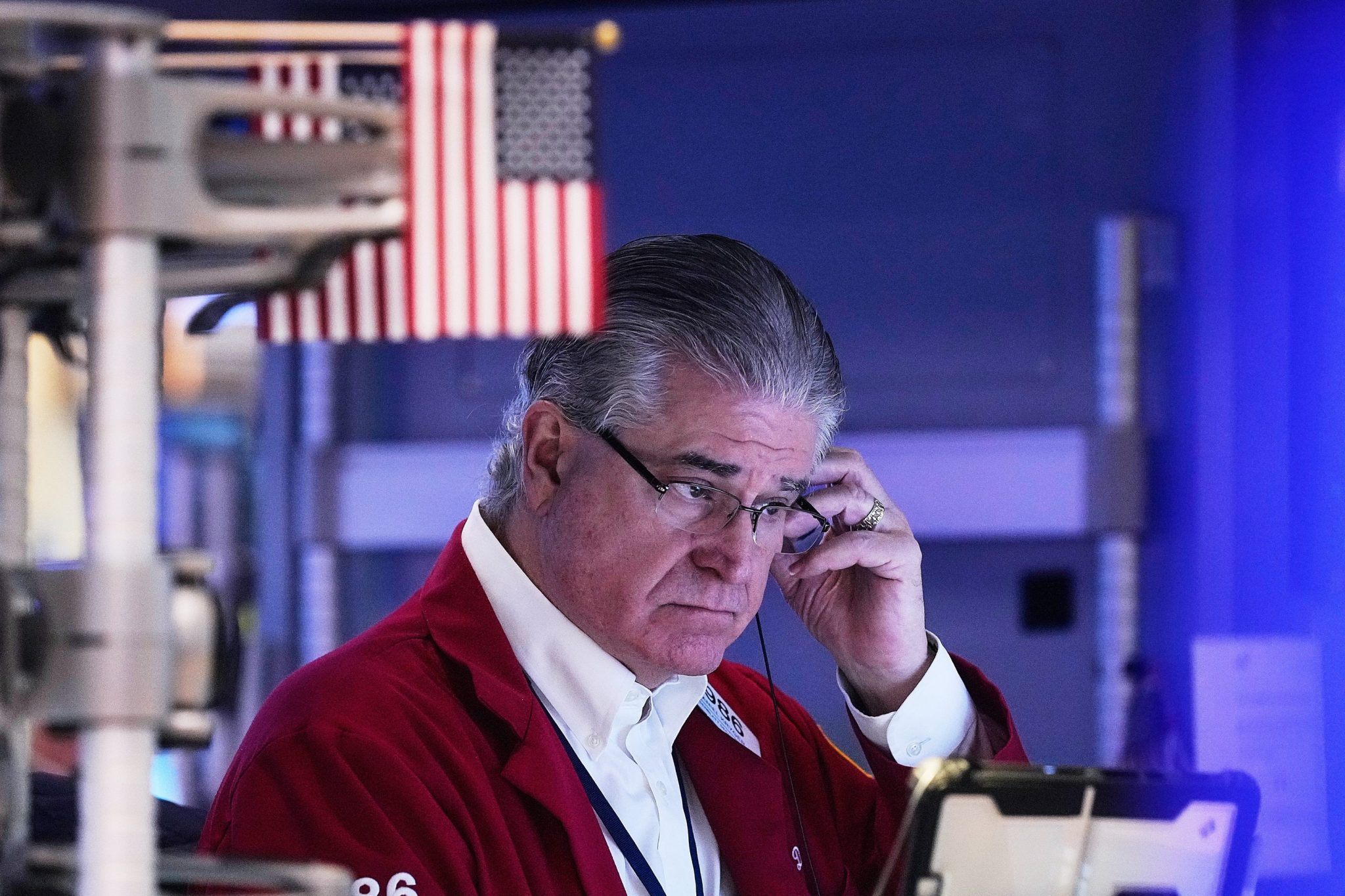
Fund managers just cut their bets on tech stocks by the most since June 2006, and 52% of them now expectat least one AI hyperscaler to announce a capex cut in the next six months, according to Bank of America’s November Global Fund Manager Survey, released Tuesday. Wall Street’s consensus forecasts point the other way: the hyperscalers in Goldman Sachs’ tally are expected to raise capex 58% next year, to about $1.4 trillion, per FactSet estimates.
“The AI investment boom has lifted S&P 500 earnings 25% above trend, and the outlook for AI investment and corporate profit margins in 2028 and beyond is highly uncertain,” Goldman Sachs Research strategists led by Ben Snider wrote in their 2027 outlook. AI capex is driving about half of S&P 500 earnings growth in 2026, they added.
The survey landed in the middle of a full-blown argument over whether the AI bubble is popping. Nvidia has lost over $700 billion in market value since the disclosures of Jensen Huang’s affair. The Nasdaq fell 2.5% Monday, less than two weeks after fears of a post-midterms crackdown on AI wiped out more than $2 trillion in market value in a single day.
AI critic Gary Marcus, a cognitive scientist, wrote Monday that it “sure looks like the bubble has finally popped.” Last week he told NPR that “Nvidia has put itself basically in a position of being a bank, backstopping everything.”
Michael Burry, the investor made famous by The Big Short, went after the money, too. “The story here is not the affairs,” he wrote on his Substack, quoting a Wall Street Journal report that the AI economy, “backstopped by Nvidia’s increasingly outrageous bets, was teetering.” “The press has now started to do its job on NVIDIA,” he wrote two days later, in a post where he also revealed that he holds put options on Nvidia, a bet that its shares will fall.
Writer Derek Thompson put the question in his newsletter’s headline Tuesday: “Did Jensen Huang Just Pop the AI Bubble?” His first answer was “No!” The buildout “looks nothing like the dot-com bubble, right now,” he wrote, noting that Nvidia trades at less than 13 times earnings. “And yet,” he admitted that the bubble case is not “hard to make,” pointing to Huang’s exit, rising borrowing costs, slowing revenue growth at the frontier AI labs and anti-AI politics after the midterms.
Nvidia reports its fiscal third-quarter results after the bell Tuesday, its first report since Huang’s exit. Its shares fell 4.1% Monday and were up about 0.7% in early trading Tuesday, per the AP.
A ‘pause AI capex’ message
BofA strategists led by Michael Hartnett called the message from the survey a big “pause AI capex” vibe. Just 16% of investors want companies to increase capital spending, the lowest share since May 2020. Asked where a credit event is most likely to come from, the top answer was “AI hyperscaler bonds (38%),” ahead of private credit (30%).
The managers aren’t scared about the economy, though. Just 3% predict a recession, and cash levels sit at what BofA called an “uber-low 3.6%.” The survey shows the “end of boom & AI euphoria,” the strategists wrote, but not enough investor “fear” to buy, and they’re staying tactically risk-off. BofA added that, by the survey’s history, the best entry points for tech have come when investors cut it to underweight; November’s cut still left tech an overweight.
On Monday, Capital Economics had argued that AI stock boom was “in its final stages,” with markets economist Joe Maher pointing to falling share issuance and “investors’ waning appetite for new shares of AI-firms at lofty valuations.” He called Anthropic’s IPO, set for Thursday, “a key test.”
Where Goldman’s math turns
Goldman doesn’t forecast a cut. Its strategists expect hyperscaler capex to “grow but decelerate in 2027,” and see the S&P 500 rising 17% to 8,700 by the end of 2027. The FactSet consensus has hyperscaler spending reaching about $1.54 trillion in 2028, up 10%.
The catch is in how that spending hits earnings. Capex shows up as revenue for the companies selling chips and servers, and as depreciation on the buyers’ books as the equipment ages. Netting the two, Goldman estimates hyperscaler capex added about 12 percentage points to S&P 500 earnings growth this year, falling to about 9 points in 2027 and turning into a drag of about 5 points in 2028. “By 2028, even with continued growth in AI investment, the net impulse should turn negative,” the strategists wrote.
Goldman sees S&P 500 earnings growth slowing from roughly 30% in 2026 to 11% in 2027, or 18% excluding mega-cap tech’s “other income” from private investment stakes. The index’s forward P/E has already fallen 19% this year, to about 18 times, near its 10-year average.
If the fund managers are right about a cut in the next six months, Goldman’s own framework suggests the drag it pencils in for 2028 would arrive early. That’s an inference from Goldman’s numbers, not a call Goldman makes.
The survey’s investors expect the S&P 500 to end 2027 at 7,926, about 775 points below Goldman’s target. Nvidia posts its numbers at about 4:20 p.m. ET Tuesday, with its call at 5 p.m.
https://fortune.com/img-assets/wp-content/uploads/2026/10/AP26300484083345-e1793131469566.jpg?resize=1200,600
https://fortune.com/2026/11/17/ai-bubble-popping-bofa-fund-manager-survey-largest-cut-since-2006/
Nick Lichtenberg





