
[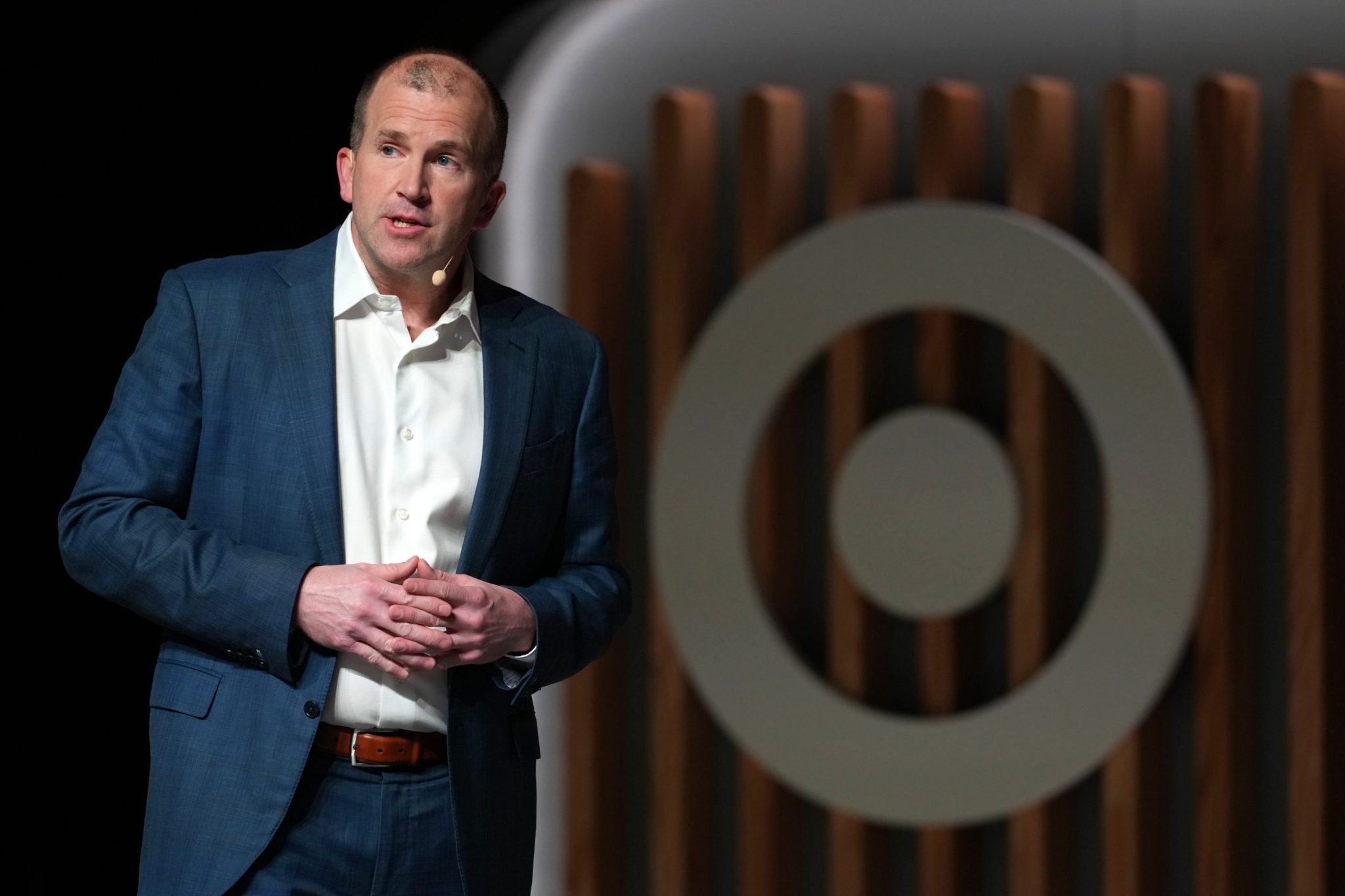
After years of declining sales and dwindling store traffic, Target’s turnaround plan under CEO Michael Fiddelke is showing gains. The retail giant reported $26.45 billion in Q3 merchandise sales for the three months ending Oct. 31, up 6.9% from last year and beating analysts’ expectations of $25.96 billion. Operating profit was $1.67 billion, up 76% from last year and beating analysts’ expectations of $1.3 billion.
But there’s a wrinkle: $301 million of that profit came from refunds of President Donald Trump’s tariffs, about 18% of the total, according to Target’s Q3 filing released on Nov. 18. Over the first nine months of this year, Target recognized $1.3 billion in tariff refunds following the Supreme Court’s ruling in February that the International Emergency Economic Powers Act did not give the president authority to impose tariffs.
Still, even without that windfall, Target seems to be recovering. Excluding the $301 million, Target would have reported about $1.37 billion in operating profit, still higher than the $948 million it recorded a year earlier. Neil Saunders, managing director of GlobalData Retail, told Fortune it’s a sign Target is genuinely gaining with consumers.
“Tariff refunds are certainly very helpful to Target, and they have provided a very nice boost to the bottom line,” Saunders said. “That said, even if you take the tariff gain out, Target is still up on the prior year, and I think that really reflects the fact that the business does have some momentum on the consumer side.”
He said Target’s investments in revamped stores and new products are helping it compete with other retailers beyond price point, saying “the recovery has multiple dimensions to it.” Target had earmarked $5 billion for this year to upgrade its physical stores. It also introduced nearly 3,000 new beauty products from 60 brands and added 3,000 food items earlier this year. On Sept. 10, it launched Target Beauty Studio, bringing 90 prestige and international brands to shelves, including French nailcare and Korean cosmetics, with two-thirds of those brands being new to Target. Those categories are Target’s strongest Q3 performers, with more than 9% growth in beauty and nearly 7% growth in food and beverage year over year. Overall comparable sales increased 5.6%, supported by a 5% increase in customer traffic.
This follows a tough 2025, where Target saw comparable sales falling 2.6% as shoppers pulled back on discretionary purchases. It faced growing competition from Amazon and Walmart and boycotts over its DEI rollbacks. Saunders said Target is trying to recapture itself as an “interesting place to go and discover things” so that consumers, already feeling squeezed by the cost of living, are more willing to open their wallets for “Tarzhay,” its chic-at-affordable-prices brand identity.
“If consumers are spending a little bit more on something, they want that extra expenditure to be justified, and the only way you can really justify it is by having really nice products or really interesting products that people want to buy,” he said.
https://fortune.com/img-assets/wp-content/uploads/2026/11/GettyImages-2266349476-e1795104233533.jpg?resize=1200,600
https://fortune.com/2026/11/19/target-q3-booked-301-million-from-trump-tariff-refunds/
Mia Osmonbekov





