
[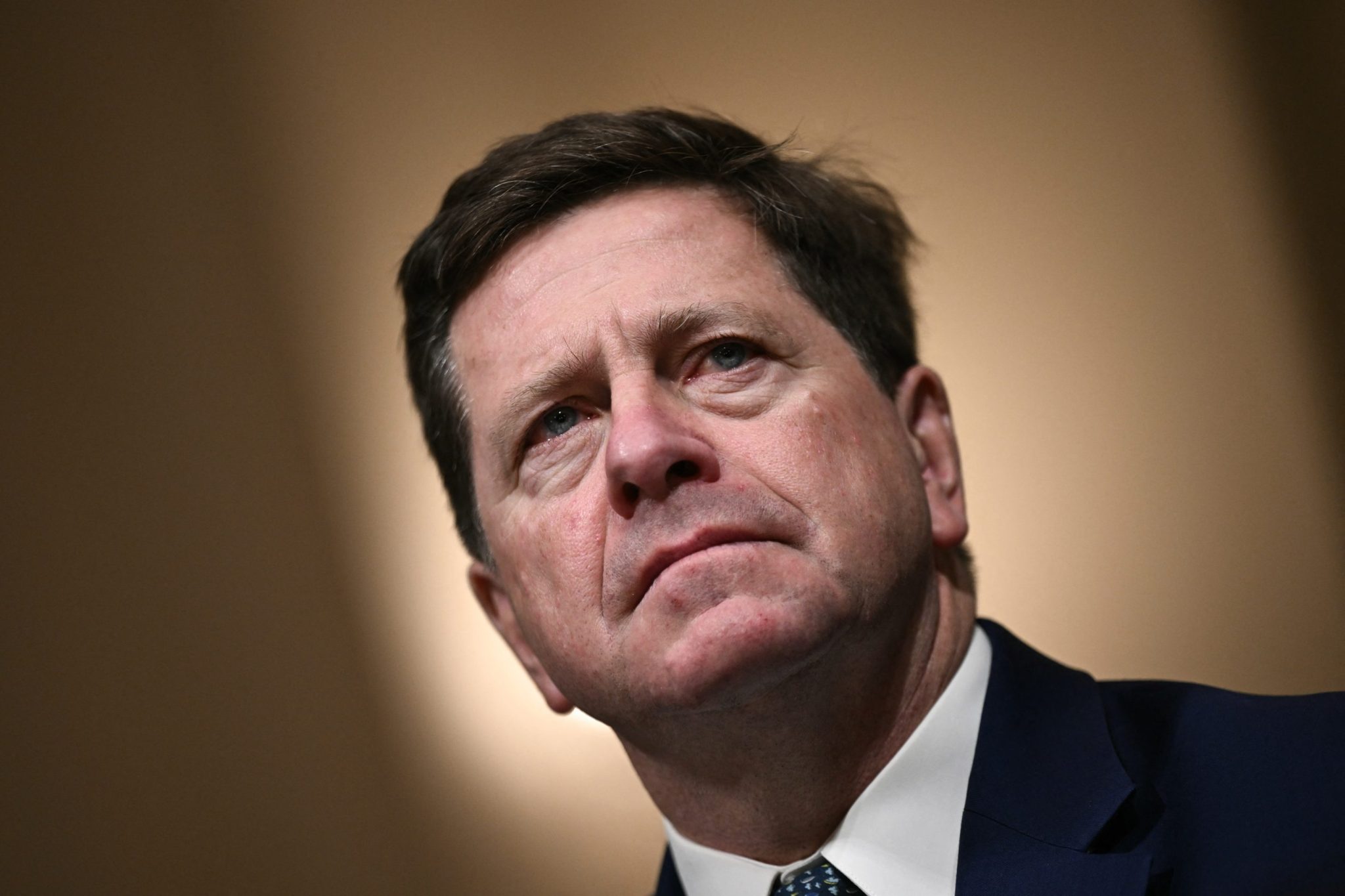
The country is on edge about the recent string of network outages, and Director of National Intelligence Jay Clayton tried to offer some reassurance but drew on an unsettling example.
Worried about an imminent catastrophe, many Americans are panic buying supplies at Costco and Walmart. In an interview on CNN’s State of the Union on Sunday, Clayton was asked if it’s time to stock up to prepare for new, possibly extended, outages.
“America is the most amazing and resilient place, and we have been living with interruptions,” he replied. “Let’s give ourselves some credit. Let’s go back to COVID, other things. Americans fought their way through these terrible things in an incredible, resilient way.”
Wait, what?
During pandemic-era lockdowns, Americans frantically hoarded so many supplies that grocery stores had to ration necessities like toilet paper.
CNN’s Dana Bash immediately stopped him right there and asked if we could be in another COVID-like situation.
“Not at all, let me be clear. But what I’m saying is the American people are resilient,” Clayton reiterated, pointing out that officials and companies are being straightforward with what’s happening.
“I have such incredible faith in the American people. As we have this technological step change, we will handle it as a country,” he added.
But when pressed on what Americans should actually do to ensure their resilience, Clayton suggested that it’s enough to just be aware.
“How do you prepare? By knowing that systems are going to be upgraded,” he said. “They may be interrupted for a period of time and that companies and the government are dealing with this on the front foot.”
The U.S. intelligence chief may not soothe many nerves by reminding people about COVID, as the number of outages at a wide range of places has stunned the country.
Last Thursday, Microsoft’s email and other office tools went down. Last Friday, the Federal Aviation Administration grounded all planes for more than four hours. It later blamed a copper wire that was being upgraded to a fiber-optic cable.
Day later, companies like Chase, Wells Fargo, United Airlines, and Apple saw temporary service disruptions. The National Security Agency’s internal classified communications network also suffered an outage, further fraying nerves.
U.S. officials, including Clayton, have said there’s no evidence of coordinated, state-sponsored attacks, suggesting network upgrades meant to patch vulnerabilities recently uncovered by AI were deployed hastily before all the bugs were worked out.
But reports also revealed that there have been cyberattacks elsewhere in recent days, including at the FBI and Agriculture Department. And last month saw so many cyberattacks that it was dubbed “Black October.”
Meanwhile, two officials at the Federal Emergency Management Agency told the Washington Post they were concerned about the outages and were having trouble believing they were a coincidence.
One official took out extra cash, and the other reported being bombarded with questions from former classmates asking whether they should prepare for an emergency.
“There is nothing on this scale that has happened before in this many sectors this close together,” one of the officials told the Post. “This is scary, and there is no leadership.”
Even before everything appeared to break down, Americans were already nervous after the Pentagon launched an initiative called FORTRESS, which seeks to ensure that every major U.S. military base can run for 90 days without outside help if a war cuts off power and supply chains.
Adding to the unease was the U.K. government’s campaign urging Britons to keep canned food, bottled water, and cash on hand to get through three days of disruption.
But in an interview with Fortune’s Catherina Gioino, Mark Giles, director of Downdetector parent company Ookla Research, said there’s nothing linking the outages.
“This is a big blip, but it’s kind of on par for the course for what we’re seeing in terms of those longer-term trends,” he explained. “Most of the time they’re fairly self-contained and remedied quite quickly. It’s the ones where you can’t withdraw money or you can’t access your emails that really get the headlines.”
https://fortune.com/img-assets/wp-content/uploads/2026/11/GettyImages-2305191998-e1795365457792.jpg?resize=1200,600
https://fortune.com/2026/11/22/should-you-stock-up-to-prepare-for-outages-director-national-intelligence-jay-clayton-covid-resilience/
Jason Ma





