
Pinterest is handing parents a virtual dimmer switch to dial down the flood of synthetic images crowding their teenagers’ feeds.
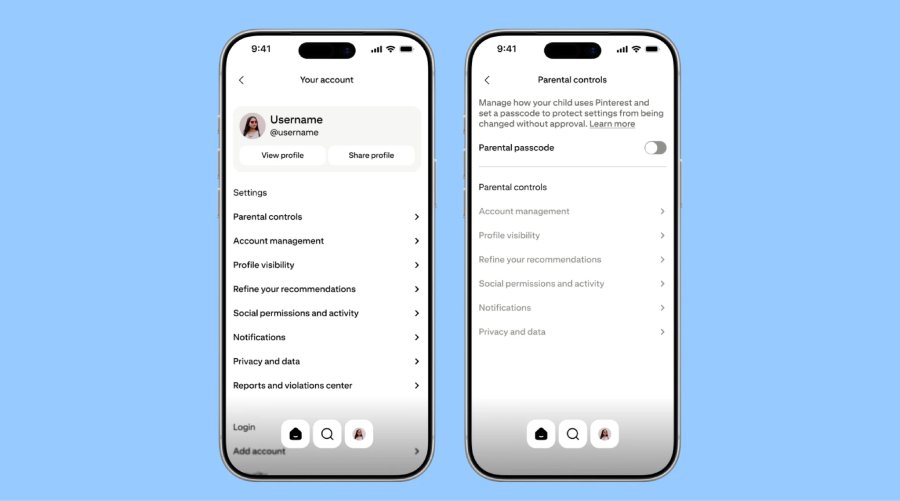
In a company announcement, Pinterest introduced a revamped Parental Controls page that lets caregivers curb how much AI-generated content appears in a teen’s recommendations.
The update makes Pinterest one of the first major social platforms to let parents regulate synthetic media across a minor’s general feed, not just restrict chatbot interactions.
“We’ve built Pinterest to be a positive, age-appropriate place for teens from the start, with protections built in, not bolted on,” Pinterest CEO Bill Ready said in a statement. “For parents who want more involvement, the controls are easy to find and simple to use.”
| Control Category | New and Consolidated Options |
|---|---|
| Content & Media | Adjust AI-generated content volume; toggle video autoplay |
| Alerts | Manage push, browser, email, and in-app notification volume |
| Social & Ads | Configure comments, mentions, and ad personalization |
| Device Links | Direct access to iOS and Android Screen Time and Location settings |
All settings on the hub lock behind a Parental Passcode, requiring caregiver permission before a teen can loosen any restrictions. These join existing defaults like private-only accounts for users under 16 and late-night notification pauses.
Shifting focus from chatbots to feeds
Competing platforms have mostly policed generative AI by blocking youth access to conversational tools, such as Snap restricting its AI chatbot for teens or Meta pausing teen access to AI characters.
Meanwhile, algorithm-driven feeds remain largely unfiltered, prompting over 200 organizations and experts in an April letter led by Fairplay to urge YouTube to strip AI-generated videos from under-18 recommendations.
By targeting the recommendation engine itself, Pinterest acknowledges that passive algorithmic exposure poses a distinct challenge for youth platforms.
More must-read AI coverage
What this means for families and tech platforms
For parents and teen users, the update offers immediate relief from “AI slop” while highlighting a clear limitation: filtering is not foolproof. TechCrunch notes that synthetic content still slips into Pinterest feeds even when users enable the platform’s 2025 AI-modified content restrictions.
- Parents gain a single dashboard to pair app-level AI throttles with device-wide screen limits, though they should treat the AI slider as a reduction tool rather than a complete block.
- Teenagers keep access to creative discovery without losing core browsing features, provided caregivers approve their baseline settings.
- Rival social networks face growing pressure to build transparent feed-level AI filters as families demand control over algorithmic curation.
For families testing the new controls, the most practical approach is to adjust the slider and then browse a few of the teen’s favorite topics—like art references or room decor—to see how well the filter holds up.
For platforms building these tools, Pinterest’s rollout highlights the next major hurdle in youth safety: proving that AI filters actually reduce synthetic clutter within specific niche feeds, not just across site-wide averages.
Other news: Four current and former Maryland high school students sued Omnilert and Baltimore County after a false AI gun alert triggered an armed police response, even though the alert had already been canceled.
https://assets.techrepublic.com/uploads/2026/11/souvik-banerjee-09RuvhgmTPY-unsplash-1.jpg?f=jpeg
Source link
Aminu Abdullahi





