
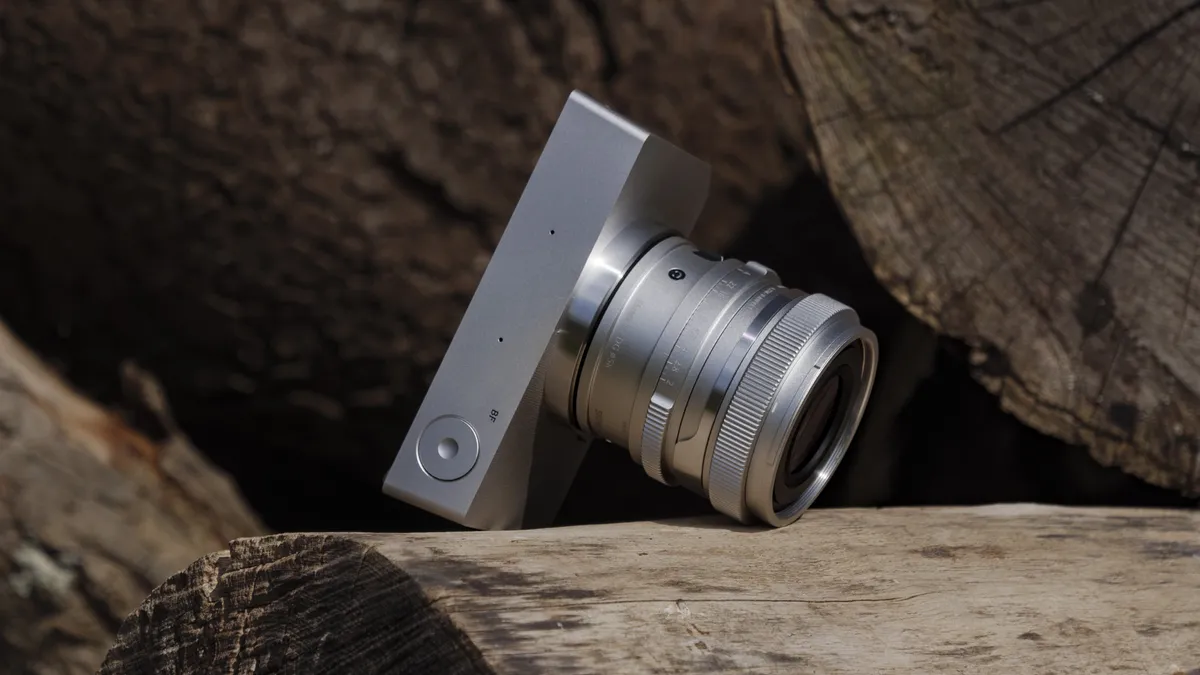
Sigma in recent years has been majorly expanding not just its lineup of lenses, but its cameras. The company has released a number of lenses that it hasn’t typically produced before, such as the 300-600mm f/4 for wildlife and sports photographers, as well as surprising us with the Sigma BF, a sleek all-metal camera with a unique, striking design that caused waves last year.
At CP+ 2026, Sigma unveiled a further two new lenses: the 15mm f/1.4 (APS-C) and 35mm f/1.4 (full-frame) lenses in the Contemporary and Art series respectively, alongside the development of the 85mm f/1.2 in its Art range. They are a mix of all-new lenses in the company’s expansive lineup and upgrades of existing lenses.
While this made the company’s lineup at this year’s CP+ quieter compared to the expansive showcase in 2025, it leaves Sigma with the most extensive collection of lenses across all formats and focal lengths in its history, with a growing reputation for quality that makes it one of the most notable third-party lens manufacturers today.
I sat down with Sigma’s CEO Kazuto Yamaki to discuss the company’s new lenses and broader ambitions for the future, especially with increased competition from both proprietary camera manufacturers and up-and-coming new lens makers in China and across East Asia. Our conversation suggested this is just the start of an ambitious new era for Sigma.
Image 1 of 3


On the threat of low-cost Chinese rivals
“ Our current plan is to have a full lineup of lenses for various cameras,” explains Yamaki. “Within that, the prime lens is one of the most important segments for us because we have a reputation for building high-quality prime lenses. With that, we think that the 15mm f/1.4 lens is a strong addition to the APS-C camera lineup, and we see the 50mm f/1.4 as a replacement for our previous 60mm lens because, although the focal length is a bit different, we see it as being an improvement in quality over a lens that we have had in the market for a long time.”
Sigma is well known now as a Japanese lens manufacturer that produces lenses using mostly domestic materials and labor, with decades of in-house experience that allows the company to engineer first-of-the-kind lenses, such as the five star 135mm f/1.4 lens. Its value present certain challenges such keeping costs low, but it manages to do so compared to proprietary lenses.

Recent years, however, have seen the rise of Chinese manufacturers like Viltrox, who have begun to make a name for not just producing well-reviewed glass, but for keeping prices even lower. According to Yamaki, this isn’t as much of a concern for Sigma who feels its experience and quality allows it to withstand the challenge of these newcomers.
“We make all our lenses in Japan, and ‘Made in Japan’ costs more due to the cost of labor and materials. That creates a challenge for us, as compared to the East Asia manufacturers; because we buy materials here and make it here, we are not able to be the cheapest on the market. However, where we make our lenses in Aizu [Japan], we’ve operated our factory for 50 years and it’s common for people to have joined the company in high school or university and stay here until they retire at the age of 60 or 65. These accumulated decades of experience give us an edge and are important for making a high-quality product.
“I’ve honestly been amazed by the progress that these manufacturers from China have made. I have a lot of respect for them. Overall, however, we believe there is a significant difference in quality while we also offer a huge range of lenses.
“For example, even if a lens uses digital components within them, the analog manufacturing and basic technology is a very different challenge. It’s still necessary to tightly pack the lenses together, to manually adjust each element, to polish the glass, and that takes experience. When it comes to digital, it’s easy to copy and make a similar product, but when it comes to analog manufacturing processes, the gap exists.”

Sigma has invested significantly in filling out the gaps in its lineup through various lens releases in recent years, from the monster 300-600mm to new and upgraded primes and tiny ‘Contemporary’ lenses. This has inevitably led to Sigma competing in markets for wildlife and sports where the company has not typically existed prior. This is not a concern for Yamaki, and builds towards a long-term strategy.
“ Our goal is to become the best optics company. For example, there is an air conditioning company in Japan called Daikin. They’re a massive company, but everyone both inside and outside of the industry knows that they are the best at what they do. I like that kind of company. We want Sigma to hold that title in camera and lens manufacturing, which means we must satisfy all photography enthusiasts, not just studio photographers but wildlife photographers and anyone who cares about the quality of their lenses. That also requires us to innovate, too.”
And what about Sigma cameras?
On the camera side, Yamaki was keen to emphasize that the Sigma BF is core to the company’s advances to these goals. “ I’m very happy to get quite positive feedback from users for the BF. When we released the product we expected a mixed response with some positive and negative, but we actually got more positive feedback on that front.”
When I asked about other cameras that could join the lineup that currently includes the Sigma BF and the Sigma FP, such as a future compact camera, Yamaki was coy on specifics but insisted that there would be more cameras to come.
“ I’m very happy to see younger people and teenagers using old compact cameras, and we need to satisfy this new audience” said Yamaki. “But to maintain the production of such a camera in Japan is challenging, and I don’t think it would be good for Sigma to just chase a trend we don’t know could end in 6-12 months. As a family-owned company, I think about the company or business long-term for 10, 20, 30 years from now.
“We need to ease people into becoming long-term camera users, but there’s no right answer for that. Some people use the most high-spec cameras, but Moriyama Daido used disposable cameras for a long time. Then you also have generative AI, which is able to produce some very powerful images, but I also believe that photography is just about the final image. We enjoy the process, we carefully choose the camera lenses and go out to take pictures, we choose the contrast between light and shadow. In the future, the essence of photography will remain the same even in an AI age, and we need to support that.

“Today, it’s not just photographers who care about cameras, but musicians, creators, architects. They won’t check information about new cameras and lenses every week or month, but they care about photography, and we want to support that. Not just in being the best for optics, but we want to be one of the best camera manufacturers, too. We make cameras now, and in 10 years, we may not be the major camera supplier, but we want people to think of us for that, as well. We have loyal camera users now, but we want to grow that audience and eventually make a full range of cameras.”
That takes time. Even if Sigma can’t become the leading camera manufacturer, Yamaki would be happy to be seen as the indie musician of the camera world. “I fear that if we made a major full-frame camera like major manufacturers now, some may not care for it. For the time being, we will keep making unique cameras [like the Sigma BF]. In the 1980s and 1990s I really liked a lot of the indie pop and rock bands from the UK, and I want Sigma to be like that.”
Follow TechRadar on Google News and add us as a preferred source to get our expert news, reviews, and opinion in your feeds. Make sure to click the Follow button!
And of course you can also follow TechRadar on TikTok for news, reviews, unboxings in video form, and get regular updates from us on WhatsApp too.

The best compact cameras
https://cdn.mos.cms.futurecdn.net/WBdsz9JeFbye9WB8xgviUU-2560-80.jpg
Source link





