
You may not have heard of the Armour Home Group, but you have almost certainly heard of its three hi-fi brands: Q Acoustics, QED, and Goldring. Q Acoustics is one of the masters of great-value value speakers, QED is one of the best-known cable makers, and Goldring is a 120-year-old turntable specialist.
And you may not have heard of its new Managing Director, Charlie Henderson, but you will absolutely have heard of the audio brands he’s helped to lead, including Cambridge Audio, Naim, and Jabra.
I’ve met Henderson before in his roles at Cambridge and Naim, and I was fascinated by how the email I received announcing his appointment promised to focus on expanding the brands “beyond the hi-fi” sector.
Latest Videos FromTechRadar
I wondered if that meant moving into more ‘mainstream’ parts of the audio world, and I wasn’t sure how that would really work with a brand like QED, so I wanted to find out more — but it turned out that Henderson had something completely different in mind.
He wanted to talk about how the brands can support the return of public listening rooms, how they can engage with the new wave of people getting into hi-fi — and how the hi-fi world can get its “mojo” back.
TechRadar: You said in your introduction at the company that “My goal is to elevate these brands beyond the hi-fi sector and into the broader music community”, referring to Q Acoustics, QED, and Goldring. So what do you have in mind?
Charlie Henderson: I have felt for a long time that the hi-fi industry has lost some of its mojo. If we go back to the ’50s, ’60s, ’70s — kind of the essence of British hi-fi in particular — lots of those company founders were either part of rock bands, or they were gigging, or they were visiting live venues, and that’s why they got into this industry. So a real love of music was always there.
I think we’ve seen maybe over the last 10 years or so that it’s gone a bit stale. And I think in all the roles I’ve had in this industry, I’ve been really keen to make sure that we reboot it. So we talk about our mission as a business, which is to move beyond the hi-fi bubble and become part of music culture — almost as though that’s revolutionary, but it’s not; it’s just going back to what hi-fi was. It was always part of music culture.
But if we think about going around Vienna High End or the Bristol Hi-Fi Show or any of these kinds of events, it’s usually less about the music and it’s mostly about the equipment and the technology. I think that’s a shame. It’s not why I’m in this industry; it’s not why all the people I tend to find that I’m working with are in this industry.
So that is our mission, and the way we do it is by just being authentic about why we’re really here.
TR: It’s funny, of all the big tech shows, IFA is the one that has started doing what you’re saying, and trying to be a cultural hub as well as a tech show. But really audio is such a kind of tangential part of IFA compared to these music shows that you’re talking about.
CH: I remember chatting to a [very respected] hi-fi journalist at the Munich show a couple of years ago, and he just hung out with us. This was in my Cambridge [Audio] days, he just kind of just hung out because he was like, ‘Man, at least someone’s playing some proper music.’
You walk around the halls and it’s Kate Bush and Pink Floyd and Led Zeppelin and all of the usual stuff. Great artists, they’re still important musical acts and incredible — but decades have moved on and there’s different artists today, you know? People like Fred Again and Wren are my two favorites at the moment, because I think they’re British artists who are defining the real musical culture right now. And I haven’t heard any Fred Again or Wren at an audio show.
I probably would hear it at IFA, and I think it’s because IFA represents companies who understand that they are part of consumer culture. I think the hi-fi industry maybe sometimes thinks that consumer culture is a dirty word. I couldn’t disagree more. Knowing who your customer is and what appeals to them and being part of their world, that’s our responsibility as manufacturers ultimately.
TR: So what do you see music culture as being in 2026? We’re in the middle of one of the most interesting times of audio I can think of, where the new audience who grew up on streaming are coming in and going, ‘I want to move beyond this.’ And that is partly behind the vinyl revival with young people really wanting to actively get into that side — but it’s also leading us in the direction of every device having streaming built in or being ‘active’. There are these two arguably separate paths, so where can you ‘meet’ music culture as a company?
CH: There’s a little bit of convenience going on here. Active is clearly a future direction for our industry, fueled by convenience and simplicity. I’ve spent a long time in my career involved in separates hi-fi, and that has a place, but I think even companies who have been focused on that over the last few decades realize that active is the direction of travel. I think that’s down to people just wanting a simpler life.
But then there’s the ironic flip side of that. We talk about the vinyl revival and analog renaissance and all these things, [including] CDs. I’m using one of my old Motorola phones for my phone because I don’t always want to be connected on a smartphone.
But one of my favorite cartoons is [the one that asks] ‘What got you into vinyl? Was the inconvenience or the expense?’ You know that one? I think the ritual [of playing and choosing vinyl] is really important.
Just for a second, I’m going to kind of dive off into part of how we’ll execute our mission. You know, moving into being more a part of music culture isn’t just about understanding the music side of it, it’s actually how people experience music. I think as an industry, the hi-fi industry has long lamented the question: how do we get people to come in and listen to what music should sound like?
I don’t believe [getting people to come to us] is the right answer. Go to where people are listening to music and show them how it could sound. There is a bar culture called the kissa bar culture that came out of Tokyo over the last 20 or so years. It manifests itself in these listening rooms, and you see them at Studio 180 in London, for example. Spotify has just announced its own version of one of these listening rooms as well. That’s where music culture is for me.
There was a great article I was reading the other day where it’s basically saying listening rooms like that are the new nightclubs. I thought that was super interesting because it’s a place where people just assemble, share a passion of music. They might be sipping nice teas or drinking great whiskey or maybe just chatting, you know? It’s a place to socialize.
We’re seeing this resurgence of gaming, and I mean board gaming. I think that’s beautiful, because it’s people coming together and escaping the distractions of modern-day technology. It’s definitely it’s a younger audience who are doing that because they are sick to the high teeth of everything being online, everything being intangible and losing that connection with friends.
You’re seeing it also manifesting things like running clubs appearing and becoming a huge thing for people in their teens and 20s and early 30s, just craving for human connection.
And I think that is part of music culture. It’s human connection. It’s why gig tickets are going through the roof again — Glastonbury’s selling out faster than ever.
And people really spend more on music, on a hi-fi system or an audio system. They’re quite happy with their [premium] Apple Bluetooth products, they’re already spending that money. They’re dropping £1,000 on Glastonbury tickets and spending all this money on Taylor Swift to get the eight different versions of an album that she releases. They’re obsessed by music, but they don’t know who to talk to because no one’s talking to them.

TR: This might tie back to what your plan is to get out there and interact with people, but the immediate problem that occurs to me with having more of these spaces — and about these spaces becoming more popular even though there’s appetite for them — is the general collapse in the ‘third-place’ concept. Places you can go that are not work and that are not home and that are also sustainable businesses. A lot of these places are struggling. Board game cafes have done all right, but you’ve got maybe one or two per city. They’re not like how pubs and bars have been absolutely everywhere in the past. So do you see yourselves opening some of these venues, or supporting them directly in other ways?
CH: I think the pub reference is interesting because we’ve seen a decline in pubs. We know how many pubs are shutting every week, and nightclubs. I think it’s just a different way of people getting together. I’m not surprised that there’s only one or two [board game cafes] in a town, because there’s probably only ever been one or two nightclubs in a town. Clearly not the same number of people going through [board game cafes as nightclubs], but it’s just a place where people can get together.
But just because they’re not doing it publicly, doesn’t mean they’re not doing it at home, you know? We know that vinyl and turntable sales continue to increase year over year over year because people are creating their own environments at home.
In terms of how we execute it, it’s by working through our relationships that we have as a team — and that I bring to the business as well in terms of relationships in the music industry and venues within the music industry — and saying ‘how do we support you creating your own listening bar environments’ or being able to [develop] kissa bar culture.
And doing that globally, importantly, as well. We might be based in the UK and proudly British hi-fi brands, but we’re a global business, so how do we get a venue in Tokyo, the home of all of this culture? We’ve had some really good conversations in Vienna just last week about being able to do this in places in Australia, and opportunities in places like New York and across Europe. Spain, Italy and France are way ahead of the UK when it comes to this listening bar culture already.
And then obviously in the UK, our approach will be to support those venues either by equipping them with the right kind of technology to be able to deliver it, or helping people to open them. There’s a difference between pop-up events, which are fun for the industry, and actually supporting these venues to be successful in what they’re trying to do.
There’s an ethical story here. Sometimes people say, ‘So what is it you do as a business? You’re making stuff?’ I’m like: no, it’s bigger than that. We make products for sure, but they transform people’s lives.
It sounds very floaty and you know, almost ephemeral, but it’s true: music changes how people feel, so we have a responsibility to make that available to people wherever they want to be. That’s kind of our cultural thing, and we’ll do that by making sure that the great kit that we make is in the places they want to go to — the two come together.
The outcome is that people realize that [our brands are] actually part of music culture, and therefore we are the people who are signposting who they could listen to great music through, and that’s the business upside of it.
TR: So when you talk to these places about what support they need from you, what are they saying?
CH: Support financially. Equipment. There are some which have been really successful with very advanced audio systems, but most locations can’t manage that.
We are proudly in the accessible end of the spectrum as a company, particularly around the Q Acoustics range. It’s high-quality equipment, but it doesn’t cost the Earth, so we can help some of these smaller venues perhaps be part of this movement; we can loan equipment to them, or work with them on [cost]. I think that’s probably the practical thing that we’d be able to do.
TR: You’re talking about getting closer to music culture and being a music-listening brand, not a technical brand, if you think of it in those terms. Do you think that’s something that separates you from the Chinese hi-fi brands that are exploding in popularity? A lot of them feel quite led by technical people who are able to create pretty incredible products for low prices, but the pitch feels based on technical specs.
CH: I think these brands aren’t that different to traditional hi-fi companies. You know, I’ve worked in a number of brands where it’s an engineering-led culture — and there’s a bit of a transformation that we’ll do at Armour Home; there’s a degree of engineering-led culture [there].
What has been fun is seeing everything from the engineering teams, but also that our designers saying, ‘Hang on, we could be bolder and braver and less safe and actually be really exciting.’
So I’m already seeing renders for products that will come out in the next 12 to 18 months where I’m like, ‘Yeah, OK, now we’re talking’. These are products that really speak to having a sense of style and presence, and really selective decisions around the colors, materials and finishes that we use, and being much closer to interior design. Pantone colors of the year and these similar cultural cues that matter [to people] — just being cool and relevant, that alone is more than maybe the Chinese brands are able to do because they’re not attuned to it in quite the same way.
There is a distinction, though. It isn’t just British tastes that matter; it’s understanding the global tastes as well. So working with our global distributors as well to really get a sense of what is current right now in China or in Australia or in the US, and bringing that as a bit of a mix. Otherwise we fall into the trap I think British hi-fi brands have done in the past where they think everything starts and stops at the English Channel.

TR: Right now, Goldring is really a turntable accessories company that happens to make one turntable [the Goldring GR3]. So, is your plan to expand its reach by offering more turntable models, or are you thinking more about expanding the kind of accessories it makes into phono stages or something else that’s not in the range at the moment?
CH: One of my observations when joining the Armour Home Group is that we focus a lot around the Q Acoustics business. And then we have two other businesses within it, which are Goldring and QED. I think that focus is a miss, [and] that’s a shame, because we have 120 years this year of history with Goldring. It is one of two of the oldest audio brands in existence, and it has been there at all the defining moments over a century.
Then we have QED, which is 53 years old this year, and it was the brand that started the whole cable revolution from bell wire to proper audio hi-fi grade cables. Something called the Genesis report, which was written by the guys at QED, is still the bible that everyone else has followed ever since.
Q Acoustics has been the new kid on the block a little bit. It’s 20 years old this year, so I kind of joke with people in the business that it’s not a teenager anymore, we’re a grown-up… but we have 120 years of Goldring.
So in the context of your question, Goldring is a beautiful thing for us to have in the family because it allows us to talk about 120 years of history, and iconic decks like the G99 or GL75 with Lenco that were built over the decades. But it’s also bang up to date, because vinyl culture is hot.
So we have to do a couple of things. One is to celebrate the past and then also bring things bang up to date in the future. I’ve had some extraordinary conversations with some of the people I’ve met in this business, but one of them in particular is a guy called David Giffin.
He’s been in the business for 40 years, his father was in the business for 41 years before that, and he was sharing with me this extraordinary scrapbook of all of the sort of cuttings over decades of this business.
That is extraordinary in itself, but he’s now the person that people come to from all of the forums going, ‘This is the guy who can rebuild whatever cartridges from around the world’. He’s showing me pictures of some Japanese cartridges, like super-esoteric cartridges made out of marble, that he’s been tasked with repairing.
So this extraordinary level of skill sits in our Goldring team, and we don’t talk about that nearly enough; it’s extraordinary. How do we make that manifest itself in the consumer world? We let people know that we have some of the best cartridges, certainly for consistency of performance, that money can buy. We’ve got everything from entry level right up to Ethos at the top level
You can come to us for turntables too. We have GR3 as a turntable at the moment, and without giving any secrets away, of course we’re looking at what more we can do more around that.
But I need to make sure that [a new] turntable is something truly iconic that celebrates 120 years of Goldring, that reminds everybody that this was the brand that started it all, and can sit proudly in a kissa bar environment, celebrated on this plinth, almost like they’re shrines. Something that’s truly special.
And then at the same time, [should] tie our brands together, so I can use QED technology in the development of that turntable, and I can also make sure we’ve got Q Acoustic speakers that do service to a turntable with 120 years’ worth of history. That’s where some of these new flagship projects that we’re working on are really exciting, because the material choices alone are bold.
I talk a lot internally about the thread between the brands. They’re not disparate brands. We’re incredibly fortunate to have three brands that bring everything together from the source through the connectivity through to the output, and we need to do more of that.
TR: So we should probably expect a cohesive, very premium, very celebratory set of stuff to come from this thinking?
CH: This is where I get kicked under the table by my PR handlers. You should expect a much more bold and confident view as to what we bring to market because I believe we’ve earned that over many, many, many, many decades.
TR: Are you considering doing something like special edition versions of Q Acoustics speakers that are Goldring-branded or designed? Q Acoustics’ design language tends to have friendly, rounded corners, and rounded edges. I look at the GR3 and I see this stark, hard-edged cuboid block. Do you want a set of Q Acoustics speakers that are equally hard-edged and glossy-finished, [and] maybe have the Goldring logo on?
CH: I think it could be that way, or it could be the other way around. You could see a Goldring turntable that leans more into the home-friendly design, or I could see everything elevating to a new design approach as well, sure.
What I can be clearer about is that I think it’s important that there are technology linkages where possible across the three brands, and design cues where appropriate across all three as well, without betraying the core design fundamentals of each brand. It’s a balancing act.

TR: The biggest missing pieces of your portfolio are the amp and streamer. Is that something you think about expanding into, or do you think the future is more in the combined active speaker route in the Q Acoustics range?
CH: There are two parts to that. We have our core business, and we have our distribution business in the UK, and it’s important to mention that our distribution business is really interesting.
We’ve got Xgimi at one end in terms of cutting-edge projector technology; we’re just rolling that out with retailers across the UK, and we literally can’t keep up with demand.
Almost at the other extreme we’ve got Grado. Cool as hell, legit New York vibes, super interesting, iconic design. And then in the middle we’ve got Burson Audio, a head-fi and amp brand.
But there is the missing link [in our brands], which is amplification and streaming. Active speakers definitely support that, clearly, but we have a very successful passive speaker range, and I need to work out how to tackle that. Is that through partnerships? Is that through collaboration with existing manufacturers in the industry, those who are on the same mission as us of understanding that music culture is really important for the industry? Or do we treat it as a distribution opportunity for us in the UK? And I don’t have the answer yet, but I know it’s important.
TR: QED is surely the hardest brand here to expand beyond the core hi-fi community, unless you take a bit of a left turn. So what is your thinking there? Would you keep QED as a nice ‘glue’ option to connect everything together, or is there some future for QED that goes beyond what it does now?
CH: I would start by saying it’s about re-remembering that QED is the brand that started it all, and helping that awareness grow. There are other brands out there who’ve established a strong position in the premium and luxury cable sector, but they’re all essentially going back to the Genesis report.
We are working on redefining the ranges, I’ll put it that way, so you’ll see some news coming out of QED fairly soon anyway.
I think connectivity is a question in itself. Cables were the original connection, but now wireless is a connection, and so I’m certainly pondering in my idle moments about whether QED should be in that wireless area. Because it’s the modern day glue, and it’s interesting you ask the question because it’s definitely in my mind.
TR: You alluded to this earlier, but it’s the old business study question of asking ‘What do we actually sell? Is it cables or is it connections? And if it’s connections, then should we think about something medium than cables in the future?’ Is that the kind of question you’re exploring for QED?
CH: Absolutely. And I’m only four weeks in, which is why I’m not giving you clear answers, but I can see that there is a clear consumer understanding among those who know us today that we are the connection. But there are consumers today who don’t even know us, they’re not being signposted well enough because of the music culture topic we’ve gone into as to how they listen to music — so they might recognize QED as being the connection, but they’re only used to wireless connectivity. And so what do we do with that?
TR: I’m sure you are not going to have anything specific to say on this subject when it comes to products, but it’s very relevant to this topic: have you seen the Pro-ject Wireless Box E? They’ve made this little box that connects directly to the speaker posts on the back of your passive speakers, it plugs into power, and it makes them wireless using the WiiM platform.
CH: I think that’s actually quite exciting for our category. A theory I have is that a lot of people are starting to inherit hi-fi, so family members might be getting to an age or passing on, sadly, and people are discovering turntables in the loft. ‘What do I do with this?’
That’s interesting for me as well, which is getting people on a journey. One of the companies I worked at was world-famous for understanding the importance of being there at the beginning of someone’s journey and being with them for life. It’s a separates company, and it’s the upgrade journey that people went on that’s really important to me. It’s one of the things that I’m talking to the marketing teams about, within the group. It’s about making it easier to understand where you start and where you could go.
QED is a perfect example actually, where it’s a bit of a maze and really hard to navigate, so making sure that, just from a packaging and a communications point of view, people know where they are on that journey. Are they at the beginning? Are they at our ‘good’, our ‘better’ or our ‘best’ — so they can work out where they could step up through their audio life.
I don’t think we have done that enough in our ranges. It’s the same with our 3000 series to our 5000 series range, and then up to our Concept portfolio, in Q Acoustics. It’s making it really clear about what this [product] does at this level, what you can expect at this [higher] level and what you can expect at this [highest] level. This idea that it’s always a little itch that’s not quite scratched; it could always get better.
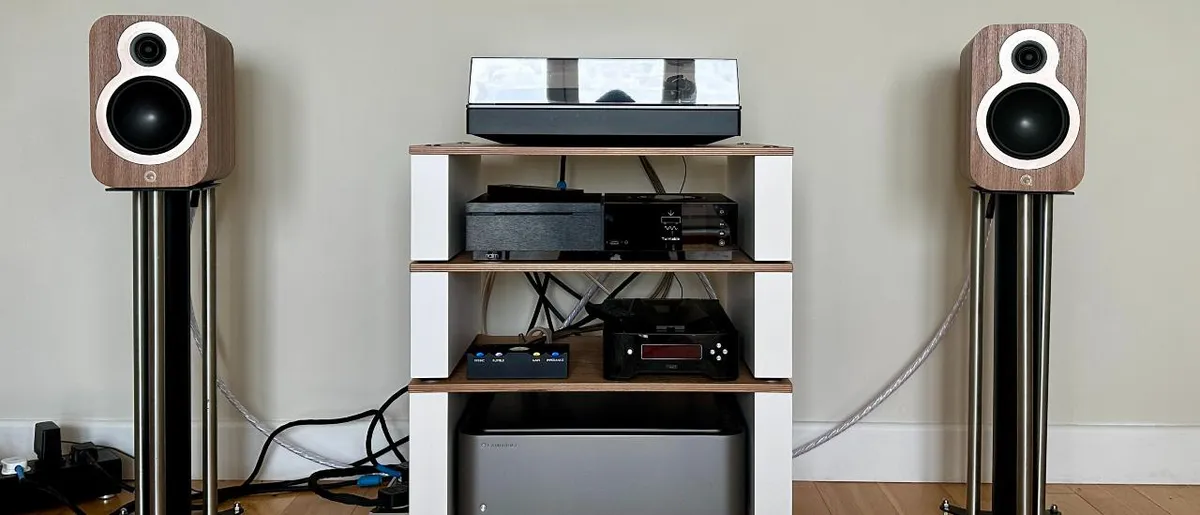
TR: One of the entry points that I think we’re seeing a lot of at the moment is desktop speakers. You guys have compact speakers, bookshelf speakers that are pretty small — but in particular, there’s this kind of breakout sector right now that’s one step down in size from there. Quite often wireless or active, but designed for people who are getting into the audiophile stage via their desktop. Based on what you were just saying, are you guys exploring more of these opportunities where there is some breakout sector where you can say ‘OK, this is where we can get people on board in our journey’?
CH: I’m gonna half answer that. We have three different bookshelves in our 3000 series and the same in the 5000 series, and those are to meet the needs of three different kinds of bookshelf customer. Some of them are international, like the 3030 and the 5030s because they’re the bigger of the lot and the US buyers like a larger volume for the cabinet.
The 3010 and 5010 are our small footprint version. They are used in home offices a lot, but I think there are new audiences coming through. There’s gaming, and there are younger consumers who might be in flat shares or whatever that need something smaller. So yes, we are watching that part of the industry very closely.
TR: We’ve talked a lot about music, and that’s kind of clearly where your focus is as far as building a new identity and the opportunities. But Q Acoustics has such a successful history in the home theater space; it was one of the earliest pioneers of soundbars and soundbases, but left that area really right as it was exploding — though exploding with entries from the likes of LG and Samsung. At the moment, there’s no a product in that area; is that something you could see the brand getting back into, or do you want to focus on that music side?
CH: So there is a crossover. Being part of music culture doesn’t mean it’s exclusive to other elements of it, and I think home entertainment and AV is still very much part of that culture of entertainment. And it is important to us strategically; we still have products in the range that allow us to satisfy a lot of those needs. We have a range of subwoofers from entry through to high performance.
In terms of the soundbar category, it’s quite a scary category. It’s very hard to compete with free, and the TV manufacturers will offer a soundbar as free, or give a retailer the latitude to offer it for free to close a TV sale.
I’ve been actively involved in some products in that space in the past, and I’ve seen how successful they can be if they are designed really well.
I’m dancing around an answer to say: no plans at the moment. It is a category that I look at with curiosity, but I’m not sure if it’s the absolute priority yet. Surround sound, yes — but soundbar, I’m not sure yet.

TR: In surround sound, what we’re seeing there is, again, a lot of people who are ready to step up, in the same way as we talked about people in hi-fi wanting to move up in the journey. One of the key trends happening in home theater right now is the move to wireless surround systems. Do you think that is a route you can see Q Acoustics going down? It’s a complicated technical thing to deal with, but I feel like it’s something that any company in the space right now needs to reckon with.
CH: So we’ve definitely got the capabilities to develop solutions in that space. An area we haven’t talked about is install, and I think there is a bigger opportunity actually about making install an option for homeowners. We have a branch of products that we call ‘easy install’ — the name says it all, you know, super easy for the average DIYer through to electricians to install. I see that there’s probably a future for much more there, in terms of in-ceiling speakers and maybe some satellite speakers to create this environment.
There’s a whole tangent we could go down about whether Atmos has gained momentum. I think for me, it’s still a ‘watch and see’.
But I think the idea of in-ceiling or in-wall speakers and satellite speakers, and maybe some floorstanders or bookshelves as an option, and them all working together, that’s interesting — and I think wireless within that environment is really interesting. And by ‘interesting’ that means ‘yes, I’m considering that’.
The ‘easy install’ stuff is super interesting though for us, because we’ve all been in this industry a long time. We’ve seen that installation systems are seen as complex and scary and difficult and expensive. You need a server-mounted system and you need specialisms and you need lots of complexity and disruption to your home… it isn’t like that anymore. I’ve been really blown away.
My wife doesn’t know this yet, but I’m going to switch stuff out in our house, because I’ve suddenly realized how easy it is. Q Acoustics has a thing called the E300a, which is essentially a built-in amplifier and streaming modules in a down-lighter-like size. Wire it up to a couple of in-ceiling speakers, you’ve got a system ready to go. It couldn’t be easier. Voice controlled, so you can say ‘Alexa play BBC 6 Music’ or whatever.
I don’t think people realize they can do this yet generally, and that they can do it themselves on a weekend, or they can get their local electrician to come and pop it in, because it’s easy. And we’re trying to support the electrician channel to do more of that. Maybe that’s more interesting than the soundbars on their own.
Let’s get nerdyish for a second. HDMI ARC I think is really, really important. Thank God for it, because I think particularly if you’re earlier on in your [hi-fi] journey, you have to make some compromises, but you can enjoy hi-fi quality sound through an HDMI ARC interface and it’ll still be part of a pseudo AV system.
Sure, it’s compromised because you’re not going to get the bells and whistles coming from all around — Titanic isn’t going to sound quite the same — but it’s going to sound beautiful when you listen to music. In that kind of relationship between ‘is it music’ or ‘is it audiovisual’, I think it’s entertainment as a whole, and finding the best of both worlds. HDMI ARC has been a savior.
TR: There’s also the element where, if people go to [the] Reddit home theater community for their advice on whether to buy a soundbar, or which is the right soundbar, what they will get is a lot of people saying that they should actually get a stereo setup. There are people who say this will always be better than any soundbar, and you guys do have that option in your active speakers.
CH: That’s what I mean; you can get the best of both worlds. That stereo presence though is always going to be better; that’s the point, isn’t it, because you’re not compromised by [having] the bar in the middle.
TR: So finally, what is the holistic brand proposition you want to offer from Armour Home? If you’re addressing what you want all of your brands to do at once, and you’ve got this idea of how you can integrate with the community, what do you want people to think about Q Acoustics and QED and Goldring in combination?
CH: I want people to see that there is a relationship between all three brands that takes us from the origins of the audio experience right up to the modern day. That there is some confidence in those brands, that we understand the legacy that they bring, and that Q Acoustics kind of brings that freshness to it as well.
That we can bring those technologies together more, so there’s more integration there and the design and feel about them having a relationship closer together as well. So rather than Armor Home as a parent company being a collection of brands, Armor Home is the home of source through to the output.
And that we’ve got a vibe as well, that we’re not passive, forgive the pun, in this industry — that we recognize that it’s about the hairs on your arms. It isn’t just about the engineering.
It’s just about having a shared passion and experience and being visible to everybody in the places that they enjoy being. This idea of ‘we’ll come to you, you don’t need to come to us because we are the same as you’.

Follow TechRadar on Google News and add us as a preferred source to get our expert news, reviews, and opinion in your feeds.
https://cdn.mos.cms.futurecdn.net/CZQUTF3o2NiEAz2B8oxBGJ-1920-80.jpg
Source link





