
Towards the end of last year, I wrote that 6.3 inches is the best size for a smartphone, with the iPhone 17 and iPhone 17 Pro nailing the phone dimensions I want.
This isn’t exactly a revelation: over the past decade, the screen sizes of all smartphones have ballooned. I remember when the Samsung Galaxy S6 Edge+ came out with a 5.7-inch screen, seen as a large screen at the time, yet now they have the Samsung Galaxy S25 Ultra with a 6.9-inch display and a design that pushes the definition of pocketability.
While I doubt people’s hands have gotten bigger on average over the past decade, it seems like a huge number of us simply went with the flow when it came to accepting bigger phones.
Readers react
“Phones these days are practically phablets, and the iPhone 17 Pro Max at 6.9 inches is really a mini tablet,” said a commenter with the handle ‘zeino’, echoing a sentiment I somewhat agree with.
“I long for the days of a proper phone, with a 4-inch display (iPhone 5s) that you can pocket without it bulging or making it uncomfortable to sit, and still use one-handed in bed for long reading sessions, thanks to its relatively light weight of 112 grams (under 4oz).”
The commenter went on to theorize how even the iPhone mini with its 5.4-inch display could be considered too large and hence why it didn’t surge in popularity, noting they are now stuck with a first-generation iPhone SE with its 4-inch display in order to have a smaller phone.
Responding to zeino, commenter ‘MrBond007’ noted, “The iPhone 13 mini has a very loyal fanbase. There are still people who look for brand new iPhone 13 minis in 2025. It’s such a shame people overlooked the Mini because it really is an excellent phone, and with devices like MagSafe and portable battery banks, battery life isn’t really that big of an issue like people make it out to be.”
I remember someone on Instagram asking about phones and noting how small their hands are. Yet with no desire to move to Android, they ultimately decided they’d go for a refurbished iPhone 13 mini over newer and more capable Apple phones.
MrBond007 also responded directly to my article, stating: “I disagree completely and think anything above ~5.4 inches is too large and hard to use one-handed. iPhones have become way too large over the past 8-10 years (starting with the iPhone 6/6S Plus or whatever it was).
“It’s not just the size that’s the problem, it’s how heavy phones have become as well. A lot of people use their pinky to support their phone, and there are loads of comments online from people saying they get pain in their pinky finger because phones are so heavy now. I mean, the “pop socket” has been invented so people can instead rest their phone on their middle finger when using it, instead, a solution created for a man-made problem.”
Continuing, MrBond007 noted the iPhone 13 mini is the perfect size and how larger phones are “objectively worse” and linked a consumer obsession with size to a similar reason why people chose SUVs over smaller cars, despite being heavier, harder to maneuver, and offering less driving dynamics.
The end of plus size?
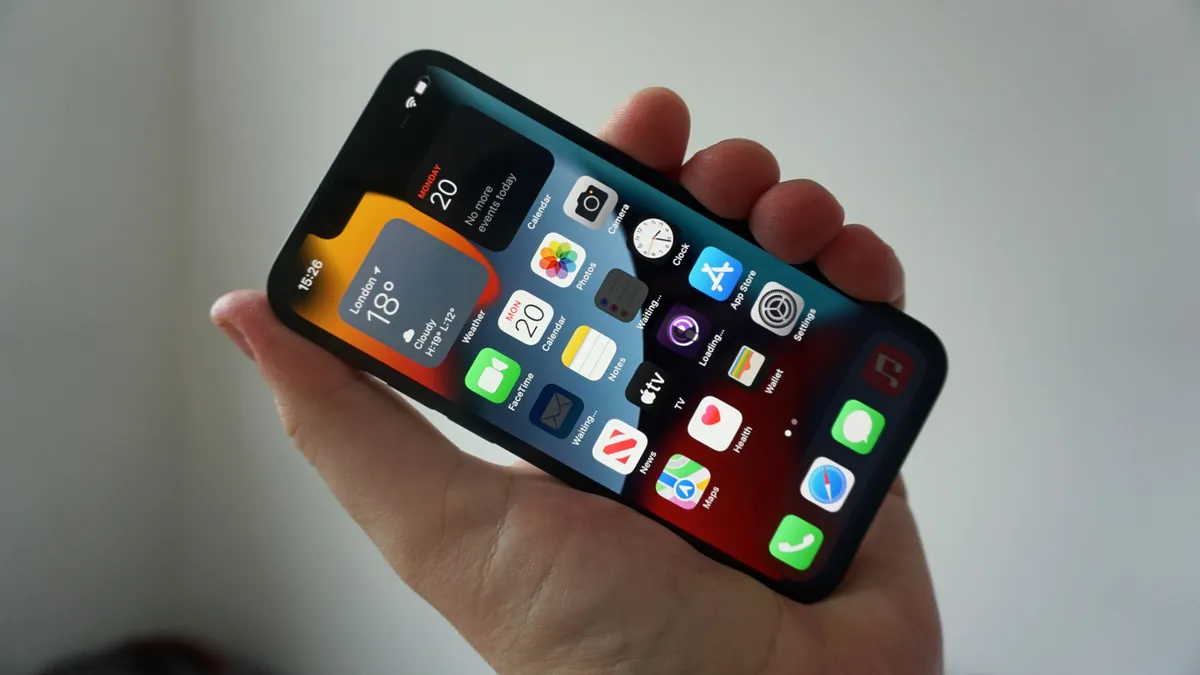
While I don’t think larger phones are objectively worse than their smaller predecessors – I’d say that in terms of performance, battery life, and camera arrays, they are definitely better– I do agree in part that there seems to be an accepted sentiment in the phones world that bigger is better without any solid logic.
On my commute, I often see people with smaller hands than mine tap away on plus-sized phones. It’s as if being forced to use a phone two-handed has become the accepted norm, while a few holdouts like myself try to use the 6-inch plus phones one-handed and then see them slip from my grip and dive bomb into the ground.
Despite there seeming to be an appreciation and desire for small phones, those that were on the market didn’t seem to sell in big numbers, and mainstream phone makers don’t seem to be considering them; slimmer phones, yes, smaller, no.
Part of me thinks the likes of the iPhone 12 mini came at the wrong time. It arguably arrived when big phones were getting a lot of attention, with Samsung effectively bringing back the Galaxy Note series with Galaxy S22 Ultra and Apple expanding the screen size of its Pro phones. This surely made bigger phones the zeitgeist, with smaller ones and their smaller batteries left as a bit of an afterthought.
But now there’s a feeling we’re pushing towards a time where people don’t necessarily want the biggest and best phones to dominate their life, with the idea of limiting screen time and going on digital detoxes being more prevalent; this is something I’m slowly becoming aware of given how easily I find it is to doom scroll on increasingly toxic social media and short attention-grabbing videos.
This is perhaps why we’ve seen people look back at using older phones, and the likes of Phone Writer Jamie Richard extol the virtues of ‘retro’ phones like the iPhone 5s. So maybe now’s the time for phone makers to explore going back to smaller and simpler phones that feel more like tools than time-sucking pocket computers. An early hint at this feeling I have can be seen with the Ikko MindOne Pro, a compact phone revealed at CES 2026 that looks like a slick antidote to ubiquitous big phones.
Of course, I’m lucky as what I’d call a medium phone (6.1 to 6.3 inches) fits my hands. But I’d not be against seeing a fresh slew of small phones that help cut out the ease to dive into social media and streaming, and instead work well enough to send some messages, follow directions on Google Maps, and snap the odd photo.
Follow TechRadar on Google News and add us as a preferred source to get our expert news, reviews, and opinion in your feeds. Make sure to click the Follow button!
And of course you can also follow TechRadar on TikTok for news, reviews, unboxings in video form, and get regular updates from us on WhatsApp too.
https://cdn.mos.cms.futurecdn.net/LxMvswdjvPvswy7YxdEW8S-2000-80.jpg
Source link




