
On this day back in 1986, something happened that would change the trajectory of gaming – The Legend of Zelda was released on the Nintendo Entertainment System.
No, that’s not just me being hyperbolic; as well as starting what is now a 40-year-old, frequently record-breaking game series, it was also the first game to introduce save files stored on the game cartridge, revolutionizing how games were played and saved.

What’s in a name?
If I had to label it, I’d say the 21 main Legend of Zelda titles broadly fall into what I’ll call the “puzzle-solving adventure” genre, constantly straddling the line between action and exploration. However, I’d be reluctant to label it at all, as the series’s ability to adapt and innovate is seemingly boundless.
A big reason behind its popularity, I think, is that Nintendo has not limited itself to a specific formula; you know when you play a Halo game that it’ll broadly consist of jumping around and shooting stuff, GTA 6 will mostly involve driving around and hurting innocent civilians.
The Legend of Zelda is not so caught up by minutiae; all you know going into a game is that there will likely be some form of “rescue the Princess” main mission, but how it will actually play is entirely down to the thematic principles of any given Zelda game.
Inasmuch, there’s one thing that does tie together all of the games in The Legend of Zelda series. Not one of them plays exactly like another. OK, barring a few of the sequels (where repetition is to be expected).
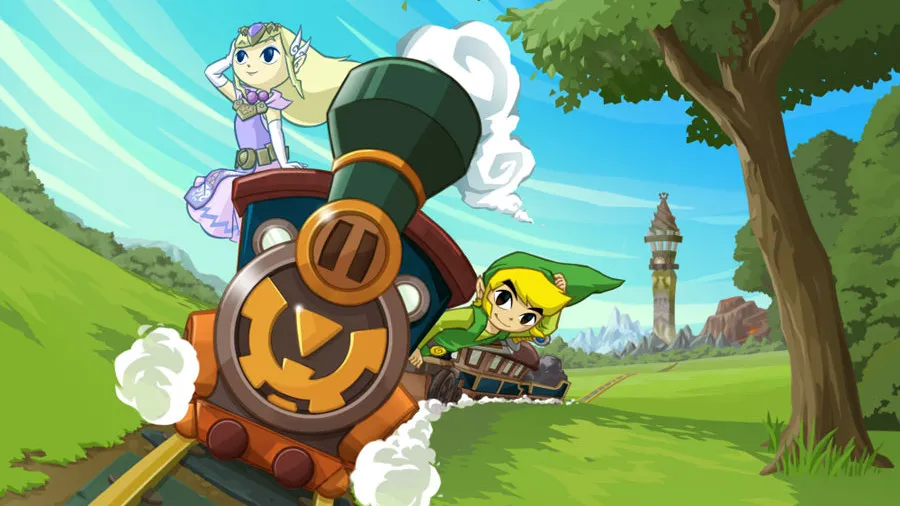
Zelda games are often experimental with mechanics, to a degree where I wouldn’t be surprised to learn that they’re established long before any story, artwork or thematics are decided upon. That’s how you end up with seafaring adventures like Wind Waker, railway exploration with Spirit Tracks, and motion-controlled swordplay in Skyward Sword. It’s a gamble that doesn’t always pay off – and I’d personally use the latter as an example of that – but it keeps the series feeling fresh.
Even the tone (and, subsequently, age restrictions) vary wildly. Some games like Majora’s Mask and Twilight Princess are quite thematically dark, while others are more kid-friendly; some are more linear compared to more recent open-world adventures like Breath of the Wild and Tears of the Kingdom. Everyone has a different favourite, and fans can be quite fierce in defending them.
The same goes for the art style, which varies wildly across almost all of the games, as well as the music; while tonally and thematically consistent, Nintendo is not afraid to shake up everything we expect from Hyrule.
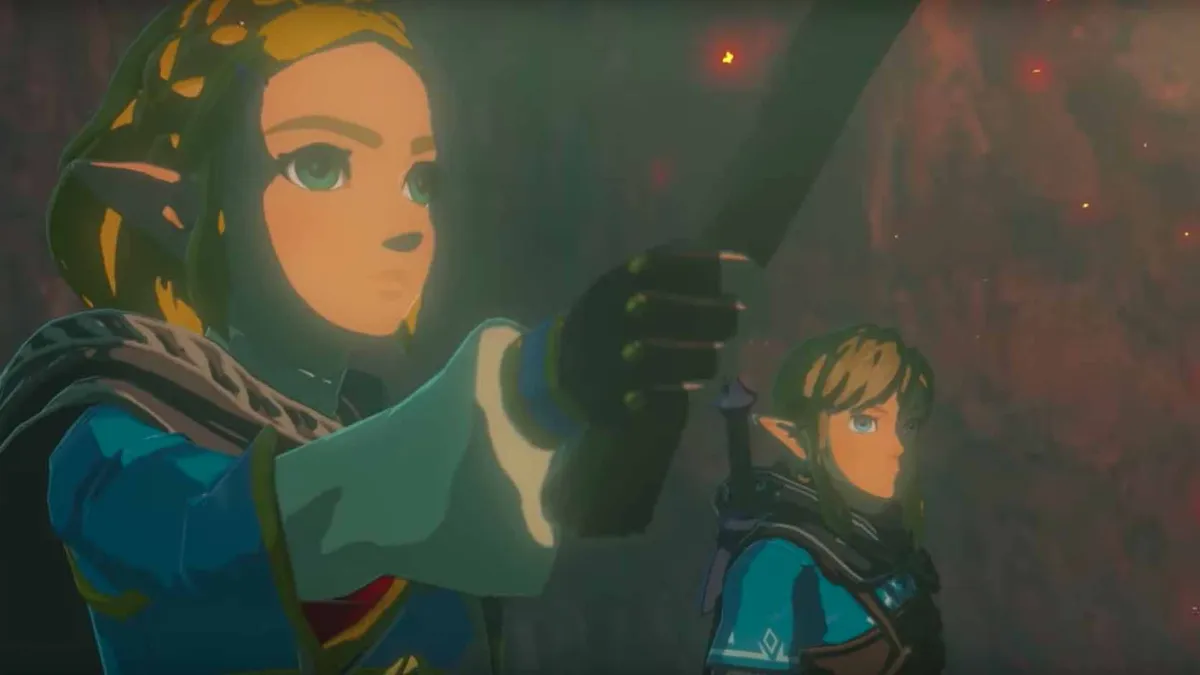
The Lord of the Rings of gaming
That’s right, I said it; The Legend of Zelda is to gaming what The Lord of the Rings was to mid-century literature. As a huge fan of both, it’s a compliment both ways, but more specifically references the fact that Takashi Tezuka himself has cited Tolkien’s work as inspirational for The Legend of Zelda. Tezuka was responsible for the narrative and world-building of the first game and has worked on many of the best Zelda titles since, meaning that Tolkien’s world-building and storytelling run deep in the franchise’s DNA.
The narrative cues are quite obvious in places; there’s a Heroic quest with a fundamental battle between good and evil at its core, and both create complex and varied characters with differing motivations, especially in more recent character-driven Zelda storylines. Putting on my literary nerd hat, both are also works of mythopoeic literature; Hyrule, like Middle-earth, is an entirely fictional world with its own rules, cultures, and regions. For the uninitiated, that means there’s a whole lot of lore.
As such, both worlds are incredibly immersive and rich, often toying with themes of apocalypse, the brutality of war, and the consequences of greed. Alongside these darker undertones, though, are the desperate attempts to preserve pastoral beauty; much like Tolkien found inspiration in the turn-of-the-century rural English countryside, Shigeru Miyamoto’s childhood adventures in nature are deeply embedded in the world of Hyrule.
Where the fork in the road appears in this comparison is simple: The Lord of the Rings strove to create folklore where Tolkien felt England lacked it. The Legend of Zelda, unbeknownst even to itself, became folklore. By creating a narrative that spanned characters in an endless cycle of reincarnation, Nintendo created a modern epic told through video games and fandom.
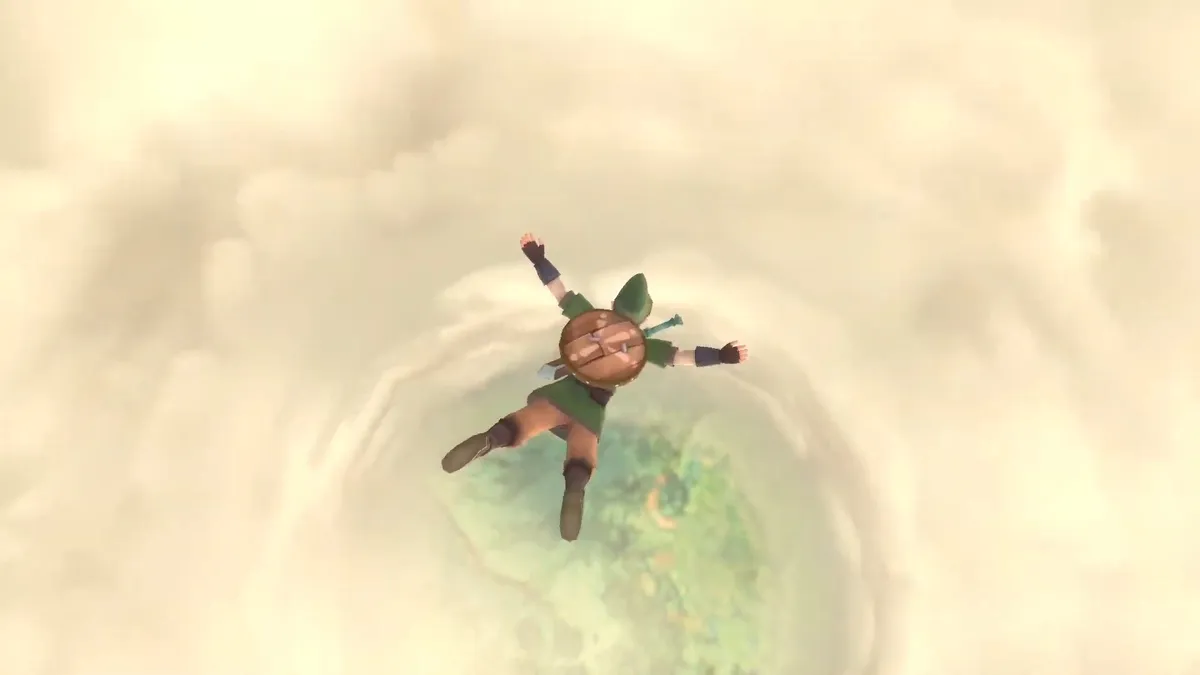
Beauty is in the eye of the beholder
This is where the magic comes into play, and it’s all down to people like you and me. Creating such a vibrant and varied narrative spanning generations across centuries is a total honeytrap for the player’s imagination.
It’s the reason I’m so drawn to the series; sure, they’re a lot of fun to play, but each game presents an opportunity for analysis. For instance, there are iconic motifs that repeat and evolve throughout the series; the three goddesses who created Hyrule, the Great Fairies, and the Master Sword – each new game introduces fresh history and meaning to the last. Sometimes, information even conflicts across games. Over the course of the series, such inconsistencies formed a kind of oral tradition in online forums and among content creators, with fans acting as the mouthpiece for various theories and connections between different games. Like the Arthurian legend, one never quite knows who told each tale, nor how much of it is true to history, but we all know the heroes.
This most famously manifested in the 2011 official Hyrule Historia, which confirmed the existence of a canon timeline that weaves each game into a complex, three-pronged timeline spanning centuries and different realities. Fans had theorized such a document existed for years, although others assume Nintendo just ran with the idea after seeing how popular it was with fans.
By now, I hope I’ve convinced the uninitiated that worldbuilding and fan theory are key components of The Legend of Zelda‘s success, but equally important is the bridge between the two: Link. His name is no coincidence; he is the literal link that bridges the real world and Hyrule. A blank, unspeaking canvas upon which we can imagine ourselves a hero of old.
It’s a huge part of his character, but also his design. There’s even an air of androgyny to Link — something Eiji Aonuma has actually discussed in an interview with Time as an intentional choice. Perhaps that’s why The Legend of Zelda seems to have a pretty strong contingent of female fans compared to other long-running series — I certainly thought Link was a girl for a fair few years.
With The Legend of Zelda, Nintendo managed a pretty impressive juggling act; it built an expansive world, created a wide-reaching and engaged community and remained laser-focused on keeping that audience captive. Today marks 40 years of continued, largely successful juggling, and even if you’re not a fan of the series, that deserves some respect.
Times are a-changing
With all eyes on Nintendo’s social accounts today (in fact, by the time I’ve hit publish, they may have already dropped some news), one can only hope we get a celebration befitting this huge milestone. For its 25th anniversary, Nintendo released The Legend of Zelda: Skyward Sword, Ocarina of Time’s 3DS remaster, the Hyrule Historia, and even a touring Legend of Zelda Symphony.
Ports and remakes are increasingly available, but whether you like it or not, Nintendo’s iron-tight grip on its intellectual property does create a scarcity; that’s why right now, fans are going pretty feral, waiting to see what Nintendo has up its sleeve for this anniversary.
I’m matching my anticipation with a looming sense of dread. In what has been an otherwise glowing review of 40 years’ worth of creative game-making, I come to an anxious juncture: what on earth is next for The Legend of Zelda?
Personally, I’m hoping for a Wind Waker or Twilight Princess remaster for Nintendo Switch 2, but in all likelihood, I’m sorry to say we’ll probably just get a new trailer for the upcoming live action The Legend of Zelda movie and maybe an announcement for a remaster or a Nintendo Switch Online port today.
Nintendo took a huge swing with Breath of the Wild, effectively retconning its own timeline and starting a new cycle for Zelda games. It was a risk worth taking, as was its sequel Tears of the Kingdom, but one so lofty I worry Nintendo will confine itself too readily to a set formula moving forward, and I’m not sure the open-world adventure genre allows for the kind of continued creativity and whimsy I’ve always loved from Zelda titles. Echoes of Wisdom did little to ease my nerves, given it wasn’t technically a from-scratch new game. So, we’ll just have to see as the year goes on what’s in store next for our favorite hero and his beloved Princess.

The best handheld games consoles for all budgets
Follow TechRadar on Google News and add us as a preferred source to get our expert news, reviews, and opinion in your feeds. Make sure to click the Follow button!
And of course you can also follow TechRadar on TikTok for news, reviews, unboxings in video form, and get regular updates from us on WhatsApp too.
https://cdn.mos.cms.futurecdn.net/pkQ7xkTJBq7TetzNUSLrNf-1280-80.jpg
Source link
josephine.watson@futurenet.com (Josephine Watson)





