
These days, if you’re looking at tech news, it won’t be long before you come across a mention of the RAM crisis. The dwindling supply of memory chips is proving increasingly problematic, and at this point, it seems that the AI industry hasn’t just eaten the consumer’s lunch, but also their dinner, pudding, and the little mints that usually arrive with the bill afterwards. And did it tip? Not likely.
I have got a tip for you, though – yeah, I know, smooth segue – or rather five tips as we face the inexorably on-rolling memory shortage, which is crushing all wallets in its path. In this article, I’ve picked out five pieces of computing hardware that I believe you should buy now, or in the very near future, before the PC component crisis — because it extends beyond mere RAM, of course — renders this hardware a good deal pricier.
Nothing is guaranteed in life, not even my expert predictions (ahem), so consider them with that in mind. But I’m making these recommendations — from MacBooks to SSDs — based on what’s happened most recently in terms of said crisis, for good reasons that I’ll expand upon when I come to each individual pick.

So here are my five devices or components which I believe you should move sooner rather than later with if they’re on your shopping list. Bear in mind that with Amazon Prime Day just around the corner (and discounts on the go already), it could also be worth keeping an eye out for bargain deals at that retail giant.
1. Apple MacBooks — especially the MacBook Neo

Earlier this week, Tim Cook came forth with some information that everyone who’s mulling buying a new Mac needs to know about. The Apple CEO told us that its products are going to get substantially more expensive before long, liberally sprinkling around words like “unavoidable” without going into any specifics.
Price hikes, and likely sizable ones, are coming to Apple‘s major products, then, and that includes MacBooks (as well as iPhones and probably iPads too, and more besides no doubt). What I’m particularly worried about though, as I discussed at the time, is what this could mean for the MacBook Neo.
Long story short: Apple ditched the entry-level Mac mini last month, the product which cost an enticing $599 (£599 / AU$999), making the next-tier-up model, which has twice the storage (512GB instead of 256GB), the cheapest option at $699 (£699 / AU$1,099). Might the same thing happen to the MacBook Neo? I believe there’s a chance that Apple could mirror this move, because given the need to address MacBook pricing, when it comes to the Neo, applying a hike this early in the device’s lifespan doesn’t look good. Especially not when it’s built entirely on its value appeal as a budget model.
So, a way of rejigging things without a price hike would be to just ditch the current entry-level Neo, just as happened with the Mac mini, leaving folks to pay a hundred notes more for the baseline model (while getting more storage, granted). Then this could be framed as a configuration adjustment rather than a cost adjustment.
With that in mind, the MacBook Neo at its current entry-level price might be a steal, and that’s especially the case if you can get a bargain on the laptop. Indeed, there’s already a good early Prime Day deal in the UK (at the time of writing) — and there may be others too.
Of course, there could be deals on other MacBook models, and just as with the Neo, it’s likely a smart move to grab a bargain on a MacBook Air or MacBook Pro, or any Mac you might be considering buying this year. All these PCs may be hit with what’ll seemingly be substantial price hikes, and so I think buying now is very much the thing to do.
A MacBook Air M5 at $950 currently (the discounted price in the US on Amazon, again as I write this) might look pretty good compared to the Neo at $700 a little way down the road, potentially.
2. SSDs

My second port of call given recent rumblings with the component crisis is to grab a relatively affordable SSD if you can, though granted, this comes with caveats — it may not be easy to find one.
Still, I think it’s worth trying — again, Prime Day might help here — and to pick an example, Samsung’s 990 Pro SSD has been at reasonably palatable pricing (for the current climate) of late. Okay, so a current deal on the 1TB model costs about the same as the MSRP of the 2TB flavor before the RAM crisis hit, but still, a bit over $200 in the US is not bad in the overall picture.
And the thing to bear in mind here is that earlier this week, an exec in the SSD supply chain (a VP at Silicon Motion, which makes drive controllers) gave us an alarming soundbite that ran: “The retail SSD market has almost disappeared.” With SSDs all being funneled towards data centers and OEMs (PC manufacturers), there’s precious little left heading to the shelves where the average consumer can pick them up.
Unlike RAM, where price inflation may not have much further room to maneuver — given that consumers will just stop buying at some point — there is still some space for SSDs to rise. What the Silicon Motion VP said all sounds rather ominous, and points to a picture where the decent deals — relatively speaking — that we can get right now on SSDs may evaporate before too long.
3. External hard drives

This comes right off the heels of the above in the world of storage, as there’s evidence pointing to a rise in hard drive prices. While as noted, SSD prices have shot up — especially for larger capacity or high-end models — hard drives hadn’t really been affected, at least not until a few months ago.
Based on the findings of 3D Center, which monitors the German retail market, hard drives are becoming increasingly expensive. Last month, they were 34% more expensive than a year ago, and as of June 2026, that ante was upped distinctly to 58% (effectively a price increase of close to 20% in the span of a month).
So, if you need an external hard disk for your backups or NAS — or to provide extra capacity for your Mac with a small SSD — you might want to consider buying it now before price increases shift up another gear, which looks like what’s going to happen.
4. Windows 11 laptops
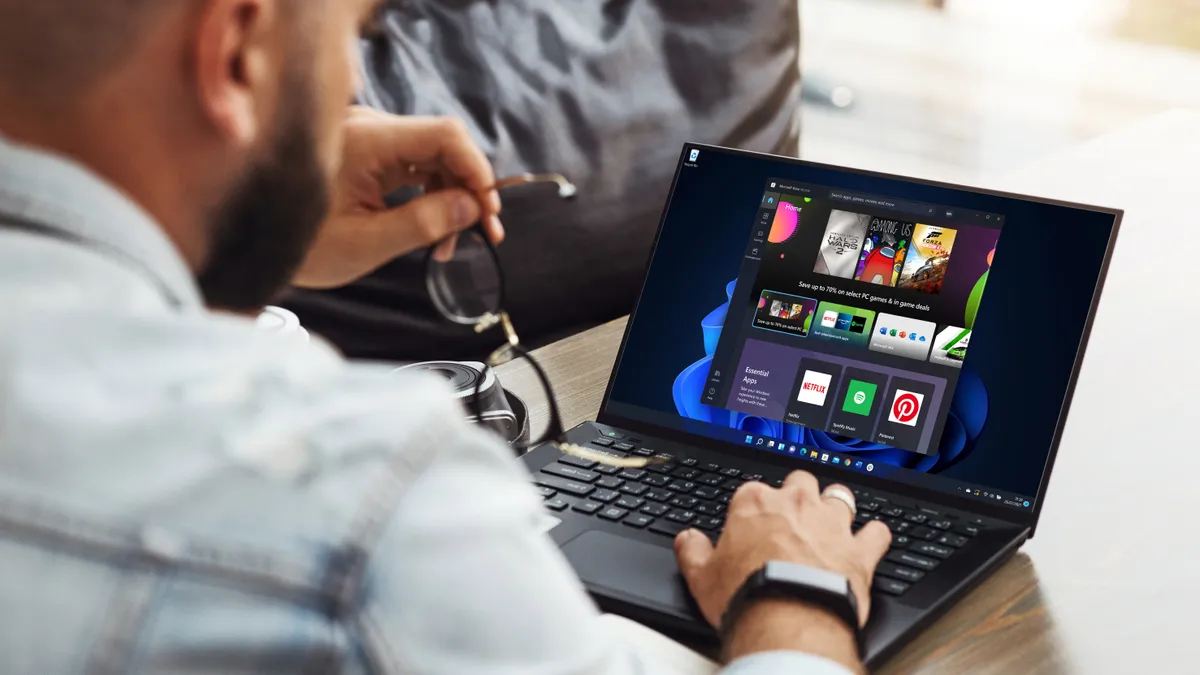
MacBooks aren’t all you need to worry about when it comes to price hikes, as naturally the broad upward pricing pressures on components affect all notebooks.
I previously wrote about why it’s a good idea to buy a Windows 11 laptop now, following Nvidia‘s CEO, Jensen Huang, predicting that the RAM crisis might spin onwards until the end of this decade.
The crux of the matter is that affordable notebooks are still very much a thing, especially during sales, but with the additional gloom cast on pricing woes in recent times — particularly by Huang, who is well placed to forecast — I feel there’s a distinct danger that it could be harder to buy a cheap laptop before long.
I doubt you’ll regret buying a Windows 11 laptop at today’s prices, put it this way, particularly with a discount applied.
5. Graphics cards
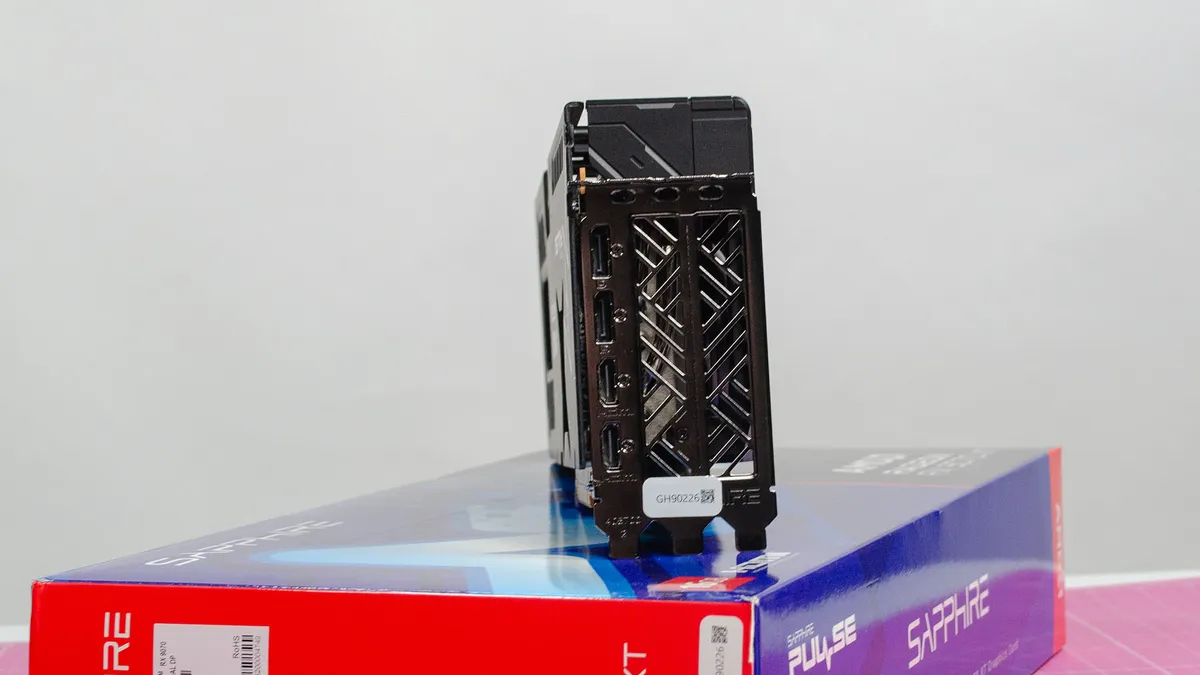
Finally, if you’re pondering a graphics card upgrade at some point going forward, this is another component that I reckon it’d be smart to grab soon.
While price increases for Nvidia GPUs have been more confined to higher-end models — products with more video memory (VRAM), which is where the pricing misery mainly stems from — I think that they’ll apply more to mainstream cards as 2026 rolls on.
Why? For starters, I don’t think it’s a great sign that Nvidia is resurrecting half-decade-old GPUs from the generation before last to help bolster supply levels of its boards. (These RTX 3000 models use GDDR6 VRAM, which is a useful alternative memory vein to tap away from the GDDR7 that’s in current-gen graphics cards). We’ve seen nasty hikes applied to the RTX 5060 Ti 16GB already, and the RTX 5070 price is creeping up too, based on the latest data from our sister site Tom’s Hardware.
The RTX 5070 and RTX 5060 8GB can still be had at relatively palatable prices, though, so they may be a solid buy with a bit of a Prime Day discount in the offing perhaps. (Even if they aren’t hugely well-liked GPUs, in all fairness, for one reason or another — the scant VRAM allocation being the main bone of contention for many gamers).
Where I’d be more inclined to look, though, is at the AMD RX 9070 XT. That GPU is in a similar position to the RTX 5070 in the US with a relatively mild (roughly) 10% price hike right now, the difference being that it packs 16GB of VRAM and considerably better performance (at least away from ray tracing).
We’ve seen some decent deals on the 9070 XT recently, and if you can grab one, I think that could be a great move as a GPU upgrade that’ll last you. Particularly given that AMD’s CEO Lisa Su has forecast pricing misery to come later this year, with Team Red serving up some relatively strong signals for the likelihood of incoming Radeon graphics card price hikes.

Follow TechRadar on Google News and add us as a preferred source to get our expert news, reviews, and opinion in your feeds.
https://cdn.mos.cms.futurecdn.net/53sVGRXmEiu9KHs5tMAKd7-1920-80.jpg
Source link




