
[
No genre is more deeply rooted in American cinema than the Western. Westerns took to the screen in the early 1900s, and the genre’s core conventions have remained surprisingly consistent over the past hundred years. However, the genre’s popularity has fluctuated and experienced distinct eras of evolution—including a fascinating 21st-century resurgence.
Popular and inexpensive, Hollywood studios delivered a slew of classic Westerns in the early days of film. “The Golden Age of the Western” took hold by the end of WWII. Westerns dominated the 1940s and ’50s filmsacpe, and solidified the genre’s definitive tropes. These sentiments include idealized American Expansionism, the heroic cowboy figure, moral justice, love, and revenge.
As the traditional American Western waned in popularity, Spaghetti Westerns took hold in the 1960s. These films introduced a grittier American West. Named for their predominantly Italian directors and filming locations, these darker Westerns were ruled by anti-heroes. Though these films began to stray from the American idealism of early Westerns, the traditional aesthetics and genre tropes remained.
Following another dip in popularity, the Western reemerged in the 1990s and transformed in the 2000s. The contemporary “Neo Westerns” or “Revisionist Westerns” of the 2000s largely explore themes of encroaching modernity, identity crises, and moral degradation or nihilism. Modern Westerns generally use the culturally understood language of Westerns to explore new ideas and make social arguments, which often contradict the ideals of early American Expansionism.
No Country for Old Men (2007)
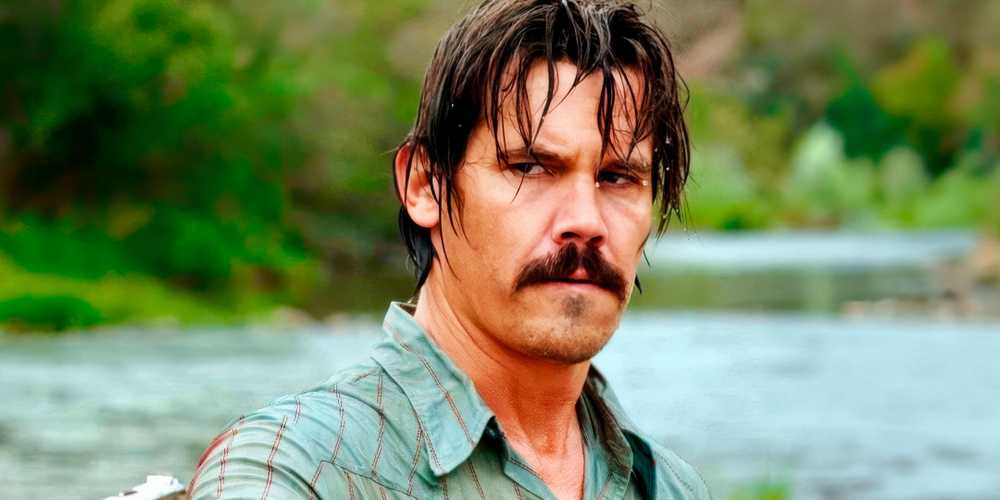
The Coen Brothers’ No Country for Old Men is a nihilistic depiction of immorality and violence in the modern West. The Coens use classic Western tropes to define the nihilistic modern era against the mythical, righteous American West.
In the film, based on Cormac McCarthy’s novel, a hunter takes cash from an abandoned crime scene and is tracked by a merciless killer. A representative of the Old West, Sheriff Bell (Tommy Lee Jones) hopelessly trails behind the dark criminal action of the film. He is unable to think like the modern characters, who act outside the moral compass through which he sees the world.
As the title suggests, the world of No Country for Old Men was unrecognizable to those only invested in classic Westerns. This Best Picture Academy Award winner indelibly transformed the Western genre and pioneered the concept of the Neo-Western.
There Will Be Blood (2007)

In his grand epic, Paul Thomas Anderson exposes the dark, corrupting realities of idealized Western Expansion. There Will Be Blood follows the devilish Daniel Plainview (Daniel Day-Lewis) as he chases his growing ambition. Plainview begins as a silver prospector and ends as a successful but morally debased oil tycoon.
There Will Be Blood captures the raw landscape commonly depicted in traditional Westerns, winning an Academy Award for cinematography. However, it uses this imagery to decry man’s pillaging of the land to satisfy unfettered economic ambition. In a particularly arresting shot, Plainview is seen splattered in oil as if it were the blood of those he killed to achieve victory.
While it lost the Best Picture Oscar to No Country for Old Men, the Anderson epic is named the best film of the 21st century by The Guardian.
True Grit (2010)

The Coen Brothers’ 2010 remake of the 1969 True Grit achieves a rare feat: it surpasses the original. While John Wayne’s True Grit is a Western classic, the Coen’s adaptation is more faithful to the original Charles Portis novel. The story sees teen Mattie Ross hire the gruff Marshal Reuben J. Cogburn to track down her father’s killer.
The 1969 True Grit adapts Portis’ morally grey story to fit the idealist sentiments of classic Western films, and centers Cogburn as the protagonist.
The Coen’s 2010 True Grit uses the lenient sentiments of contemporary westerns to more authentically explore the grittier tale spun in the original book. The film also re-centers the story on Ross (Hailee Steinfeld) and more explicitly extracts the novel’s dark humor.
Rango (2011)

Rango stands out against a saturated genre as one of the most innovative Westerns of the modern era.
After directing Pirates of the Caribbean, Gore Verbinski ventured into animation to create this unlikely gem with Jack Sparrow himself. Verbinski hired Industrial Light & Magic, the company that created the Pirates effects, to animate Rango through E-motion capture. This was the first fully animated feature for both the company and the director (via The Hollywood Reporter).
Rango emerged from this precarious production process and forged a new frontier. This heroic journey is reflected in the film’s plot. Voiced by Johnny Depp, Rango is a nervous pet lizard who unwittingly finds himself as the hero of a small frontier town. Pampered by modern American society, Rango embodies the Western spirit of valor and adventure to forge personal growth and individual identity.
The Hateful Eight (2015)

The Hateful Eight is Quentin Tarantino’s second western, following Django Unchained in 2012. Tarantino strove to authentically capture the spirit of 1960s Westerns in The Hateful Eight.
The director used 1960s Ultra Panavision 70mm film to capture the sprawling wintry landscape of the Rocky Mountains with the essence of classic American cinema (via Collider). Tarantino also had Ennio Morricone compose the film’s magnificent score. Morricone is a legendary Spaghetti Western composer, responsible for the score of Once Upon a Time in the West, Tarantino’s favorite Western.
The Hateful Eight even opens with a direct homage to the 1939 John Ford classic, Stagecoach. While it is an ode to classic Westerns, The Hateful Eight itself re-imagines the genre with Tarantino’s signature cynicism, vulgarity, and violence. As such, the film is generally considered a Revisionist Western.
Hell or High Water (2016)

Hell or High Water entraps its modern protagonists in the impossible contradiction of American Expansionism and modern capitalism.
Written by Taylor Sheridan (Yellowstone), the Western crime follows two brothers who attempt to rescue their family’s ranch from foreclosure. Finding the American Dream to be a farce and the system to be rigged against them, these brothers turn to bank robbery as a means to save their land. However, the brothers are not the vilified bandits of classic Westerns. Rather, they are the justified antiheros of this Western, battling the villainous State.
A groundbreaking entry into the Neo-Western subgenre, Hell or High Water received immediate popular and critical praise upon its 2016 release at the Cannes Film Festival.
First Cow (2019)

First Cow is a quiet champion in the Revisionist Western sub-genre. The A24 film connects idealist early American Expansionism to its late modern consequences.
Based on his 2004 novel, The Half-Life, Jon Raymond co-wrote the film’s script with director Kelly Reichardt (via Time). Their story follows two travelers in the rugged Pacific Northwest of the early 1800s. The men attempt to get rich by selling the milk of a cow, though it is the property of a wealthy landowner.
First Cow raises questions of ownership concerning natural resources, inciting a larger reflection on the modern commodification of land.
Reichardt’s film stands out against high-action, nihilistic revisionist Westerns such as There Will Be Blood. The film’s social critiques are padded by serene cinematography, a peaceful score, and a compassionate depiction of innate human goodness.
The Power of the Dog (2021)

The Power of the Dog is a Western psychological thriller that explores themes of toxic masculinity—championed in the traditional Western. Director Jane Campion uses the cowboy archetype to expose the suffocating effect of patriarchy on male characters.
Following two brothers on their Montana ranch in the 1920s, The Power of the Dog notably lacks a clear villain for its characters to defeat and define themselves against. Rather, the brothers fight against the restrictive and elusive concept of manhood. This is a concept the characters are simultaneously trapped in and unable to embody.
This unnatural and restrictive idea of toxic masculinity is contrasted by breathtaking shots of the natural landscape and its inherent freedom and fluidity.
The Harder They Fall (2021)

The Harder They Fall is a reclamation of a historically racist genre. The fictitious story is populated by real historical figures, who have been excluded from Westerns due to their race. The film opens with the defiant statement: “These. People. Existed.”
Writer-director Jeymes Samuel places these historical figures in a classic Western movie, refusing to relegate them to a Neo-Western. The Harder They Fall follows heroic outlaw Nat Love (Jonathan Majors) and his band of ruffians as they exact revenge on Rufus Buck (Idris Elba). The film closely adheres to Western conventions, down to the literal “black hat” villains.
The Harder They Fall departs from the standards of the Western genre only in its technical filmmaking. Produced by Jay-Z, the film’s innovative cinematography, quick-paced editing, and contemporary soundtrack give it the feel of a modern music video. This underrated Netflix original is considered to be one of the best modern Westerns.
https://static0.srcdn.com/wordpress/wp-content/uploads/2026/01/hell-or-high-water.jpg?w=1600&h=900&fit=crop
https://screenrant.com/westerns-neo-best-movies-21st-century-since-2000/
August Barham
Almontather Rassoul




