
[
Though the midterms have been dubbed “the AI election” and a resounding repudiation of tech, it’s hard to tell what all this practically means.
There’s a whole lot that’s clear, to be sure. The blue wave was massive, and in part that wave traces back to serious anti-tech sentiment, especially around data centers. It’s worth pinning this down clearly: Americans, right now, overwhelmingly hate data centers. A Gallup and UMass Amherst poll from earlier this year said that more than 70% of Americans oppose data center construction, and the Democrats capitalized (Democrats in over 130 federal and gubernatorial races ran anti-tech or anti-data center ads).
Now, consider: Perhaps the greatest open question around Anthropic, on the eve of its historic IPO, is something like “Can they get enough compute, and can they manage the costs of that process?” The wishes of American voters seem to be on a collision course with the answers that Anthropic (and the AI boom) are looking for.
It gets weirder: While this election was roundly viewed as a disavowal of tech, California’s billionaire tax (famously and financially opposed by Sergey Brin) seems likely dead. And while some data center stocks dropped on Wednesday (Tesla and SpaceX shares also saw non-trivial drops), the Dow actually rallied on Democrats’ victories, up 1500 points.
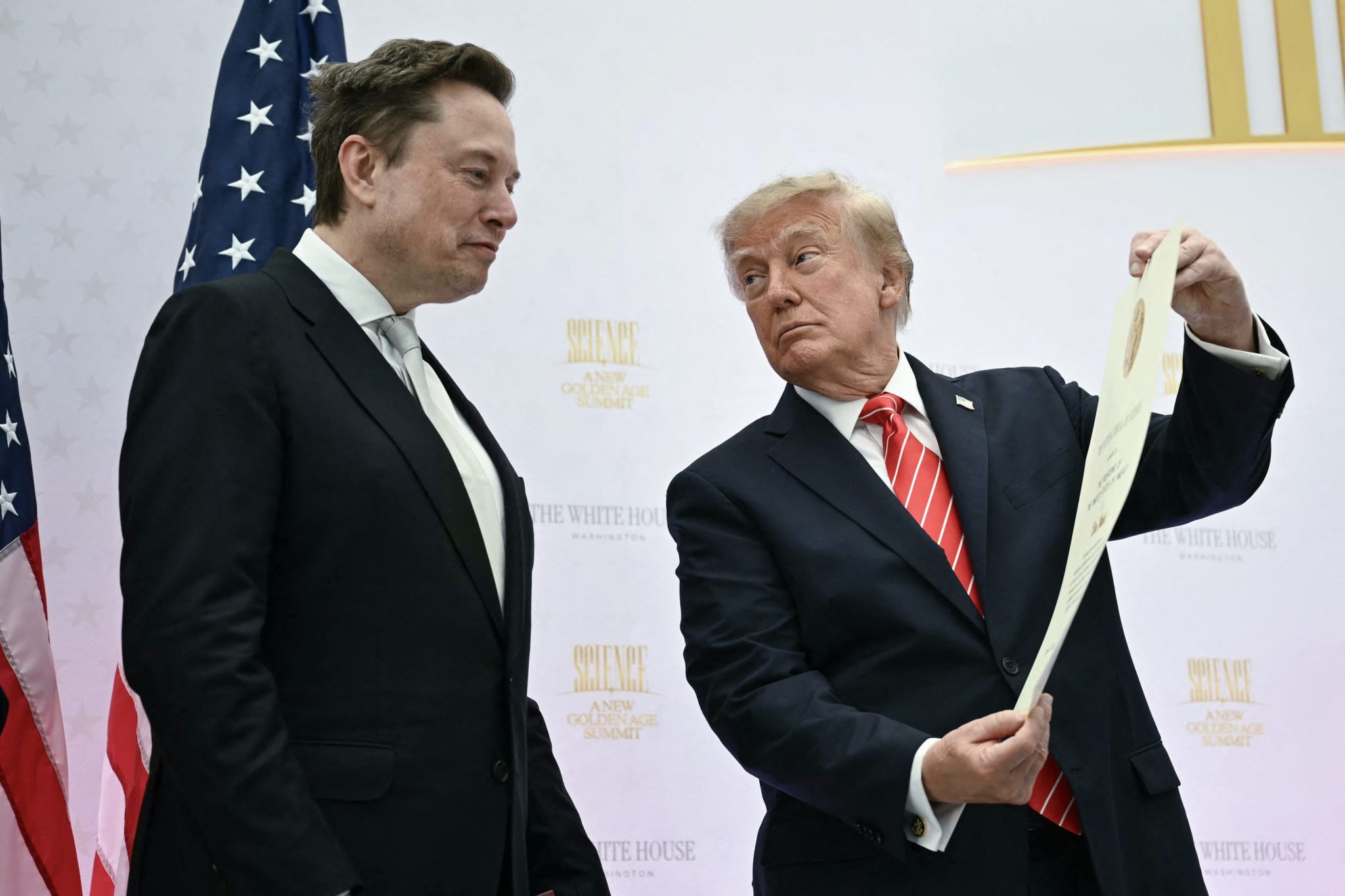
Brin’s possible success in shooting down the billionaire tax in California has proven singular. Famously, Marc Andreessen and Ben Horowitz were among the most active donors to Republican candidates in these midterms, to the reported tune of more than $100 million. The same was true of Musk, who reportedly donated well over $400 million. This all got a lot of press in the lead-up to the midterms, and rightfully so.
But most of these billionaires were suspiciously quiet on X on Wednesday, at least as of this writing in the afternoon. Musk was notable in sounding off: “Guess my election-interfering space lasers didn’t work this time.”
To me, for all the questions that remain, what these results prove goes something like this: The American people are exhausted and afraid of the AI boom, and no amount of billionaires yapping on X or funneling millions into the election is changing that.
Where that takes this world of people I cover from here, I don’t know.
See you tomorrow,
Allie Garfinkle
X: @agarfinks
Email: alexandra.garfinkle@fortune.com
Submit a deal for the Term Sheet newsletter here.
Morgan Chittum curated the deals section of today’s newsletter.
VENTURE CAPITAL
– Sentra, a data security company, raised $150 million in a Series C funding round. The investment was led by Capital One Ventures, with participation from existing investors Bessemer Venture Partners, Zeev Ventures, Standard Investments, Munich Re Ventures, and Key1 Capital.
– Kabilio, a Barcelona-based startup that uses AI to automate accounting and tax processes, raised over $11 million in funding. The round was led by Picus Capital and Visionaries.
– Shackleton AI, a New York-based developer of an AI platform for construction management, secured $5 million in seed funding led by Battery Ventures, with participation from Brick & Mortar Ventures, Trust Ventures, Correlation Ventures, Motivate Partners, Thayer Investment Partners, Act One Ventures, Brainstorm Ventures, Silence VC, and others.
– Kalepa announced a $75 million Series B funding round at a $470 million valuation. Updata Partners led the company’s raise. Other backers include IA Ventures and Inspired Capital.
– Phaze, a remote desktop platform for both human and AI agents, raised $8.75 million in seed funding led by a16z, with participation from Indie, NextView, Makers, and Lerer Hippeau.
– Pliant, a Berlin-based payments infrastructure company, secured $80 million in Series C funding, led by Seaya Nova and Speedinvest. Illuminate Financial, Motive Partners, and Molten Ventures also participated in the round.
PRIVATE EQUITY
– Aspirity Partners committed $135 million through a strategic minority investment to London-based wealth management platform Hoxton Wealth.
OTHERS
– Sapphiros and binx health have merged to form diagnostic company Onvaro. KKR, Hildred, and EQT Life Sciences are investing additional capital in the combined business. Financial terms were not disclosed.
PEOPLE
–Abnormal AI, a cybersecurity company backed by Greylock, Menlo Ventures, and Wellington Management, appointed Don Jeter as chief marketing officer. Jeter previously held the same role at Torq.
https://fortune.com/img-assets/wp-content/uploads/2026/11/GettyImages-2298607258-1-e1793776516946.jpg?resize=1200,600
https://fortune.com/2026/11/05/americans-hate-data-centers-tech-needs-them/
Allie Garfinkle




