
[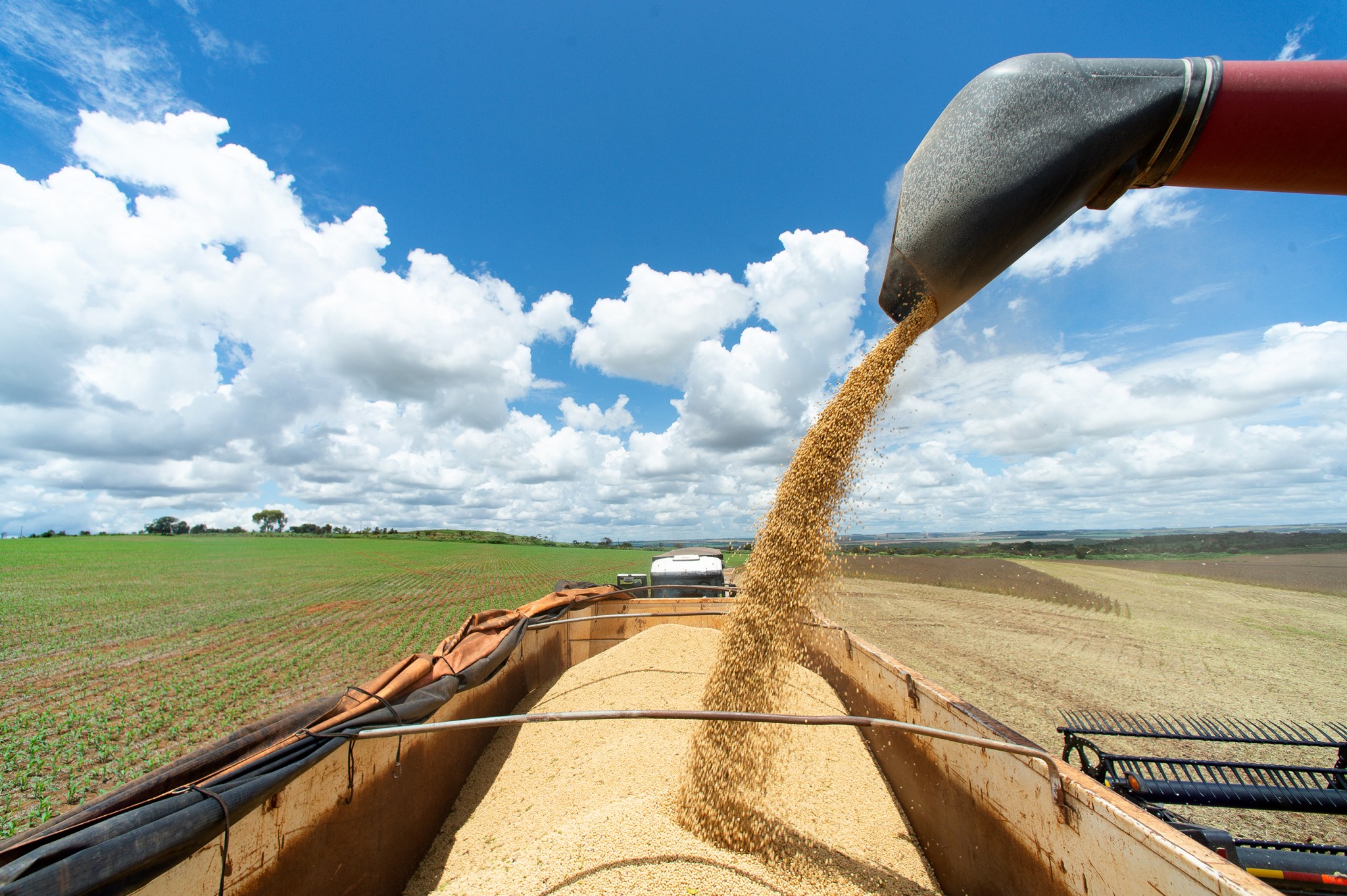
That is the paradox: the country that feeds so much of the world cannot feed its own fields without imports from a handful of foreign suppliers. Its farms run on three nutrients — nitrogen, phosphorus and potassium — and, according to the latest UN Food and Agriculture Organization data, in 2024, Brazil imports roughly 90% of the fertilizer it used.
Brazilian farms use more than a tenth of the world’s fertilizer, but the country produces barely 1% of it, despite meaningful domestic capability, and imports nearly a fifth of all fertilizer traded internationally. By nutrient, the same data puts nitrogen import dependence at about 99%; Brazil runs the largest nitrogen-fertilizer trade deficit of any country in the world, at US$4.3 billion in 2024, with most supply coming from China, Russia, Nigeria and Oman. Even phosphate, which Brazil partly mines at home, is about 70% imported, mostly from Morocco and Russia. Even more concerning is potash, given its production is highly concentrated: Brazil imports about 98% of its potash, almost all from Canada, Russia and Belarus. A country that uses nearly a quarter of the world’s potash relies on just three suppliers for almost all of it. Global potash output is concentrated in just four countries, Canada, Russia, Belarus, and China, and potassium has no substitute as a plant nutrient.
Since Brazil is the world’s largest net food exporter, fertilizer concentration is what turns import dependence into a food-security risk. And because nitrogen fertilizer is made mostly from natural gas, it also turns every energy crisis into a farm crisis. When global prices spike, sanctions bite or shipping lanes close, the cost lands directly on Brazilian farms. Farmers who cannot afford or obtain fertilizer apply less, and yields fall. A fertilizer shock does not stay an industrial problem; it becomes a systemic risk to the global food supply, reaching every country that buys Brazilian soy, corn or meat. Energy security, fertilizer security and food security are, in practice, links in the same chain.
That risk is no longer being ignored. The shocks of recent years, from the price spike that followed Russia’s invasion of Ukraine to this year’s disruption in the Strait of Hormuz, have moved fertilizer from a niche commodity concern onto the agendas of governments and development banks.
In the United States, the Trump administration has committed more than US$1.3 billion across eight projects to expand domestic fertilizer manufacturing, and multilateral development banks issued a joint statement in August 2026pledging to shore up fertilizer supply chains worldwide. Brazil is moving, too: its National Fertilizer Plan sets targets to raise domestic potash fertilizer production to 6.3 million metric tons by 2030 and 14.6 million metric tons a year by 2050, measured as potassium oxide (K₂O), part of a broader goal to cut imports to about 45% of the fertilizer Brazil uses by 2050. The Profert law, signed in September 2026, goes further, authorizing up to R$10 billion (about US$2 billion) in tax credits and incentives for domestic fertilizer plants. Together, these moves signal that fertilizer is finally being treated as a matter of food security — and, increasingly, of national security.
Building resilience means producing more of these nutrients at home, and there are two complementary ways to do it. The first is large-scale and centralized: mines and industrial complexes built on Brazil’s own mineral and energy resources. Brazil holds substantial, largely undeveloped potash reserves, including deposits in Amazonas state that companies such as Brazil Potash are seeking to develop. Meanwhile, Petrobras has signaled plans to restart two idled ammonia and urea plants and build two new ones, aiming to cut Brazil’s reliance on imported potash and nitrogen. Brazil Potash, which funded this research, is developing one of those deposits in Amazonas. Such projects take years and millions of dollars to build, but once running, they deliver the volume and low cost per metric ton that only scale can provide, the backbone any serious strategy needs.
The second is small-scale and decentralized: modular units, above all for nitrogen, that run on renewable power or agricultural waste and sit close to the farms they serve. They can be built faster and added step by step, spreading risk across many sites instead of concentrating it in a few, and shortening the long haul from port to field. The same logic extends to potassium: recovery systems that capture it from manure, crop residues and food-processing wastecan create a regional supply alongside mined potash.
Brazil does not have to choose between the two. Potash and phosphate are geological: they depend on mineable reserves, which favors large, centralized operations where those reserves exist. Nitrogen is an energy problem, so it can draw on both: large plants for volume, and decentralized, renewable-powered production built on Brazil’s abundant hydropower.
Making both models work will take coordinated leadership from policymakers, industry and investors. The policy tools now exist; what matters is whether they turn into projects that get built. International finance is lining up too: the six development banks behind the August statement, including the World Bank and the Inter-American Development Bank, are preparing a joint roadmap to finance fertilizer production, storage and transport, an effort the G20 has welcomed. Brazil should be first in line to use it. It can become more self-sufficient in fertilizer while remaining open to the world. The more secure Brazil’s agricultural engine is, the more reliably it can keep sharing its surplus with everyone else who depends on it.
The next disruption to potash or nitrogen supply, and there will be one, will not ask Brazil’s farmers for a grace period. The time to build resilience is before the shock, not after it. Brazil has shown it can feed the world. The next test is whether it can secure what it needs to keep doing so, because when Brazil’s fields falter, the whole world’s food supply feels it.
The opinions expressed in Fortune.com commentary pieces are solely the views of their authors and do not necessarily reflect the opinions and beliefs of Fortune.
https://fortune.com/img-assets/wp-content/uploads/2022/03/Fertilizer-Soybean-Crop-Russia-Sanctions-GettyImages-1238927580.jpg?resize=1200,600
https://fortune.com/2026/11/15/brazil-fertilizer-potash-imports-global-food-supply-risk-lorenzo-rosa/
Lorenzo Rosa





