
[
Heavy is the head that wears the crown, and contrary to popular belief, Beijing doesn’t want the yuan to dethrone the dollar as the world’s dominant currency, according to a top China scholar.
While China has been trying to internationalize the yuan, also known as the renminbi, it doesn’t want the obligations that come with being the global reserve currency, Zongyuan Zoe Liu, senior fellow for China studies at the Council on Foreign Relation, wrote in Foreign Affairs this month.
To truly take the dollar’s place would require open capital markets, which would threaten the Communist Party’s control over who gets capital and how, she explained. That’s as many elites rely on offshore dollar holdings as a type of insurance against domestic political persecution.
Since China actually prefers to keep the dollar on top, the real reason for promoting the yuan abroad is to prevent the U.S. from weaponizing the financial system against it, Liu added, similar to how Russia was shut out after it invaded Ukraine in 2022.
A yuan network that’s international enough, even without being dominant, could bypass any dollar-based sanctions the U.S. might impose in the future.
“Placing a respectable second, or even a consequential third, would suffice to break the dollar’s effective monopoly and constrain the United States’ ability to impose financial sanctions unilaterally, while saving China the effort and cost of sustaining currency supremacy,” she said.
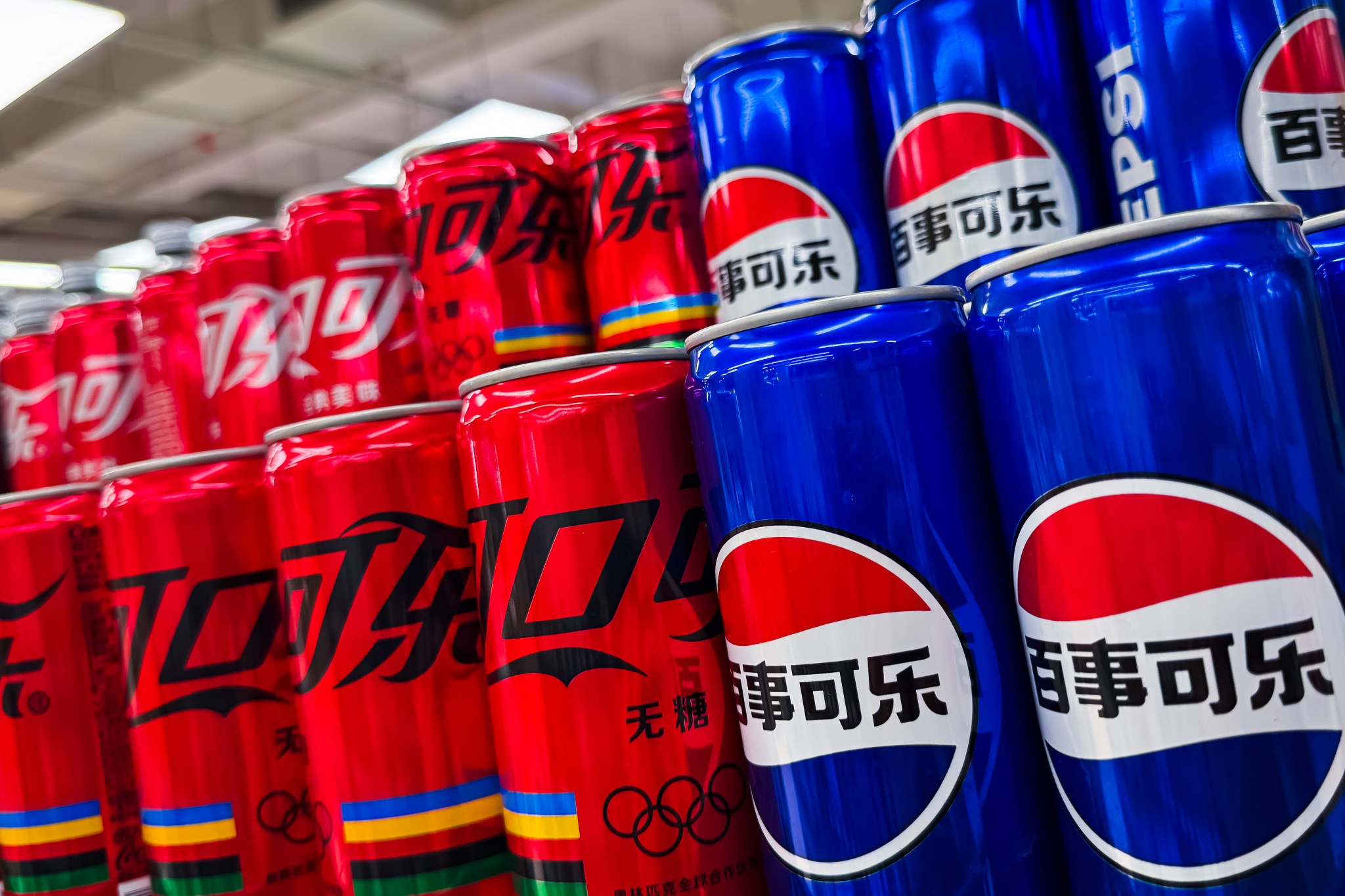
“From Beijing’s perspective, the mission is to establish the renminbi as the Pepsi to the dollar’s Coca-Cola: never the market leader, but serviceable in a pinch and more than capable of keeping the dominant incumbent honest.”
(For what it’s worth, Pepsi has actually fallen further behind Coke in the cola wars and was dealt a major symbolic defeat recently when KFC said it would replace PepsiCo soft drinks with Coca-Cola’s products at its 3,700 U.S. restaurants.)
So far, China facilitates renminbi use among firms in more than a hundred countries and across a growing array of commodity markets. As of June, its Cross-Border Interbank Payment System had 1,829 participants who could send payments to more than 5,200 banks in 191 countries.
Global currency requirements
But that’s just a small fraction of what the U.S.-dominated system processes, Liu said, adding that a global currency also entails pricing, financing, risk transfer, and reinvestment.
Chinese exporters still invoice in dollars and convert them to yuan just before brining them into China. But Beijing is promoting “China prices,” or yuan benchmarks on domestic commodity exchanges and has succeeded with lithium, she noted.
The financing stage is gaining momentum too as Chinese banks have more than doubled their yuan lending to overseas borrowers between 2023 and mid-2026. The People’s Bank of China has also reached currency swap agreements with 32 foreign central banks and monetary authorities.
More modest steps have increased the yuan’s presence in risk transfer markets as state firms have begun settling cargo insurance in yuan. But reinvestment is perhaps the weakest link in the chain. A strong yuan ecosystem requires recipients to hold and reinvest their balances rather than convert them, Liu argued.
China has expanded overseas access to domestic stocks and bonds, but Beijing’s unpredictable capital controls remain a worry. In March, foreign investors held just 1.6% of the Chinese bond market versus 27% in the U.S. bond market.
“Without a far larger pool of renminbi assets that foreigners can freely buy and sell, the renminbi cannot come close to replacing the dollar,” she said.
But similar to how the “petrodollar” anchors the greenback’s role in global trade, the yuan can dominate trade in an essential good that China controls.
That could take the form of critical minerals, clean energy equipment, and electrical infrastructure used in green energy technology, Liu posited.
China has already established supremacy across much of the green supply chain and is promoting standards built around technologies Chinese-owned firms.
“If China consolidates its dominance over that industrial ecosystem, using its scale and cost advantages to prevent competitors from catching up, it could gain enough leverage to price those essential, hard-to-substitute exports in renminbi, creating the foundation for a ‘green yuan’ that might eventually replace the petrodollar,” she predicted.
Petroyuan
Meanwhile, the Iran war has raised doubts about the petrodollar, which goes back to a deal struck in 1974 when Saudi Arabia agreed to price its oil in dollars and invest surpluses in U.S. assets.
In exchange for Saudi Arabia recycling its dollars back into the U.S., Washington guaranteed the kingdom’s security, which also involved stationing troops in the region, providing advanced weapons, and ensuring free navigation in the Strait of Hormuz.
But America’s role in the Mideast looks vastly different today. Despite 40 days of punishing bombardment of Iran and round-the-clock protection of commercial ships, the U.S. still hasn’t fully restored traffic in the strait.
At the same time, Iran’s swarms of missiles and drones have inflicted significant damage on U.S. aircraft, radars and bases, while American air-defense systems have failed to completely protect Gulf allies’ critical energy infrastructure.
“Damage to Gulf economies could encourage an unwind in their foreign asset savings,” Deutsche Bank warned in March. “In this context, reports that the passage for ships through the Strait of Hormuz may be granted in exchange for oil payments in yuan should be closely followed. The conflict could be remembered as a key catalyst for erosion in petrodollar dominance, and the beginnings of the petroyuan.”
https://fortune.com/img-assets/wp-content/uploads/2026/10/GettyImages-2179746109.jpg?resize=1200,600
https://fortune.com/2026/10/31/china-us-currency-wars-yuan-vs-dollar-pepsi-coke-pretodollar-dedollarization/
Jason Ma





