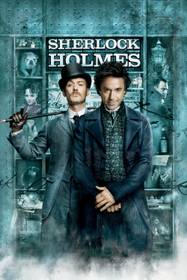
Guy Ritchie’s two-part crime thriller revived his career and makes for a perfect one-day binge. Guy Ritchie is now the busiest director in Hollywood, and since 2015 has essentially released a new blockbuster every year. His career before 2009 was a little spotty, however. After coming strong out of the gate with British gangster comedies like Snatch, his career got tripped up with duds like Swept Away.
It was the success of the Robert Downey Jr. Sherlock Holmes movies that completely turned his fortunes around. The first entry arrived in 2009, and wisely capitalized on its leading man’s hot streak following Iron Man and Tropic Thunder. While the chemistry between Downey Jr. and co-star Jude Law was key to the movie working, Ritchie is just as vital to their success.
Guy Ritchie movies tend to be visually inventive and witty, and he brought a very modern energy to a well-traveled brand. Instead of a stuffy old Sherlock Holmes detective tale, Ritchie’s take was a blend of procedural mystery and action thriller. This is especially true of the second entry, A Game of Shadows, which is practically a 19th-century Lethal Weapon with its blend of laughs and explosions.
From Baker Street to the Reichenbach · Eight Questions How Well Do You Know Sherlock Holmes? “When you have eliminated the impossible…”
🔎The MagnifierObserve, don’t see
👼Pipe & TobaccoThree-pipe problem
🏯Baker Street221B
🕷️MoriartyNapoleon of Crime
📱Modern SherlockHigh-functioning sociopath
01
Sherlock Holmes first appeared in print in 1887 and went on to feature in four novels and 56 short stories — a body of work fans call “the Canon.” The Edinburgh-born author who created him was a practising physician before fiction made him famous, and was knighted in 1902 for unrelated journalistic work on the Boer War. Name him.
✓ Correct! Sir Arthur Conan Doyle (1859–1930). He trained at Edinburgh under Dr Joseph Bell — whose almost theatrical diagnostic deductions were the direct model for Holmes’ method — before failing to make a living from medicine and turning to fiction. Doyle wrote four Holmes novels and 56 short stories between 1887 and 1927, plus a parallel career in historical novels and spiritualism advocacy. He was knighted in 1902 for his pamphlet defending Britain’s conduct in the Boer War, not for the Holmes stories.
✗ Wrong. The answer is Sir Arthur Conan Doyle. Wilkie Collins (The Moonstone, The Woman in White) is the great Victorian sensation novelist and an influence on the genre, but didn’t create Holmes. Edgar Allan Poe’s Auguste Dupin (in Murders in the Rue Morgue, 1841) is the prototype for the rational-detective genre and an open influence on Doyle. Chesterton wrote Father Brown. Holmes is Conan Doyle’s.
02
Holmes and Watson share rooms above Mrs Hudson’s lodgings at the most famous fictional address in literature — so famous that for decades the Abbey National Building Society employed a full-time secretary to answer letters sent to it. What is the address?
✓ Correct! 221B Baker Street — an address that didn’t exist when Doyle invented it (Baker Street numbering originally only ran into the lower hundreds). When the road was renumbered in the 20th century, the address fell within the Abbey National Building Society’s building — and so the bank employed a permanent “secretary to Sherlock Holmes” to answer the thousands of letters that arrived from fans every year. The Sherlock Holmes Museum now occupies the next-door property and uses the 221B address with City of Westminster permission.
✗ Wrong. The answer is 221B Baker Street. The “B” matters — it indicates the upper-floor flat above Mrs Hudson’s ground-floor rooms. Doyle picked the number when no real 221 existed; today, the Sherlock Holmes Museum at 239 Baker Street is officially permitted to use the 221B address.
03
Doyle’s first Holmes novel was published as the centrepiece of the 1887 issue of Beeton’s Christmas Annual, where Doyle was paid £25 for the full copyright. It introduces Watson, narrates the meeting with Holmes at St Bart’s laboratory and pivots into a long Mormon-Utah backstory. Name the novel.
✓ Correct! A Study in Scarlet (1887). Doyle wrote it in three weeks while waiting for medical patients who never arrived at his Southsea practice. The first half is the now-iconic introduction (Watson’s wound from the Battle of Maiwand, the chemistry lab, “You have been in Afghanistan, I perceive”); the second half pivots without warning to a Western-set Mormon revenge backstory in Utah. Beeton’s Christmas Annual sold out, and only 11 surviving copies of the magazine are known to exist today — making them among the most valuable items in modern book collecting.
✗ Wrong. The answer is A Study in Scarlet. The Sign of the Four (1890) is the second novel. The Hound of the Baskervilles (1901–02) is the third and most-famous — serialised in the Strand and frequently topped Holmes-novel polls. The Valley of Fear (1914–15) is the fourth and last. The very first Holmes work is A Study in Scarlet, in Beeton’s Christmas Annual 1887.
04
John H. Watson narrates almost the entire Holmes Canon and is Holmes’ flatmate, biographer and friend. When the two meet in A Study in Scarlet, Watson is recovering at a London hotel from a wound received at the Battle of Maiwand — a clue to his profession in the British Army. What was Watson’s profession?
✓ Correct! Army surgeon — specifically Assistant Surgeon, attached to the 5th Northumberland Fusiliers and then the Berkshires during the Second Anglo-Afghan War. Watson took a Jezail bullet at Maiwand (July 27, 1880), was rescued by his orderly Murray and shipped home on a wound pension of 11 shillings and sixpence a day. The war wound is variously located in his shoulder or his leg across the Canon — Doyle famously didn’t keep his own continuity straight. Watson is a working medical doctor throughout the series.
✗ Wrong. The answer is army surgeon — Watson is a medical doctor (the “Dr” in “Dr Watson” is hard-earned). He served with the 5th Northumberland Fusiliers in Afghanistan, took a Jezail bullet at Maiwand and shipped home on a small wound pension. He runs a private medical practice during much of the Canon, often near Paddington.
05
In December 1893’s Strand Magazine, an exhausted Doyle attempted to kill off Holmes by sending him over a Swiss waterfall locked in mortal struggle with Professor Moriarty. Public reaction was apocalyptic; mourners reportedly wore black armbands in the City. After ten years of pressure, Doyle resurrected him in “The Empty House” (1903). Name the falls.
✓ Correct! Reichenbach Falls, near Meiringen in the Bernese Oberland of Switzerland — which Doyle had visited the year before and chose specifically as a setting dramatic enough to retire Holmes. The story “The Final Problem” ends with Watson finding only Holmes’ cigarette case, alpenstock and a farewell note. Doyle was so determined to be done that he wrote “Killed Holmes” in his diary. Public mourning was so intense (over 20,000 Strand readers cancelled subscriptions) that he caved a decade later. “The Empty House” (1903) reveals Holmes survived by tossing Moriarty alone over the edge.
✗ Wrong. The answer is Reichenbach Falls. Niagara is American/Canadian. The Trummelbach Falls (also in Switzerland, in fact) and the Rhine Falls are real but not the Holmes setting. Doyle set the “death” specifically at the Reichenbach Falls near Meiringen — today a Sherlock Holmes pilgrimage destination with its own museum and statue.
06
Holmes calls his arch-nemesis “the Napoleon of Crime” — a former mathematics professor with a treatise on the binomial theorem to his name, now operating an invisible criminal syndicate that runs through London like a spider’s web. He appears in just two stories of the Canon but looms over the entire mythos. Name him.
✓ Correct! Professor James Moriarty. He explicitly appears in just two Canon stories — “The Final Problem” (1893) and the prequel novel The Valley of Fear (1914–15) — and is mentioned in five others, but his cultural footprint is enormous. Doyle modelled the “Napoleon of Crime” phrase on Scotland Yard’s real-life nickname for Adam Worth, a 19th-century international thief who funded London’s underworld from a fashionable mews flat.
✗ Wrong. The answer is Professor James Moriarty. Colonel Sebastian Moran is Moriarty’s lieutenant — Holmes calls him “the second most dangerous man in London” — and is the trigger man in “The Empty House.” Charles Augustus Milverton is the blackmailer of his own self-titled story. Irene Adler is Holmes’ intellectual rival from “A Scandal in Bohemia” (memorably called “the woman” by Holmes). Moriarty is the explicit arch-nemesis.
07
The BBC’s contemporary-set Sherlock — created by Mark Gatiss and Steven Moffat, with Benedict Cumberbatch as Holmes and Martin Freeman as Watson — debuted with the episode “A Study in Pink,” updating Doyle’s first novel for a London of mobile phones and military Afghanistan. The show won 7 Emmys across its run. In which year did it premiere?
✓ Correct! 2010 — July 25, BBC One, “A Study in Pink.” The series was famously short-format-by-design (just three 90-minute episodes per season, four seasons, 2010–17, plus the one-off “Abominable Bride” special) and was the project that propelled Cumberbatch from supporting roles into Doctor Strange and Hollywood A-list status. The show’s “A Study in Pink” pilot was actually shot a year earlier in 2009 but was substantially reworked and reshot for broadcast.
✗ Wrong. The answer is 2010. 2008 is when Mark Gatiss and Steven Moffat first pitched the show. 2012 is when CBS’s competing American adaptation Elementary (with Jonny Lee Miller and Lucy Liu) launched. 2014 is when BBC’s Sherlock Season 3 aired. The show’s first broadcast was July 25, 2010.
08
One of the four phrases below is the world’s most-quoted Holmes line — and yet it never appears anywhere in the 60 stories of the Canon. Holmes does say each of its components separately, but the famous combined version was popularised by adaptations decades after Doyle’s last story. Name the phantom phrase.
✓ Correct! “Elementary, my dear Watson” never appears in the Canon. Holmes does say “Elementary” on its own (in “The Crooked Man”) and “my dear Watson” many times, but the combined phrase was popularised first by P.G. Wodehouse’s 1909 novel Psmith, Journalist and then cemented as a Holmes catchphrase by the 1929 Clive Brook film The Return of Sherlock Holmes — Hollywood’s first sound-era Holmes adaptation. Basil Rathbone’s 14-film cycle (1939–46) made it standard. The other three lines are real Canon quotes.
✗ Wrong. The answer is “Elementary, my dear Watson.” Holmes says “The game is afoot” (it’s a Henry V quote, used in “The Adventure of the Abbey Grange”), “You know my methods” (in The Sign of the Four and elsewhere) and refers to “a three-pipe problem” (in “The Red-Headed League”). The combined “Elementary, my dear Watson” was popularised by adaptations — Wodehouse used it in 1909, the 1929 Clive Brook film cemented it — but Doyle himself never wrote it.
The Case File · Final Verdict Your Detective Standing
🔎
/ 8
Master of Baker Street — or just a confused Lestrade?
While a third Sherlock Holmes keeps being threatened, it has yet to enter production. While Ritchie later developed and directed two episodes of Amazon Prime’s Young Sherlock, this series isn’t connected to the Robert Downey Jr/Jude Law movies.
Why Guy Ritchie’s Sherlock Holmes Movies Still Hold Up Today
Sherlock and Watson in Guy Ritchie’s Sherlock Holmes movie
In a sea of Sherlock Holmes adaptations (including BBC’s Sherlock or Netflix’s Enola Holmes ), Ritchie’s duology still stands apart. Tonally, they’re not that faithful to Arthur Conan Doyle’s stories, but in terms of the characterization of Sherlock and Watson, they’re surprisingly on point. While most movies or TV shows depict Holmes as a non-physical intellectual, the source material reveals him to be a skilled martial artist, boxer and swordsman.
Ritchie’s films stay true to this element and add “Sherlock Vision” to the mix, where Holmes mentally maps out his moves during a brawl. The Equalizer trilogy would borrow this visual gimmick a few years later, but Guy Ritchie got there first. While both Sherlock Holmes movies feature mysteries, in truth, they’re largely secondary to the banter between Holmes and Watson and the setpieces.
They are designed to be flashy, crowd-pleasing blockbusters. Holmes purists may bristle against this Hollywoodization of Doyle’s classic tales, but considering the wealth of more faithful adaptations that already exist, Ritchie’s bombastic approach is oddly refreshing. It naturally helps that both entries have great supporting casts, including Rachel McAdams, Jared Harris, Stephen Fry and Mark Strong.
The duology also helped Ritchie refine his voice as a blockbuster filmmaker. While big budget movies tend to dull the individual voices of the directors behind them – especially if working inside the machinery of a franchise like the MCU – Ritchie always managed to retain his unique style. Whether it’s Sherlock Holmes, The Man from U.N.C.L.E., The Gentlemen or Wrath of Man, there’s a clear signature in all his work.
Outside of perhaps Snatch, Ritchie’s two-part Sherlock Holmes series might just be his most purely entertaining work. They might have some violent sequences – chiefly a nasty torture scene from Game of Shadows – but they all have a deft touch that keeps them from being too intense. Outside his work in the MCU, these two movies are among the best showcases for Downey Jr himself.
In addition to being a surprisingly convincing action hero, he’s so darn charming and funny that he always commands the screen. That’s not to undercut Law’s contribution as the straight man to Holmes, since most of the gags land precisely because of his reactions to them. While it would have been nice for Ritchie and his leading men to reunite for a third and final Sherlock Holmes, the two that exist still make for a solid night’s entertainment.
Created by
Guy Ritchie, Lionel Wigram
First Film
Sherlock Holmes
Latest Film
Sherlock Holmes: A Game of Shadows
Upcoming Films
Sherlock Holmes 3
Cast
Robert Downey Jr., Jude Law, Rachel McAdams, Mark Strong, Jared Harris, Noomi Rapace, Stephen Fry, Kelly Reilly
Movie(s)
Sherlock Holmes, Sherlock Holmes: A Game of Shadows
The Sherlock Holmes franchise, starring Robert Downey Jr. as the titular detective, reimagines Sir Arthur Conan Doyle’s iconic character in a fast-paced, action-packed style. Directed by Guy Ritchie, the films blend period mystery with modern action, emphasizing Holmes’ analytical mind and unorthodox methods. Alongside Dr. John Watson, played by Jude Law, Holmes faces off against nefarious criminal masterminds, including Lord Blackwood and Professor Moriarty. The films have been commercially successful, earning praise for Downey’s unique portrayal of Holmes and Ritchie’s energetic direction. A third film has been in development, keeping the excitement for the franchise alive.