
[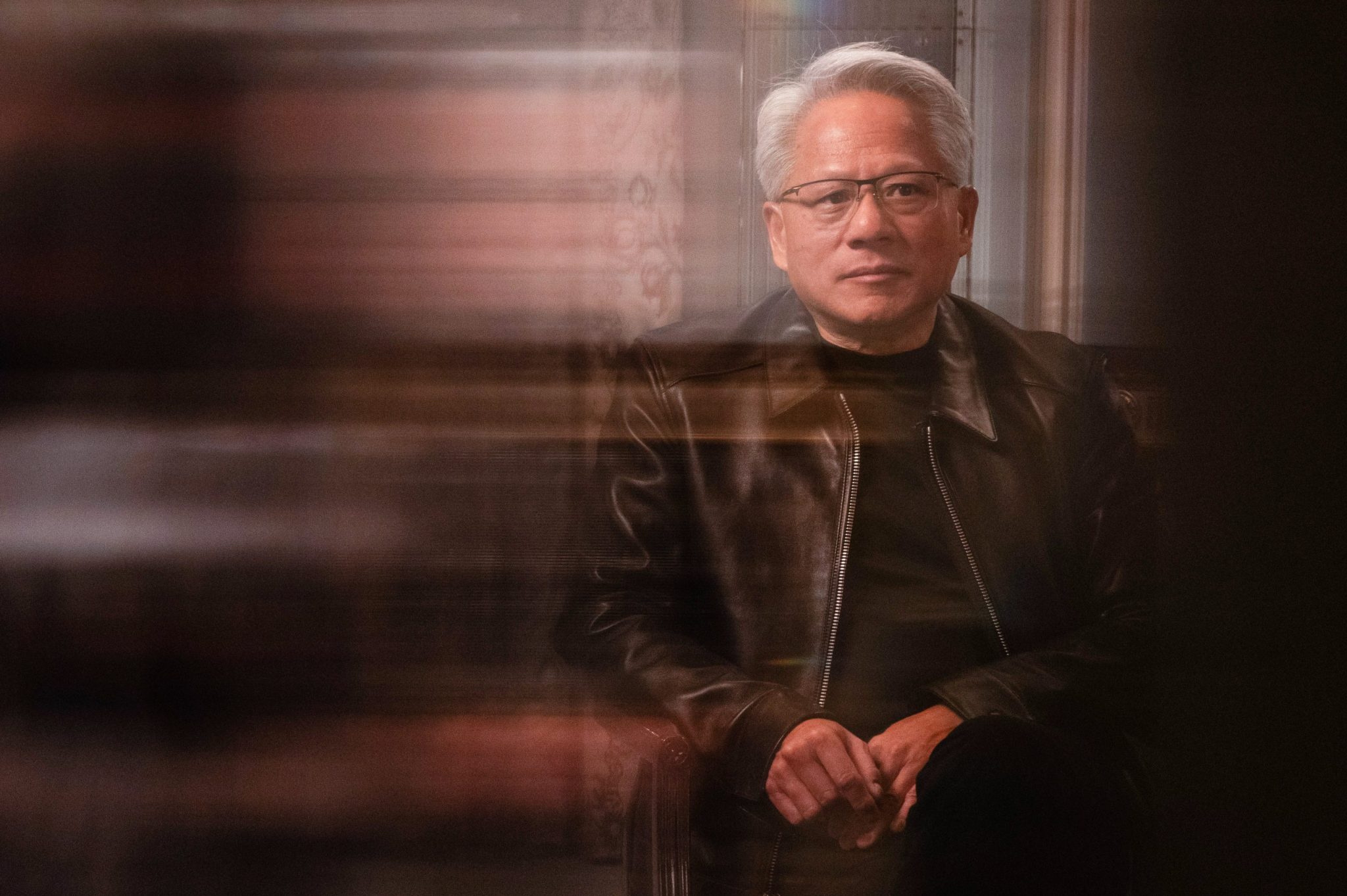
The consensus view: a brilliant engineer, seduced by a foreign agent. It is also Jensen Huang’s most convenient defense, turning a compliance failure into a private indiscretion. The narrative has one fatal flaw: Mr. Huang himself.
A year ago, we brought the story to The Times of London, worked with the reporter based on our knowledge of the tactics, prompting the article, Beijing’s “sex warfare” in Silicon Valley in which we were quoted, and which Elon Musk summarized: “If she’s a 10, you’re an asset.” This is not a honeypot story, but it may be one of complicity.
Megaspeed, a Singapore company, imported at least 136,000 Nvidia processors worth at least $4.6 billion, Bloomberg reports, more than half were Blackwell chips, restricted from sale to China. It bought through Aivres Systems, the California arm of Inspur, blacklisted for aiding China’s military. A Shanghai sister network, Century Litong facilitated up to $7.5 billion, The Information reports.
The executive at the center of both, Alice Huang, is suspected of spying for China. Officials say he may not have known her role; I make no claim that Mr. Huang did. The affair is not the issue. The transactions are.
The Personal Tenacity
Mr. Huang rescued Nvidia from near-insolvency, operating “as if it were 30 days from going out of business.” He managed up to 60 direct reports, never grooming a successor and intended to lead for decades. A honeypot trap is designed for the ordinary man, exploiting predictable emotional weaknesses. There is nothing average about Mr. Huang. He is one of a small circle of people that are very strange, unique—very excellent. He is single-minded, accustomed to securing whatever resources he needs—people included—and to achieving the ends he seeks. The affairs were incidental; the enterprise was the constant. Executives of that temperament are not captured. Such leaders are used to commanding.
The Ledger
Megaspeed’s assets rose from $33 million to $3 billion in one year. When Nvidia restated fiscal 2025 revenue by customer headquarters, CNBC reports, and China jumped from $17.1 billion to $25 billion; Singapore’s $23.7 billion disappeared, according to the WSJ.
Mr. Huang said Nvidia “counted every one” of Megaspeed’s deployments. Yet its government tallies ran 50,000 short, according to Bloomberg. Nvidia says it cut off Megaspeed in June 2025, yet 17,544 of its newest GB300 processors reached Megaspeed that November, which seems more like a delivery schedule than an embargo.
Export-Control Issues
No one has been charged, and all deny wrongdoing. The legal threshold is high, but knowledge includes “an awareness of a high probability” of a fact, especially when a customer’s assets surge ninety-fold.
Future Union documented Beijing’s exploitation of capital markets, as our Rubicon Report traced $146.1 billion from American pensions and endowments into China and Hong Kong, often through Singapore and Cyprus intermediaries. We applied that lens to Megaspeed, beginning with Washington’s own checklist.
The Commerce Department publishes 40 red flags required to be evaluated by exporters before shipping. On the public record alone, Megaspeed matched eight: customer with negligible business history, suspicious ownership structure and questions regarding prior headquarter locations in China, never received chips before 2022 and retains little online presence, cannot account for the hardware, and rented significant remote capacity to Alibaba. The 136,000 processors require 175 to 250 megawatts, according to Yahoo Finance, yet Megaspeed was allocated only 68.4 megawatts at its Johor campus, while 2 of 8 data centers Nvidia cited were absent Megaspeed hardware. Where are the chips, and who is using them?
The Board
The board accepted Mr. Huang’s resignation only after his relationship with a subordinate became public, a code of conduct violation. The same code mandates export compliance, yet it tolerated tens of billions in Singapore revenue anomalies and post-cutoff shipments. What did they know, and when?
Future Union graded Nvidia’s board against peers AMD, Intel, Broadcom, Qualcomm and Micron, using each company’s own proxy statement. With no chief compliance officer or disclosed succession plan, Nvidia ranked last with 4 points—half the next-lowest score—while peers averaged 9.8, and Intel scored 13.
This is a stale board in damage control, anchored by three “independent” directors serving since the 1990s, evincing an abdication of basic duties like succession planning in deference to the CEO. Retaining Mr. Huang would necessitate a Nasdaq ethics waiver and invite shareholder suits and retaliation claims from passed-over executives. Oversight existed on paper; action was absent, as the only demonstrated act related to China restrictions was to lower executive bonus thresholds to keep payouts intact. Nor is Nvidia likely alone in an industry in which intermediaries serve the entire industry. We suspect Megaspeed is the pattern, not the exception.
Washington’s Oversight
And then there is the Department of Commerce itself, which has not blacklisted any companies in over a year, an 18-year record, despite four agencies recommending listing Megaspeed. Commerce Secretary Howard Lutnick resisted pressure from the White House, intelligence and the Department of Treasury, according to the NYT.
In an unusual act, Nvidia’s general counsel, Tim Teter, called the Commerce director overseeing Megaspeed and emailed the Bureau of Industry and Security, Bloomberg reports, raising the perception of interference.
The core conflict is that Treasury is responsible for financial sanctions, while Commerce focuses on export licensing. The Entity List process that is overseen by Commerce, which has the power to refuse or delay enactment, is opportunistically exploitable by lobbyists and lawyers. Nvidia’s roster of lobbyists grew from seven in 2024 to 34 this year, including record spending, Bloomberg reported.
Nor do penalties deter. The law permits fines of twice the value of an illegal export, or $9.2 billion for Megaspeed, yet the largest stand-alone civil penalty in the history of Commerce’s enforcement bureau is Seagate’s $300 million, or a mere 12 hours of Nvidia’s revenue. Using the same red flag scoring criteria found 3 for Cadence ($140 million fine) and 1 for Applied Materials ($253 million fine). And the fines harm shareholders, not officers.
Washington has also made itself a partner in the trade it regulates, imposing a 25% tariff on Chinese H200 sales. Partners do not audit their own deal flow. One arm of government runs a criminal inquiry. Another licenses chip sales to China and shelves the blacklist. Mr. Huang did not create that incoherence. Nvidia’s order book thrived in it.
The Remedy
The question is not whether one executive erred. It is whether America has built a system that rewards behavior that undermines its own security. Future Union is building a National Security Balance Sheet to price the strategic exposure that corporate accounting ignores.
- First, end licensed sales of advanced AI accelerators to China, and end revenue-sharing on export licenses.
- Second, blacklist Megaspeed, Century Litong and Aivres, which would have been blacklisted the day after the disclosure of the affair if the rule was not suspended. Reinstate the affiliates rule.
- Third, treat remote rental of controlled compute to Chinese customers equal to restrictions on physical chip exports.
- Fourth, take Mr. Huang’s testimony under oath, publicly disclosing all nonclassified information.
- Fifth, strengthen penalties – and deploy them. Four times an illegal export’s value, and an executive who certifies end-use diligence under personal liability; companies that capture the revenue should carry the risk, through compliance bonds, end-user insurance, and independent audits.
Shifting Views
Restrictions are a double-edged issue. Cut off supply, and scarcity becomes the mother of invention. Continue it, and you arm an adversary. If Beijing wants these chips this badly, America should supply none.
These 136,000 processors are not an act of passion. They are an accounting. Mr. Huang showed us what Beijing wants, and how neatly it aligned with what Nvidia wanted to sell.
The opinions expressed in Fortune.com commentary pieces are solely the views of their authors and do not necessarily reflect the opinions and beliefs of Fortune.
This story was originally featured on Fortune.com
https://fortune.com/img-assets/wp-content/uploads/2026/11/GettyImages-2299714527_26bdbe-e1794935910332.jpg?resize=1200,600
https://fortune.com/2026/11/18/nvidia-jensen-huang-megaspeed-honeypot-national-security-export-controls-andrew-king/
Andrew King





