
Apple’s first foldable iPhone — expected to be called the iPhone Ultra — still exists mostly in rumors, supply chain whispers, and analyst notes, but the prospect already feels less niche than it did a year ago.
There’s clearly an appetite among iPhone owners for something new. Apple’s yearly upgrades have become smoother, faster, and more polished, but also more familiar. Better cameras, brighter screens, and faster chips are nice and definitely still matter, but they rarely change the basic shape of the thing in your pocket.
I’m not convinced that the form factor itself is what will make Apple’s debut foldable succeed, though. Samsung, Google, Motorola, OnePlus, Oppo, and others have already proved that foldable phones can be impressive, useful, and surprisingly refined. Apple won’t be arriving in a category that needs rescuing. Its advantage is simpler than that.

If the iPhone Ultra goes mainstream, it will be because Apple makes a foldable that feels like the most natural iPhone upgrade in years. The device, if and when it releases, should feel familiar when closed, more capable when opened, and never quite as strange as the idea of a folding iPhone probably should be.
Apple doesn’t need to invent the foldable

Relatively speaking, Apple is very late to foldables, which is sometimes treated as a problem. In this case, though, it may be a gift.
The first wave of foldable phones did the awkward work, proving that flexible screens could survive real life, hinges could be trusted, and apps could adapt. Some of that took years, and some of it is still being worked out.
But the category no longer feels experimental in the way it once did. Samsung’s Galaxy Z Fold series has become thinner and more polished; Google has pushed the Pixel Fold line towards a more phone-like shape, and so on. Foldables are still expensive and imperfect in 2026, but they are no longer weird concept devices that only tech enthusiasts dream of.
All of this gives Apple a different job: it needs to persuade iPhone owners that a folding iPhone makes sense.
Ultimately, this is where Apple tends to be most dangerous. The company rarely needs to be first for a new device type to land properly. With the iPhone Ultra, the pitch is less about joining the foldable future and more about getting an iPhone that can do a little more when you want it to.
The hinge is only half the battle

Of course, the hardware still has to be excellent. Apple can’t stroll into the foldable market with a chunky design, a distracting crease, or a hinge that makes people nervous every time they open it.
A foldable iPhone Ultra would almost certainly sit at the top of Apple’s range and cost thousands of dollars, so the screen, outer display, cameras, battery life, and durability all need to feel worthy of the price.
But polished hardware only gets Apple through the door.
As mentioned, rival phone makers have already shown that foldables can be thin and powerful devices. A cleaner crease or stronger hinge might make the iPhone Ultra easier to trust, but it won’t explain why people should change the way they use their phone. That job belongs to the software.
The real pitch is a bigger iPhone

Most people don’t wake up wanting to buy a foldable. They want a better phone — one that makes everyday things a little easier without asking them to rethink everything, and that fits within their price bracket. That’s where the iPhone Ultra could feel different.
Closed, it needs to be a normal iPhone; opened, it has to become something more useful without feeling like a separate device. Reading an article, checking travel plans, editing photos, watching videos, replying to emails, or using Maps should simply feel less cramped.
That sounds obvious, but it is essentially the whole pitch. A foldable iPhone does not need to replace your iPad, and it probably won’t be the best iPhone for most people at first (I can’t see it dethroning the iPhone 17 for value). At the core level, it just needs to make the regular iPhone feel a little limited once you’ve seen what the dual-screened Ultra can become.
iPadOS may hold some clues
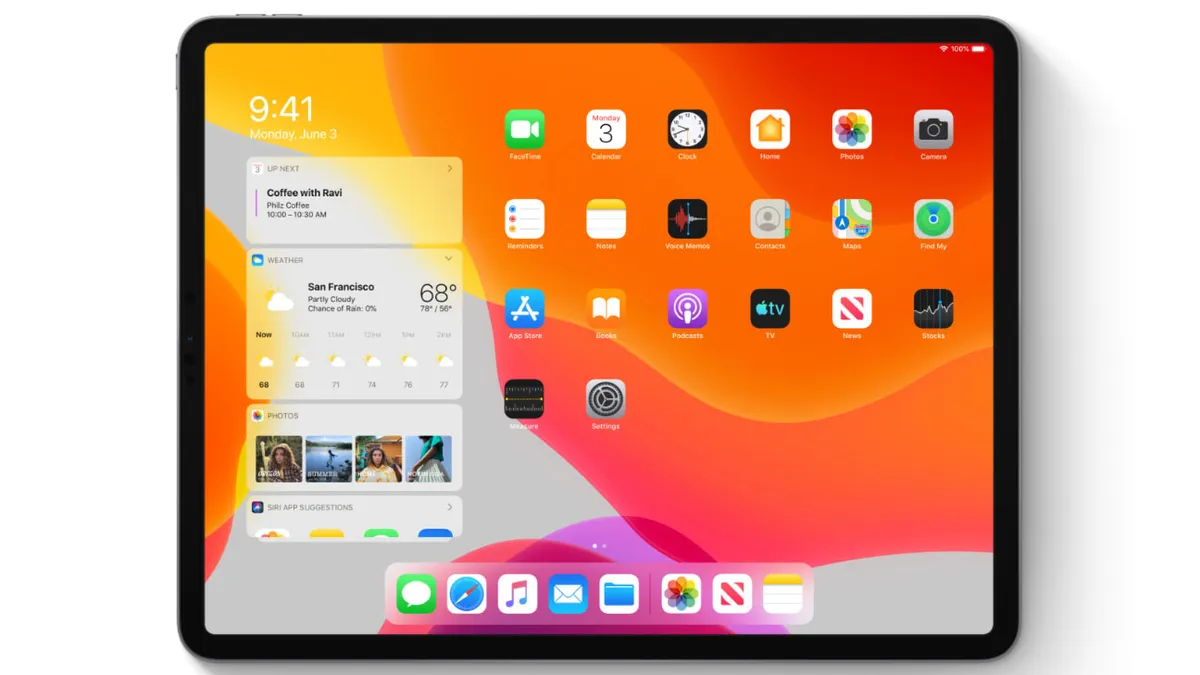
The iPhone Ultra’s inner display can’t just be a stretched iPhone screen. If Apple wants it to feel genuinely useful when opened, it needs a software language built for more space: apps that resize cleanly, multitasking that feels natural, and a layout that gives photos, video, and documents room to breathe.
In recent times, Apple has already been moving the iPad in that direction. iPadOS updates have made multitasking, windowing, accessing files, and arranging apps feel more flexible without simply turning the iPad into a Mac.
The goal should not be to make the iPhone behave like a tiny laptop or iPad; it should be to make everyday phone tasks feel less cramped.
A foldable iPhone would need to implement a lighter version of that idea: its software should be more capable than iOS on a normal iPhone, but still simple enough to feel like an iPhone the moment you open it.
For me, the multitasking experience will be where the iPhone Ultra sinks or swims. Foldables are often sold on their multitasking capabilities, but multitasking on these dual-screened devices can often still feel like work, mostly due to software-related issues. Apple’s version needs to make common pairings — Safari and Notes, Maps and Messages, FaceTime and Calendar, Photos and Mail — feel obvious, useful, and easy to return to later.
The goal should not be to make the iPhone behave like a tiny laptop or iPad; it should be to make everyday phone tasks feel less cramped, with the extra screen appearing exactly when it helps.
The ecosystem is Apple’s secret weapon
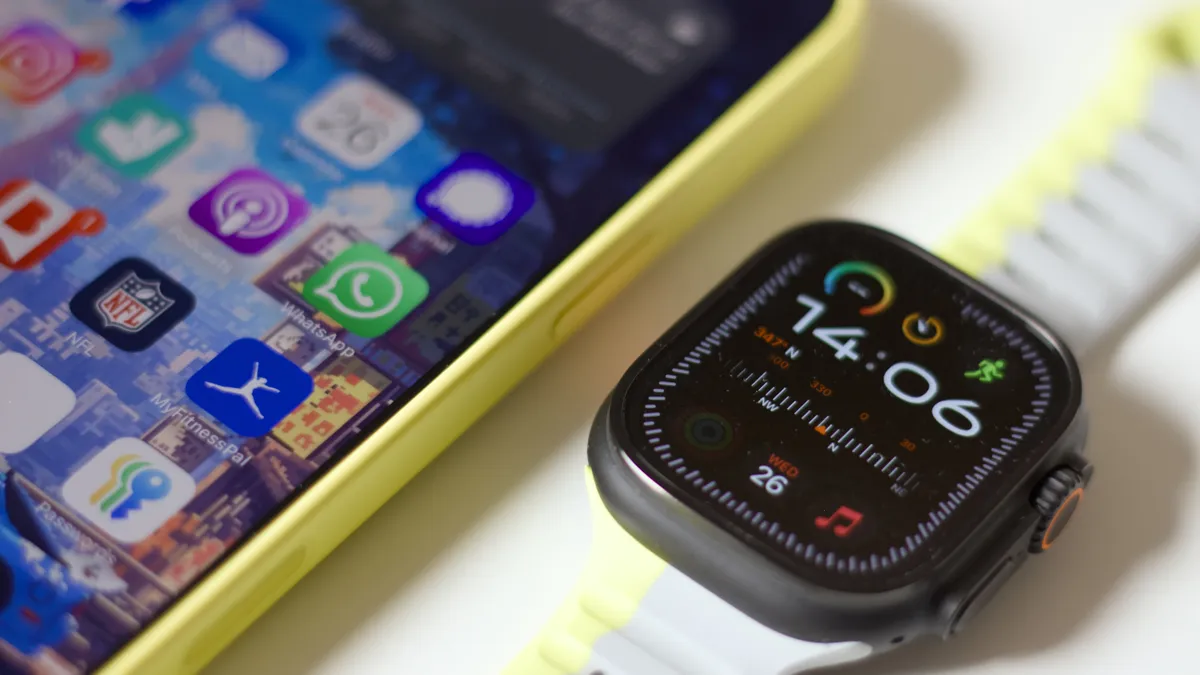
The iPhone Ultra could look radical by Apple’s standards while still behaving like the safest upgrade imaginable. It would still be your iPhone for AirPods, Apple Watch, iMessage, FaceTime, iCloud, Apple Pay, MagSafe, Find My, the App Store, and all the home comforts that make switching away from iOS feel like a huge grind.
That familiarity is probably Apple’s strongest card and could do more for foldables than any single spec. The company can essentially sell buyers the most capable version of a device they already use all day. The shape changes, but the experience stays recognisably “iPhone”.
The hinge, crease, thickness, and price of the iPhone Ultra will dominate the conversation before Apple shows anything official. That much is inevitable, because those are the easiest parts of a foldable iPhone to imagine and critique ahead of any real-world, hands-on experience with the product itself.
But the iPhone Ultra wins if those details fade quickly once people start using it.
Apple’s real trick might be making its first foldable feel invisible, or at least not radically different from the iPhones its customers have come to know and love. That, I think, will be the key to the iPhone Ultra’s success.

Follow TechRadar on Google News and add us as a preferred source to get our expert news, reviews, and opinion in your feeds. Make sure to click the Follow button!
And of course you can also follow TechRadar on TikTok for news, reviews, unboxings in video form, and get regular updates from us on WhatsApp too.
https://cdn.mos.cms.futurecdn.net/Hq6SDS88m2cTRU8BeL2pL6-1842-80.jpg
Source link





