
[
Although one Netflix show’s budget dwarfed all of its competition, the reception of the show’s eventual series finale proved that bigger doesn’t always equal better in the world of streaming. Regardless of their target audience, almost every major streaming franchise wants to feel immersive in its world-building. From mature, R-rated shows like Prime Video’s Critical Role spin-offs The Legend of Vox Machina and The Mighty Nein to comparatively family-friendly fare like The Lord of the Rings show The Rings of Power, major genre shows need to feel big to compete in a post-Game of Thrones world.
Netflix is no stranger to this reality, with everything from its animated Castlevania show to its live-action The Witcher adaptation competing to create the most vast, visually impressive fictional universe. Although Netflix’s One Piece might have the most lore out of any show on the streaming service, thanks to the many volumes of its source manga, there are a dozen other shows in the fantasy genre that feature fictional worlds which are just as expansive as the anime adaptation’s universe.
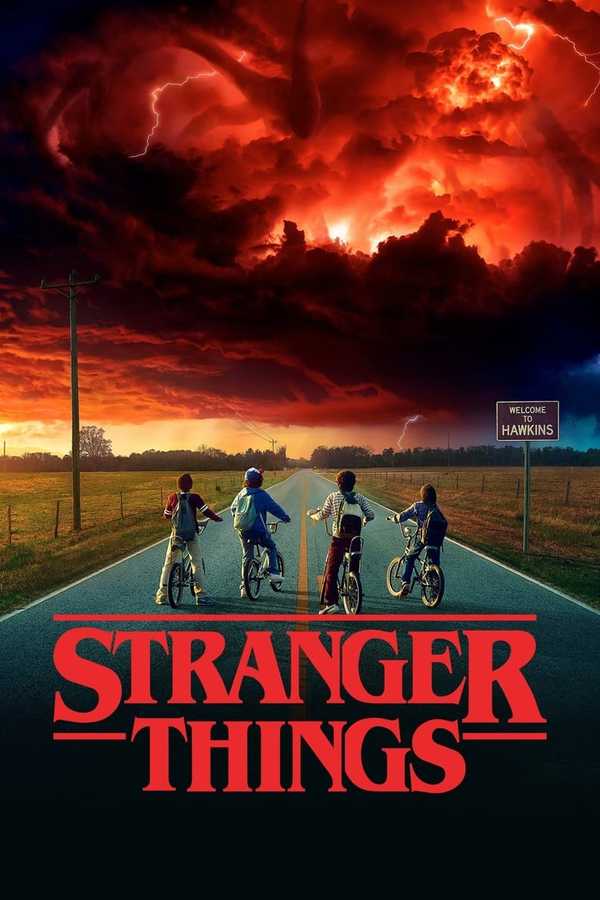
Some shows even end up becoming massive in scope despite their own initially limited ambitions. When Stranger Things began back in 2016, the Netflix mystery series was intended to be a self-contained single-season miniseries that explored strange goings-on in Hawkins, Indiana, through the eyes of some local kids, their teenage siblings, and the harried mother of a missing boy. Instead, Stranger Things eventually became a massive franchise that went on to produce the single most expensive and ambitious season of TV ever made, and the show arguably lost its way in the process.
Stranger Things Season 5’s Gigantic Reported Budget Massively Increased Its Scale

Throughout its run, Stranger Things gradually increased the scale and scope of its story. The villain of season 1 was a lone escaped Demogorgon, and it took all of Eleven’s might to kill the monster in the show’s gripping finale. In season 2, there were a dozen Demo-dogs stalking around Hawkins, and the Mind Flayer was introduced as the show’s larger-scope villain. This season also introduced viewers to Billy, Murray, Max, and many more new supporting stars.
In 2019, Stranger Things season 3 infamously opened up the show’s scope in a massive way, turning the once grounded series into something more like a live-action cartoon. There were secret soviet scientists hiding in a subterranean base beneath the Starcourt Mall, a multi-storey monster that rampaged through the town, and an entire newspaper staff who were reduced to goo by Billy’s body-snatching antics. Stranger Things effectively changed genre during this colorful outing, and season 4 wisely toned down the goofiness with a more mature, darker story.
However, it is important to note that Stranger Things season 4 didn’t undo the show’s increasing scope. If anything, the globe-trotting outing made the show feel even bigger, with its action split between Hopper’s exile in Russia, Eleven and Will’s miserable new life in California, and the old gang’s continued adventures in Hawkins. By the time all of these global plot threads came together, and the main characters were finally in the same place at the same time, the season was already over.
Stranger Things Season 5’s Scope Shift Turned Out To Be A Mistake

Thus, Stranger Things season 5 had nowhere to go but bigger as the show started to wrap up its sprawling story. By the time the final season began, the series had over a dozen main characters, as well as many more supporting stars, and season 5 made the fascinating decision to add new characters like Derek and Holly Wheeler into the mix. Before long, Stranger Things was making the MCU’s multiverse look limited in its ambition.
With a whopping price tag of $400 million, Stranger Things season 5 wasn’t short on the money required to realize this massively ambitious story. However, budget alone can’t save a plot that has outgrown its own sense of scale. By midway through season 5, it was clear that the show didn’t feel like Stranger Things anymore, instead becoming a cookie-cutter blockbuster fantasy/sci-fi story complete with quips, too-smooth effects, and zero stakes.
Like any show that needs to appeal to the biggest audience possible, Stranger Things became too conservative to kill off any major characters. This reticence has been a kiss of death for many earlier hit shows, but it was particularly problematic in Stranger Things season 5 since the show had far too many characters to begin with. In an epic ending that was supposedly intended to leave viewers shocked and stunned, season 5’s finale left Mike, Will, Lucas, Dustin, and Max all alive. Even the older characters, like Hopper and Joyce, as well as the teens Steve, Robin, Nancy, and Jonathan, surived the story of the series.
Stranger Things Season 5 Proves Bigger Isn’t Always Better

Yes, Eleven’s ambiguous fate was a poignant twist, and this ending did prove that Stranger Things season 5 wasn’t as unapologetically saccharine as it could potentially have been. That said, a glance at Netflix’s Cobra Kai proves that things could have been far better and could have cost the streaming service far less money with a few smart changes. Like Stranger Things, Cobra Kai started airing in the late 2010s.
Like Stranger Things, the martial arts drama split its focus between characters in their teens and middle-aged protagonists, and, like Stranger Things, Cobra Kai was an unabashed love letter to the pop culture of the ‘80s that also found time to critique and subvert the familiar tropes of the era. However, Cobra Kai never lost sight of its original heroes and the stakes of their story, refusing to expand with every new season solely because its increasing popularity could have facilitated bigger stories, more characters, and more dramatic action.

Netflix’s 10-Part Psychological Thriller That’s Designed To Be Binged Is Cobra Kai Meets Squid Game
This underrated Netflix show’s unexpected premise blends Cobra Kai and Squid Game into something new, inventive, and entirely unpredictable.
While Cobra Kai never became as massive a mainstream franchise as Stranger Things, the show also didn’t suffer the mixed reception that Netflix’s biggest series was met with when its finale arrived. In the end, Stranger Things didn’t need $400 million to end its story, but taking the money and exchanging storytelling risks for a bigger budget led the show to abandon the maturity and grounded darkness that once made the series so appealing in the first place.
- Release Date
-
2016 – 2025-00-00
- Network
-
Netflix
- Showrunner
-
Matt Duffer, Ross Duffer

https://static0.srcdn.com/wordpress/wp-content/uploads/2026/05/a-twisted-mass-of-clouds-in-the-upside-down-from-stranger-things-season-5.jpeg?w=1600&h=900&fit=crop
https://screenrant.com/stranger-things-netflix-makes-mystery-shows-look-small/
Cathal Gunning
Almontather Rassoul




