
[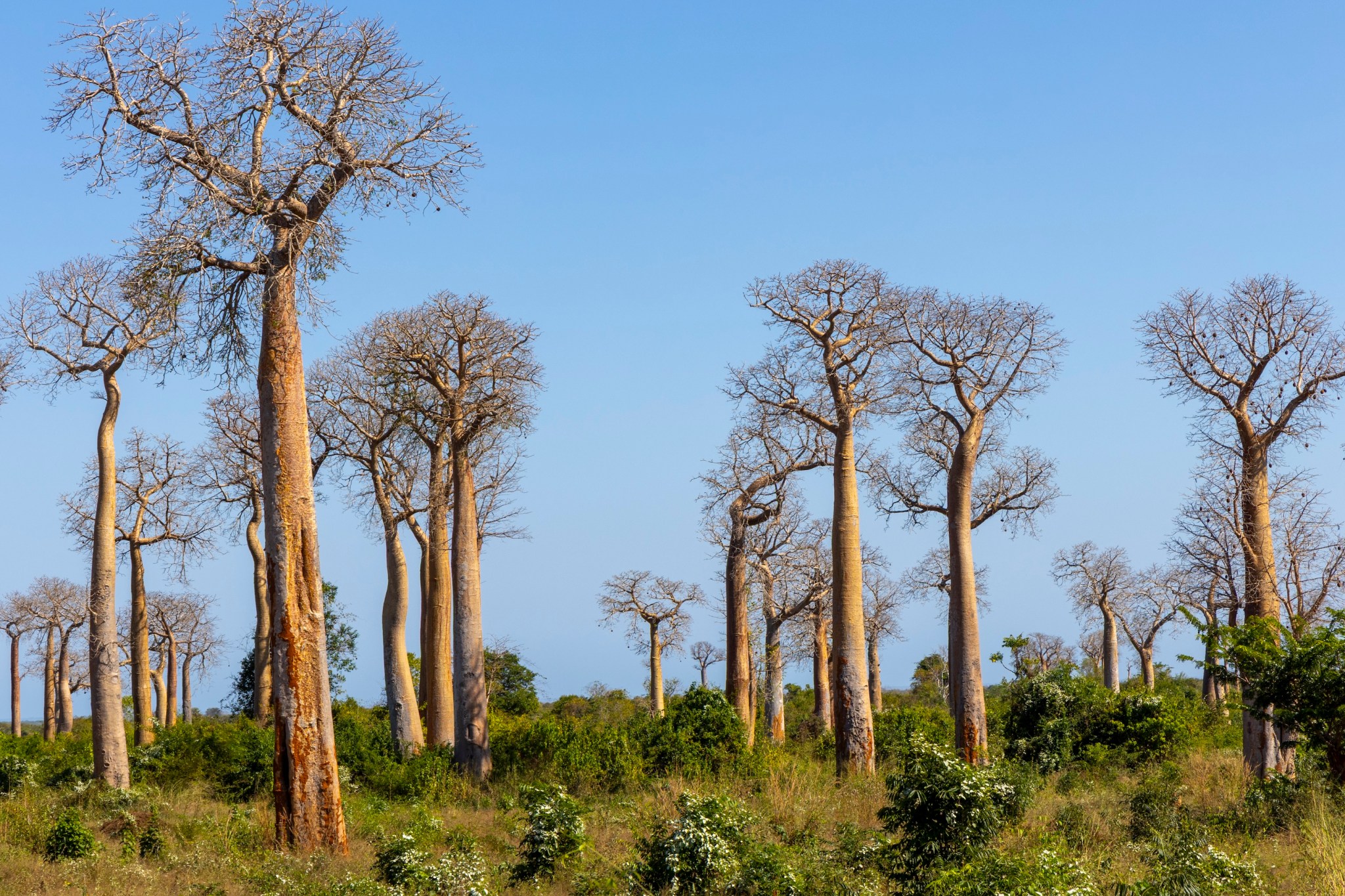
For more than three months, five baobab trees estimated to be 200 to 300 years old lay on their sides in a Durban warehouse parking lot, roots and branches hacked back, waiting to be shipped to the Black Sea nation of Georgia. South Africa’s Department of Forestry, Fisheries and the Environment (DFFE) intercepted the trees on July 17 after their exporter, Pretoria-based Divine Landscapes, could not produce licenses to remove, transport, or export them.
Officials have not named the buyer. But reporting by Daily Maverick traced the trail to the Shekvetili Dendrological Park, a private arboretum on Georgia’s coast founded by billionaire Bidzina Ivanishvili, the country’s former prime minister and the founder of its ruling Georgian Dream party. Ivanishvili has not commented, and Daily Maverick said requests to his lawyer and to Georgia’s embassy in Pretoria went unanswered.
The case tests how far South Africa will go to keep a protected species from becoming a collectible for wealthy buyers abroad. It also left authorities with a practical problem: keeping living evidence alive while a case moves through the courts.
A tip, a fence, and a criminal case
Environmental journalist Tony Carnie got an anonymous tip about the trees, photographed them through a fence at the Africa Global Logistics warehouse in Durban’s Mobeni industrial area, and reported the seizure in Daily Maverick in October. AGL told the publication it only provided logistics services and neither owned nor exported the cargo.
Every baobab in South Africa is a specially protected species under the National Forests Act, which bars anyone from cutting, disturbing, removing, transporting, or exporting one without a license. The DFFE says the five trees were dug up in the Lephalale area of Limpopo province without a provincial permit. It refused Divine Landscapes’ late license application at the end of July and dismissed the company’s appeal on Oct. 27.
The company denies wrongdoing. Its attorneys told Daily Maverick the trees were “obtained from private gardens with the full consent of the respective owners” and said it is seeking judicial review of the appeal decision. The company’s owner appeared in Durban Magistrates’ Court in September, and the case was postponed to January pending further investigation.
A billionaire’s history with African baobabs
Ivanishvili, whose party critics accuse of tilting Georgia toward Moscow, has spent years moving giant trees to Shekvetili. Eight baobabs uprooted on Kenya’s Kilifi coast were bound for the park when Kenyan President William Ruto halted their export and ordered an investigation. The Kenya Forest Service later authorized the shipment, and the trees reached Georgia in 2023.
All eight died. In August 2024, the park confirmed the deaths and blamed delays it attributed to Ivanishvili’s political opponents.
“We also did not want to see a repeat of what happened in Kenya,” Dr. Sarah Venter, an ecologist and founder of the Baobab Foundation, told Daily Maverick.
A push for global rules on environmental crime
The seizure comes as South Africa presses for tougher international enforcement. On Oct. 23, parties to the United Nations Convention against Transnational Organized Crime, meeting in Vienna, voted 83 to 12, with 27 abstentions, to begin negotiating a new protocol on crimes that affect the environment, including trafficking in wild flora and fauna. South Africa co-sponsored the resolution.
“Environmental crime is organized crime,” Forestry, Fisheries and the Environment Minister David Maynier said in a DFFE statement. Once negotiated, the protocol could give countries shared tools for cross-border investigations, extradition, and recovering criminal proceeds. Trafficking networks are already expanding their reach, as a U.N. report on the global illicit economy found this year, and wealthy collectors’ appetite for rare species is under scrutiny elsewhere, including in India’s trade in trafficked orangutans.
Who pays to save the evidence
Seized cargo can usually wait in storage. These trees could not. “They’ve been lying on their sides. Their branches and their roots have been trimmed, well hacked, so they’re not in a very vertical position. They’re not in soil. They’re in full sun. There’s no water,” Carnie said in a Daily Maverick video interview.
“The really critical thing is to get them back into the soil as soon as possible to allow them to recover and regenerate, because they are using up stored stem water to survive,” Venter said. A healthy baobab can be up to 75% water.
The rescue was privately funded. Timbavati Private Nature Reserve, which straddles the Mpumalanga and Limpopo provinces, offered to cover loading, transport, and replanting, and Mark Read of the Everard Read Group found an unnamed private funder within 10 minutes of Venter’s call, Daily Maverick reported. On Nov. 11, the trees, each weighing an estimated 17 to 30 tons, began leaving Durban on abnormal-load trucks for the roughly 900-kilometer trip to the reserve.
All five had sprouted leaves and flower buds. “I think we got here just in time and I’m quite positive about their future,” Venter said.
https://fortune.com/img-assets/wp-content/uploads/2026/11/GettyImages-2297686667.jpg?resize=1200,600
https://fortune.com/2026/11/17/south-africa-baobabs-seized-georgia-ivanishvili/
Jessica Gibson





