
[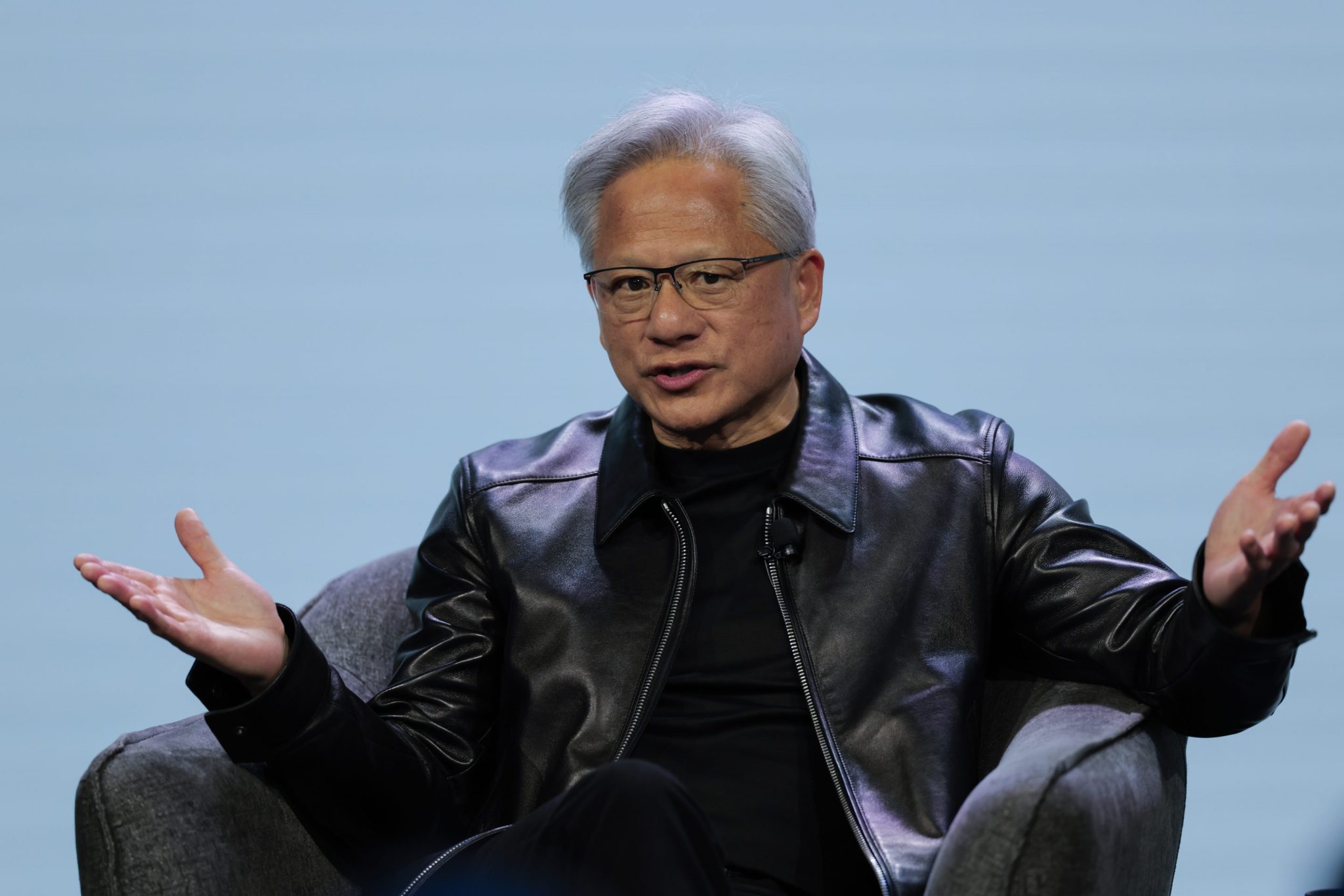
Jensen Huang’s resignation from Nvidia hits the AI industry’s most indebted borrowers hardest, according to one investor who backs AI infrastructure.
Nvidia said Thursday that Huang resigned as president, CEO and board member, effective immediately. His exit follows his admission of an extramarital affair with a woman U.S. intelligence officials believe to be a Chinese spy, and following a board investigation into the affair. CFO Colette Kress is now interim CEO, and the board named Harvey Jones its first chair.
While Nvidia’s leadership switch-up is sending shockwaves across every industry that relies on its chips to those who simply have stock or their 401Ks resting in company, some say the companies that are most at risk are the so-called neoclouds that rely on Nvidia’s chips.
How Nvidia props up the neoclouds
Nvidia designs the chips that most AI models are trained on, and Taiwan’s TSMC manufactures them, and that’s a problem. So says Joe Kaiser, who started Switchyard Partners at the beginning of this year after serving as CEO of Mercato Partners, which managed about $1.5 billion.
Neoclouds such as CoreWeave and Nebius buy those chips by the hundreds of thousands, fill data centers with them and rent the computing power to AI labs and other companies, competing with Amazon, Google and Microsoft.
But Nvidia does more than sell to them. It invests in them: the company held about $329 million in Nebius shares, for example, at the end of June. Nvidia also guarantees their business. In July, Nvidia began offering to rent back unused GPU capacity from neocloud partners at a fixed rate, a floor meant to make banks more willing to lend. The company later joined a $500 billion financing platform with six institutional partners, of which Nvidia may backstop up to $125 billion. That backstop, Kaiser said, posed an issue for what lenders are pricing.
“The chip isn’t what puts them at risk, but it’s the financial backstop that allows CoreWeave or Nebius to go get those hundreds of millions of dollars of debt from Blackstone and Brookfield,” Kaiser told Fortune. “Why is Blackstone willing to back a CoreWeave project? It’s because they know that there’s an Nvidia backstop, a written backstop, behind it, and so it lowers the risk, and then obviously lowers the interest rate.”
CoreWeave carried $35 billion in debt at the end of June, and lenders had grown wary of businesses that depend wholly on AI demand, well before Huang left.
“If the capital providers now say that Nvidia guarantee is not worth what it was worth a week ago, that puts those neocloud businesses at risk,” Kaiser said. “At the end of the day, this is a heavy-asset, infrastructure-based industry.”
The winners and losers
OpenAI and SoftBank’s SB Energy may be the biggest beneficiaries of Nvidia’s backstops, with CoreWeave and Nebius close behind. Kaiser referenced how Nvidia has been in talks over a reported $250 billion backstop to help OpenAI lease an Ohio data center campus that SB Energy is developing.
Following Huang’s resignation, Neocloud stocks fell Thursday: CoreWeave dropped about 9%, giving back part of a 25% rally the day before. Nebius fell 16%, though it also issued weak full-year guidance the same day. Nvidia itself lost about $450 billion in market value in the days after Huang admitted the affair, before Thursday’s drop.
Kaiser doesn’t expect Nvidia to lose its grip on AI training for at least two or three years, because customers built on its CUDA software will find it “really hard” to switch. The fight is over inference, the work of running models once they’re trained, which Kaiser said now takes up more AI compute than training. There, buyers are weighing Nvidia’s general-purpose chips against cheaper ones built for specific jobs: Qualcomm for robotics, Cerebras, Etched, Google’s TPUs and Amazon’s Trainium.
“If Nvidia no longer has Jensen as its rainmaker, did that just tip the scale towards using specialized chips?” Kaiser said.
“The bigger play is actually for the specialty chip makers,” he said, but said AMD and Broadcom will inevitably gain an opening. Google and Amazon could win twice: by pitching their own chips to labs like OpenAI and Anthropic, and by lending their balance sheets. “The Googles and others can step into that Nvidia backstop arrangement,” he said.
TSMC should come through fine, Kaiser said. He estimated about two-thirds of its capacity goes to Nvidia, but said it could shift that to other customers “in pretty short order.”
Kaiser said Huang ran Nvidia on a “hub-and-spoke” model. “The stories are true about Jensen having 60-plus direct reports,” he said, which now leaves “this leadership vacuum and vision vacuum.”
He referenced Intel after Andy Grove stepped down as CEO in 1998. “Andy Grove and Jensen both have just this iron-fist approach to management, very disciplined approach,” he said. Intel kept growing revenue after Grove left, he said, but the company lost margin and “didn’t adapt as well” as chip demand moved toward new uses.
“Intel is the roadmap here to what might be ahead for Nvidia.”
Kaiser also tied Huang’s exit to last week’s midterms, where data centers became a campaign issue. Calling Huang the industry’s “true spokesperson” for data centers, and with that spokesperson now gone, he said, the case for giant single-site data centers weakens further.
“This is just more push for distributed edge compute,” he said, “away from these mega monolithic data centers.”
https://fortune.com/img-assets/wp-content/uploads/2026/11/GettyImages-2299098173-e1794508470226.jpg?resize=1200,600
https://fortune.com/2026/11/12/nvidia-neoclouds-jensen-huang-resignation/
Catherina Gioino





