
- Nvidia’s CEO has said the RAM crisis will last for “quite a few years”
- The comment came ahead of the announcement of a multiyear partnership between Nvidia and memory chip maker SK Hynix
- It’s one of the bleaker predictions we’ve heard, and it might be wise to take it on board if you’re thinking of buying a laptop, PC, or components in the near future
If you were hoping the worst of the RAM crisis might soon be over — and we’ve heard some hints to that effect in recent times — you can think again, according to Nvidia‘s CEO.
Reuters reports that Jensen Huang just predicted that the memory shortage is a crisis that’ll last for “quite a few years”, and this doubles down on some of the more pessimistic forecasts about the RAM crisis.
Given that this comes from a heavy-hitting source – Huang was speaking ahead of the announcement of a collaboration between Nvidia and SK Hynix in a “multiyear technology partnership for next-generation memory” — it’s a distinct worry for me.

As I noted at the outset, we’ve recently heard some more positive inklings, suggesting that the RAM crisis could be peaking and a recovery might arrive sooner than expected. That includes the ex-chief of Samsung’s semiconductor business forecasting that the RAM shortage could possibly ease in just a year’s time, or certainly by early 2028, partly due to the efforts of Chinese memory chip makers.
Previously, though, we’ve also heard that more RAM price hikes are on the cards due to disruption to shipping in the Strait of Hormuz, as well as predictions that the memory crisis could be prolonged until the end of the decade.
Interestingly, that latter claim of RAM pricing misery continuing through to 2030 came from the chairman of the parent company of SK Hynix, which Nvidia just signed its deal with, and Huang appears to have adopted the same line of thinking. For me, the declaration of “quite a few years” means at least three, and hints at more, effectively backing that previous 2030 worst-case prediction.
What does this mean for the average consumer? The words from the Nvidia CEO carry some considerable weight, I think, and this is a rather ominous development in my opinion, although it’s not quite as simple as “if you think prices are bad now, just wait — so buy, buy, buy, while the going is still relatively good”.
Of course, calling the going ‘relatively good’ given the price of RAM sticks themselves is more than a stretch, but the truth is that there are certain categories of hardware you should probably consider pulling the trigger on now, to avoid what might be even more painful price hikes by the time next year rolls around.
Here’s what I think we all need to consider given the current picture and predictions relating to the RAM crisis, in terms of different types of hardware. I should caveat all this by underlining that it is just my opinion, and I may, of course, turn out to be wrong.
Laptops: don’t hang around for too long here

What immediately sprang to mind when I read Huang’s comment was that this additional gloom nugget is another sign that the time to buy a laptop is now. Or rather, perhaps as part of an Amazon Prime Day deal (later this month) or come Black Friday, with these big tech sales in 2026 likely to represent your best chance to get a new notebook at a relatively affordable price.
The trouble is that if the RAM supply situation really is set to be a very rocky road through to the end of the decade, even the big laptop manufacturers are going to run out of all their inventory of memory bought at (relatively) cheaper prices – and the same is true of storage (SSD price hikes have also been seriously nasty).
If all this plays out as Huang expects, continued pressure on just those two component categories are going to hike laptop prices substantially over a few years. And that’s not considering other pressures such as with discrete GPUs (that use VRAM) on gaming laptops, or price increases on other notebook parts, notably CPUs which are starting to feel the heat a bit in the broader component crisis.
If you’re thinking you’ll need a new notebook in the not-too-distant future, and you can score a good deal with a laptop that’s on sale this year, I can’t see you losing out. It seems unlikely that you’ll find something cheaper next year, put it that way — and if there’s one piece of hardware I’d advise buying with some level of urgency, it’s a laptop.
Do bear in mind, however, that more Windows 11 laptop makers are now dropping models back down to 8GB of RAM as a cost-cutting measure to reduce those sticker prices, and there are caveats for future-proofing here, which I’ve discussed at length elsewhere.
Desktop PCs: ditto, sort of…
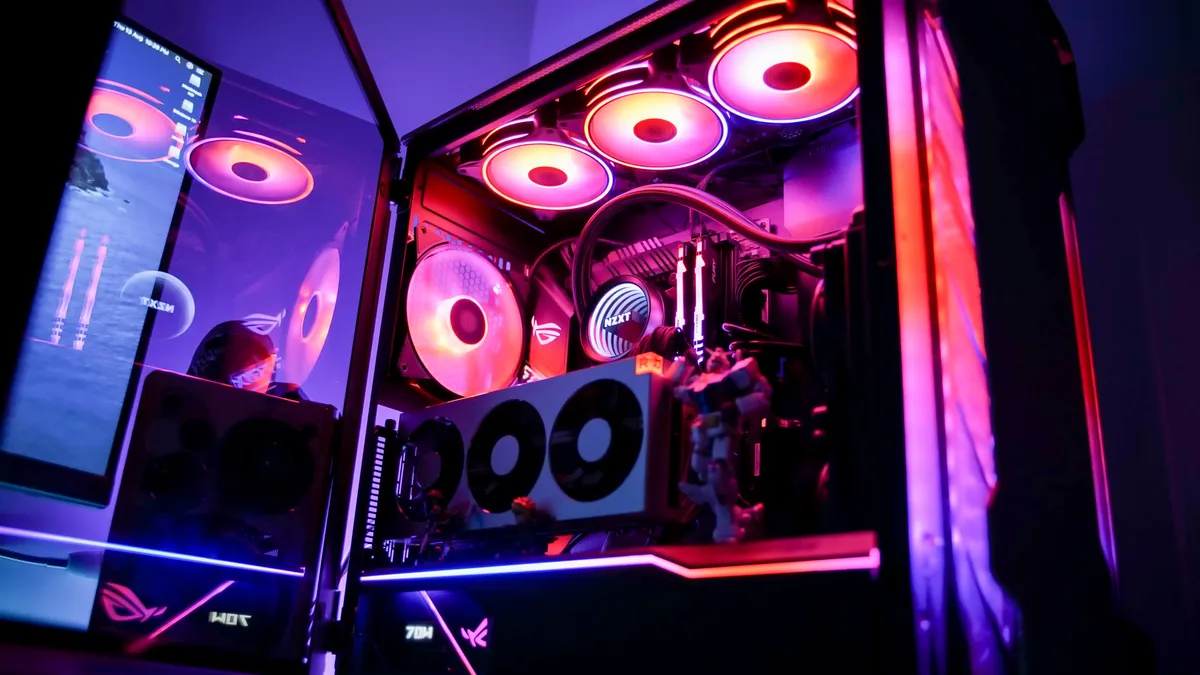
I think everything I’ve written above about laptops is also true of desktop PCs to an extent, as the same pressures around the same components exist broadly, certainly for prebuilt computers. Matters are worse in so much as a desktop will usually have a discrete GPU (much more often than a laptop will), and the price hikes therein add some extra misery into the mix, particularly at the higher-end (although the same is true of gaming notebooks).
So, again look to the likes of Amazon or Black Friday sales, and if you need a new desktop, a discounted prebuilt might turn out to be a pretty smart move this year.
However, a DIY PC build is a bit different and more painful these days, as you are sourcing individual components all with varying price hikes, and some of those increases are huge – you’re lacking any of the cost cushioning that you might get from a prebuilt (where the PC maker gets cheaper prices for bulk buying components, of course). In this case, I’d be far more cautious, as it’s not exactly clear how things will play out with component pricing more widely as I’ll come on to next.
RAM and SSDs: the real pain points
The RAM crisis kicked off all this pricing pain when it began back in September 2025, followed by SSDs (which also use memory chips, of course), and at this point, price tags on both are massively hiked.
Having to buy system RAM is as bad as it gets when it comes to the extra damage to your wallet, although the exact extent of that can depend on the type of memory you’re looking at. Prices of DDR4 and DDR5 RAM have trebled or even quadrupled in price, though, which is ridiculous, frankly.
In short, I’m loathe to recommend buying RAM at this kind of premium to anyone. That said, Huang’s comment here hints that perhaps memory does still have further to go in terms of hikes, and as Tom’s Hardware recently reported, a Lexar executive just predicted a further doubling of RAM prices by the end of 2026.
So, in spite of some recent evidence of memory price stabilization or even slight decreases, it seems the worst isn’t over yet. At the same time, there’s a ceiling as to what consumers will pay in terms of price hikes before they collectively fold their arms and refuse to buy. Overall, it’s unclear how this will play out, and while the Lexar exec’s prediction feels alarmist to me, it’s not a great overall indicator of where we’re headed – particularly now in light of what Huang’s chipped in with.
I simply can’t recommend buying RAM at the price it’s at, and the same is true for SSDs in many cases. Indeed, I have to wonder how much worse the prices on these components can get before it becomes farcical, frankly. But for now, I’d err on the side of playing a waiting game to see how these fresher predictions begin to pan out.
GPUs and CPUs: a more positive picture, but not entirely

As for computing components outside of RAM and SSDs, the main concerns are the other key staples of any PC – the processor and graphics card.
If you’re in the market for a desktop GPU in the near future, I think it’s probably a good move to buy (again, perhaps with a bargain in the next big sale – though I think we’re less likely to see any sizeable discounts on graphics cards as opposed to, say, laptops). That’s because pricing is relatively palatable currently for mainstream products, meaning mid-range and lower-tier GPUs – we’ve seen some solid deals on AMD‘s RX 9070 XT GPUs recently for example.
For high-end GPUs – meaning Nvidia models – sadly price hikes have been a lot heftier (what with more copious amounts of video memory being involved for one thing). It’s quite possible these graphics cards could see further cost increases, though, into next year, but the RTX 5070 Ti and upwards are already seriously over and above the MSRP to the point where I balk at recommending them.
CPUs are a different matter, with price inflation being much more restrained here, and with the possibility of processors getting more expensive down the line, I think it’s a safe bet to buy one now if you need an upgrade. There’s even a new budget Ryzen 7700X3D set to launch next month, and we could see further additions along these lines at the lower-end from AMD apparently, so I think the picture for CPUs looks stable enough for the foreseeable.

Follow TechRadar on Google News and add us as a preferred source to get our expert news, reviews, and opinion in your feeds.

The best laptops for all budgets
https://cdn.mos.cms.futurecdn.net/C4Jp9Q3JPN6rEdUUCnaYcf-2560-80.jpg
Source link





