
- Disney Accelerator is exploring new roles for robots across Disney’s amusement parks
- Field AI is testing Cars-inspired autonomous robots to help guests park
- Physical Intelligence is exploring robots that sort and organize 3D glasses
Picture this: The next time you’re pulling into one of the many parking lots at Disneyland in Anaheim, California, or Walt Disney World in Orlando, Florida, you might not need to go hunting for a parking spot. Instead, you’re greeted by a car that looks like it drove straight out of Pixar’s Cars.
The car is decked out in a bright orange paint job with a yellow safety vest and marshaling wands, with a screen on top displaying directional arrows telling you where to turn and park. It even offers a friendly wink as you start to make the turn.
Then, as you approach the end of your spot, another little vehicle rolls up alongside you, its screen flashing ‘slow,’ then a thumbs up, and finally ‘have a nice day.’ It’s a pretty magical way to be welcomed to a Disney park before you’ve even stepped inside, right?
Latest Videos FromTechRadar
And it might not be as far off as you think. As part of Disney Accelerator 2026, Disney is collaborating with Field AI to test autonomous robots in parking lots and explore how they could help with park operations.
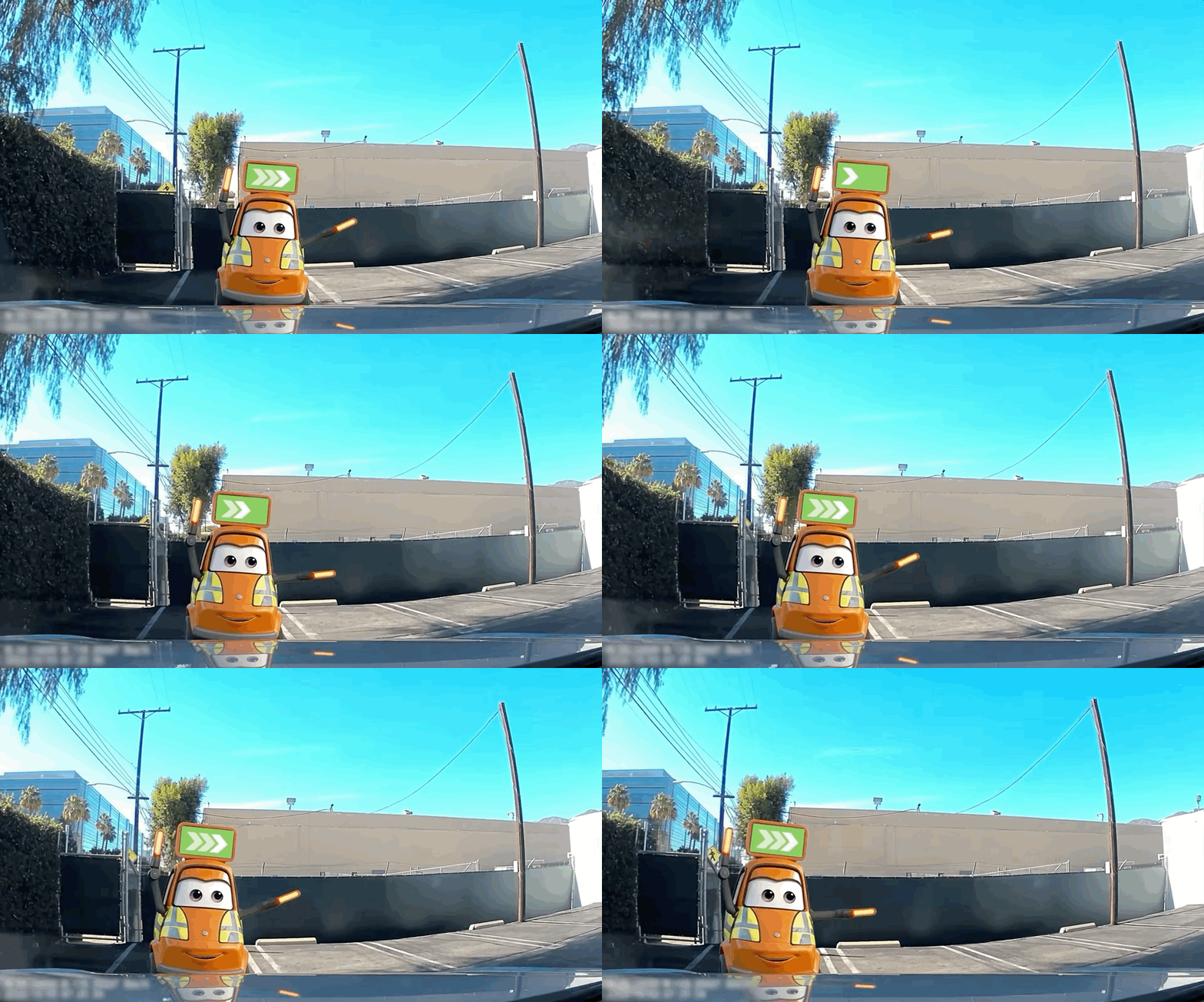
Field AI essentially develops the intelligence — or the brain — behind robots, rather than the robotic hardware itself. The company has experience deploying autonomous solutions in engineering environments, and Disney is now exploring how that technology could translate to its theme parks.
It’s essentially the intelligence that comes in the form of hardware and software as a kit that goes on top of the robot. In the video, it’s clear that the Cars figure is the end goal, but we do see what appears to be a Boston Dynamics robot with the Field AI stack on top, offering the screen and directional movement guidance for a few brief moments.
Gary Daniels, SVP of Technology at Disney Experiences, said: “We’re excited to be working with Field AI, testing autonomous robots’ ability to guide cars to park. Imagine if characters from Cars or robots from Wall-E direct you where to park when you arrive. The work we’re doing now is a great way to see how robots function and, as important, how people respond.”

It’s clearly a test for now, but seeing Field AI’s intelligence solution in action in the demonstration videos is pretty compelling. Particularly when you consider how it could pair with Disney Imagineering’s existing research and development work in robotics.
Think about the robotic Star Wars BDX Droids, Olaf from Frozen, or even the walking Groot. Disney has already been exploring how to bring familiar characters into the physical world. Now, there’s an opportunity to take some of those robotics advances beyond entertainment and into the everyday guest experience — while also helping with operational challenges like parking management and moving guests around the parks. The latter is something Disney Experiences knows a lot about, and a car from Cars or a robot from Wall-E would fit right in.
Of course, it’s still early days, and these experiments are just that: explorations. But Disney Accelerator participants have found their way into the parks before.
Haddy, part of the 2025 group, develops large-scale 3D printing technology that produces materials and components to match the quality Imagineering requires. Its work was used to create an entirely new boat for Jungle Cruise at Disneyland in 2025. I wouldn’t be surprised to see Haddy’s technology featured in future projects, potentially including new environments like the forthcoming Monstropolis land at Disney’s Hollywood Studios.
Robots could also help behind the scenes
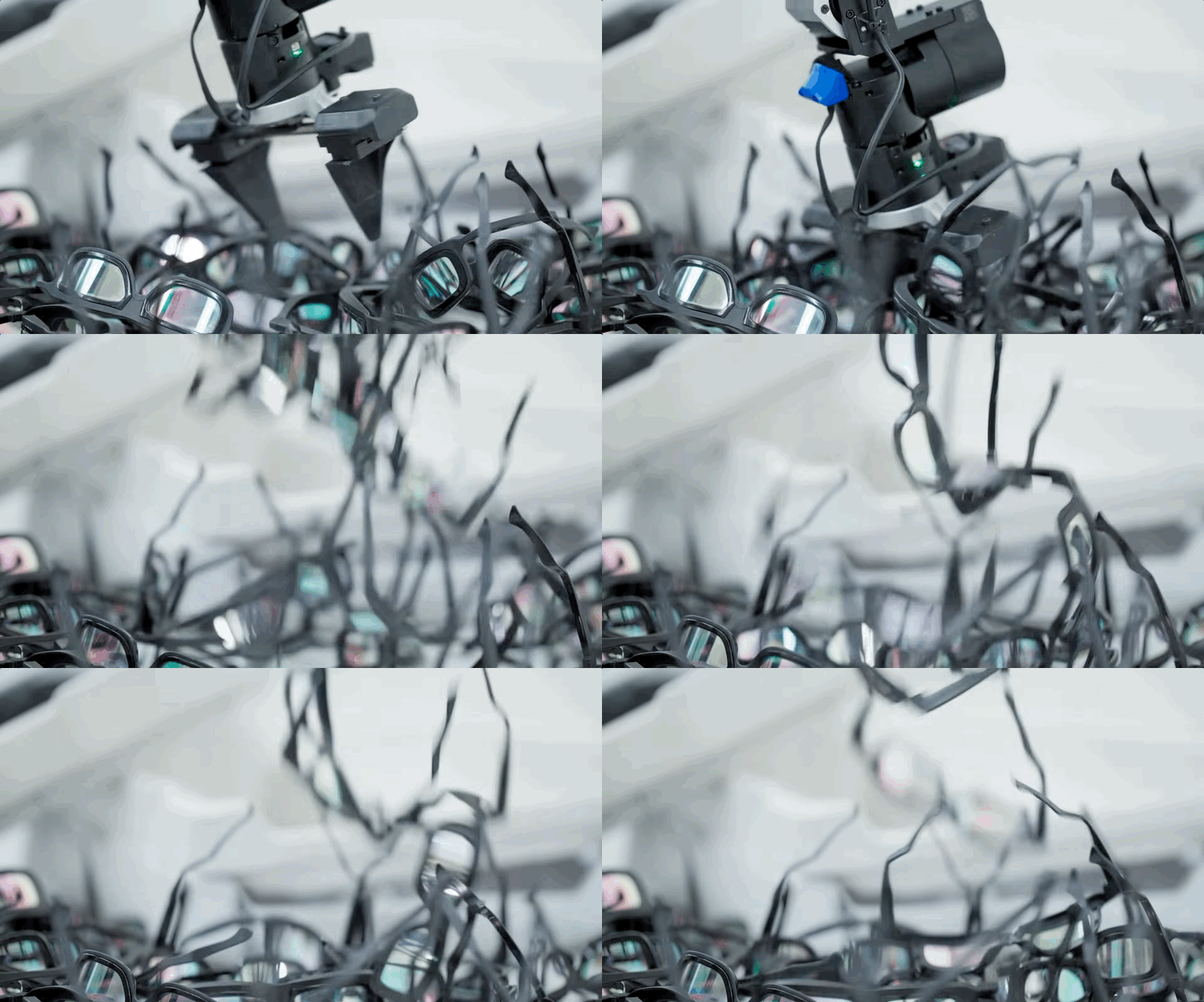
The parking experiment is perhaps the most immediately exciting from a guest perspective, but another Disney Accelerator 2026 participant is exploring a robotic application that could have just as much impact behind the scenes.
Physical Intelligence is working on a tool that could greatly benefit Cast Members. Attractions like Star Tours, Toy Story Midway Mania, and Mickey’s PhilharMagic — found at Disney parks in the United States and elsewhere around the world — use 3D glasses that guests pick up and wear during the attraction before returning them afterward.
Guests, myself included, don’t always think twice about dropping those glasses back into a collection bin. But someone has to sort through them, untangle them, and make sure they’re in good shape for the next guest.
That’s where Physical Intelligence comes in. The exploration takes shape as a robot that can sort and organize the glasses, potentially untangling them and stacking them for redistribution. It’s not necessarily an easy task for a robot to handle. It requires dexterity, precision, and the ability to apply varying amounts of force depending on what it’s handling.
Physical Intelligence already trains robots to carry out everyday tasks, including folding shirts, cutting vegetables, and folding boxes. Teaching a robot to handle Disney’s 3D glasses is another step toward getting these machines to carry out more complicated physical tasks.
The company explained that training robots to perform basic functions, while pairing that training with the right inputs — such as sight through a camera and touch through sensors — is key. For the glasses-sorting experiment, the robot is taught how to carry out the task through demonstrations and training, allowing it to learn how to handle and stack the glasses. It’s also been deployed in parks in some test use cases.
There’s an interesting parallel here with the reinforcement training Disney worked on alongside Google DeepMind and Nvidia for its BDX Droids. While the applications are different, both demonstrate how extensive training and the right combination of inputs can help robots interact with the physical world in increasingly sophisticated ways. Here it’s clear, though, that real hands-on — err, robotic arms — training was needed versus simulation.
And there’s an important distinction in how this could benefit Disney’s workforce. The goal isn’t necessarily to replace a Cast Member or eliminate a role. Instead, automating a repetitive task like sorting glasses could free someone up to spend more time interacting with guests, thus creating those little moments that make a Disney visit special.
Disney’s robotic ambitions go beyond bringing characters to life

Both Physical Intelligence’s glasses-sorting experiment and Field AI’s autonomous parking guidance show that Disney’s robotic ambitions, with the right partners, go well beyond bringing characters to life. One could help make arriving at a park more seamless and perhaps a little more magical, while the other could make some of the less glamorous work of running a theme park easier.
Even so, the learnings from these two use cases and prototypes could eventually find their way into future roaming characters in the parks or even on Disney Cruise Line ships.

And while the BDX Droids aren’t greeting guests daily in the parks just yet, and Olaf has taken a few tumbles along the way, Disney has a much bigger vision for where this technology could go.
Kyle Laughlin, SVP of R&D, Technology and Engineering at Walt Disney Imagineering, previously told us: “We don’t envision just one robot from a franchise, but an entire world populated with characters you know and love.”
Maybe that world starts with a robot directing you into a parking spot.

Follow TechRadar on Google News and add us as a preferred source to get our expert news, reviews, and opinion in your feeds. Make sure to click the Follow button!
https://cdn.mos.cms.futurecdn.net/T948PnNPQMu8yZGPg3CKNj.gif
Source link
jacob.krol@futurenet.com (Jacob Krol)





